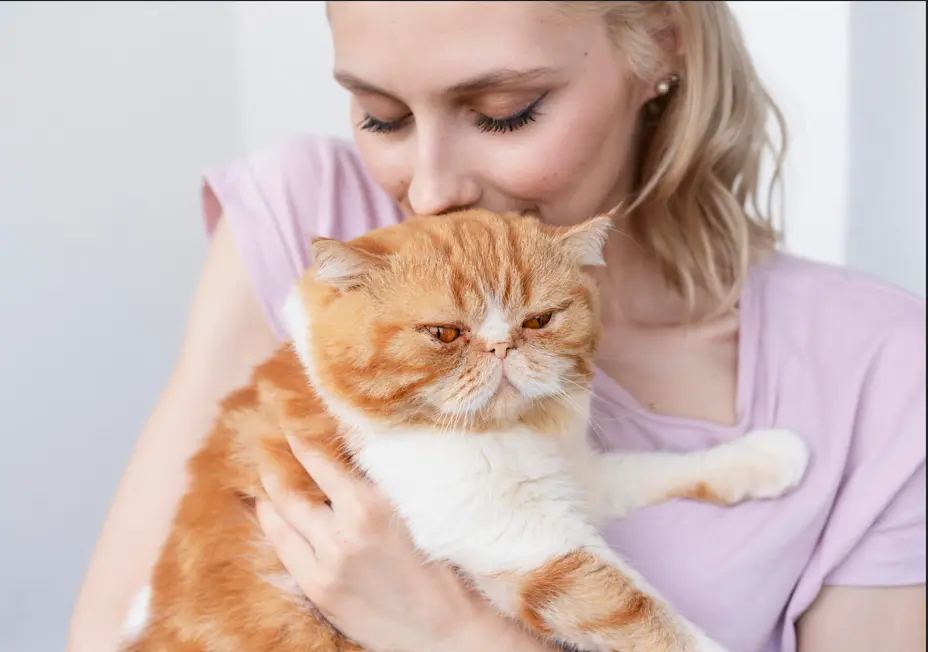
When your cat nuzzles you, she’s releasing her scent onto you. It comes from glands on her face, and it means she trusts you and considers you part of her social group.
My cat does this every time I sit down. She comes over, rests her forehead against my cheek, and pauses for a moment, then rubs her face against my jaw. I’ve had cats my whole life, but this behaviour always feels like a compliment to me
Why does my cat headbutt me? 7 real reasons
1. She’s marking you with her facial pheromones
When your cat nuzzles you, she is pressing these glands on you, releasing her pheromones, and other cats get the message that you have this cat’s scent on you, meaning you are part of her group and territory. That’s why my cat licks you so much: licking is another way to release scent, this time through the glands in her mouth and chin.
Humans can’t smell these pheromones, but your cat and any other cat you meet get the message: You are claimed, in the most adorable way possible.
2. She trusts you completely
Cats are both predators and prey. When they put their foreheads to yours, they’re turning their face toward you, exposing a vulnerable spot, and getting so close that they can’t track your movements. This only happens when a cat feels completely safe.
Cat behaviourist Pam Johnson-Bennett puts it bluntly: “You should be happy they chose you, because it means they thought you were that good.”
Cats don’t butt heads with everyone. This behaviour is reserved for people and animals in their inner circle. And if a cat butts you head-first, especially when you’ve just seen them. It’s one of the strongest signals of comfort and trust.
3. She’s creating a shared group scent
In cat colonies, cats regularly butt each other, creating a shared scent among all members. And it’s this shared scent that tells who’s part of the group and who’s not.
According to a 2025 study published in Applied Animal Behaviour Science, cats in multi-cat households butt each other more and rub up against members of their primary social group more, so butting isn’t just affection; it’s a social statement.
4. She’s saying hello
Not every headbutt is a deep social ritual; sometimes your cat will just headbutt you because you just came in the door, and it’s their way of saying “hello.” Cats who headbutt their owners have learned that the reward for this particular gesture is a warm response: you lean in, pet them, and talk to them.
5. She wants your attention right now
Why does my cat headbutt me specifically when I’m doing something else, reading, working, or looking at my phone? It’s because it works. Cats are very observant; they quickly learn what behaviour results in what. And if headbutting comes with affection, they’ll use it when they need attention.
That’s why some cats will headbutt your phone or book; they’re not confused about what those things are. They know that these things are competing for your attention and they’re getting in the way.
6. She’s self-soothing
Cat facial pheromones have a calming effect not just on the cat that smells them but also on the cat that releases them. When your cat rubs her facial glands against you, it is physically soothing, and she may do so when she is mildly stressed.
7. The dominant cat in the household butts the most
Headbutting is not evenly distributed in a multi-cat household. The more socially confident and dominant cat tends to start head-butting the most because it’s the dominant cat’s job to naturally spread the group’s scent to the others.
This means that if you have two cats and one is head-butting you more than the other, you’re probably looking at your more confident cat. It doesn’t mean the other cat loves you less; they just show their affection differently. And shy or newly adopted cats usually head butt less, especially at first, but as they gain confidence, that changes.
Headbutting vs head pressing: a critical difference
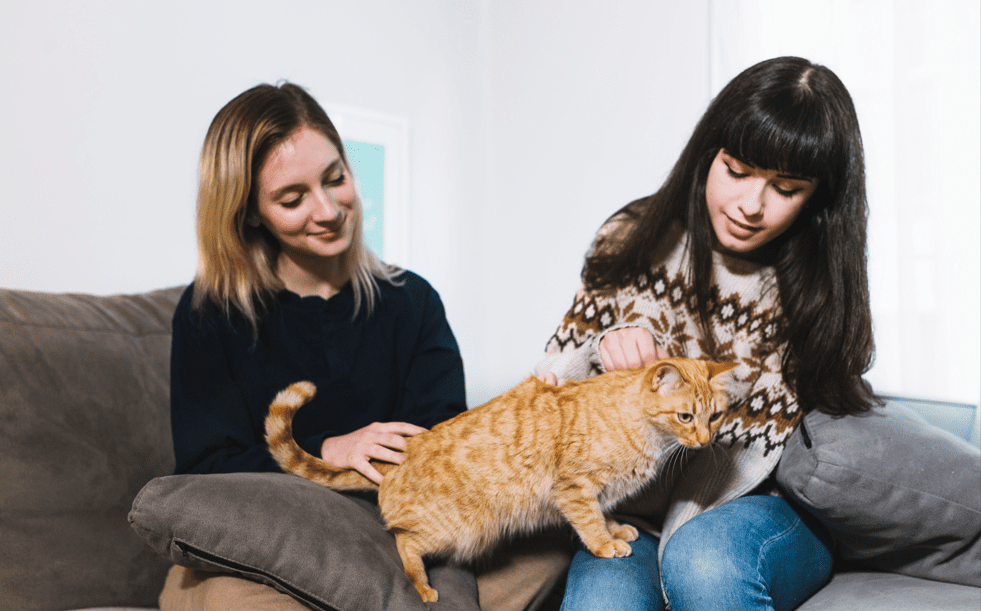
Head banging, also known as bunting, is a relaxing and social behaviour. Your cat will lightly bump its forehead against you, rub its face against you frequently, remain calm with soft, dilated eyes and a relaxed body, and then walk away.
In contrast, head pressing is a medical emergency. When a cat repeatedly presses its head against a wall, corner, or surface, is unmoving, appears confused, lethargic, or listless, it’s a neurological symptom.
Causes of head pressing can include a brain tumour, hepatic encephalopathy caused by liver disease, exposure to toxins, stroke, or other serious neurological problems. And according to Dr Michel Doleque: “This behaviour should not be ignored, as it could be a sign of a serious health problem.”
So if you see your cat headbutting not a gentle, affectionate bump, but a constant, forceful headbutt that seems confused, go to the emergency vet immediately.
Why does my cat headbutt me, then bite?
This particular sequence, head butting first, then biting, confuses many cat owners because it seems contradictory, but it’s not.
Head butting is genuine affection and social bonding, while biting is usually caused by one of three things.
Reason one — overstimulation: The physical contact has gone too far. Your cat was happy and then suddenly became emotionally overwhelmed. Watch for warning signs before biting: tail wagging, fur flapping along the back, ears back or slightly flattened. All of these occur before biting, not during biting.
Reason two — love bite: Cats groom each other in their social group, and sometimes even give a little bite during it. If the biting is gentle and doesn’t tear the skin, that’s probably. If your cat considers you a close social companion.
Reason three — Boundary signal: The cat showed affection, you showed affection in return, and now it has decided that it’s done. This biting is saying, “I’m done.” This is not aggression. It’s setting a boundary.
Do all cats headbutt?
No, and if your cat doesn’t headbutt you, it doesn’t mean she doesn’t love you.
Cats have many ways to show affection, like slow blinking, sleeping close to you, following you from room to room, purring when you talk to them, and licking you. All of these are equally ways to show affection. And some cats aren’t naturally headbutters.
Confident and outgoing cats will headbutt more, while shy or anxious cats will show affection in other ways and no one way is more or less correct.
But if your cat used to headbutt and now doesn’t, it’s important to pay attention, because a change in behaviour is sometimes the first sign that a cat isn’t feeling well. And if it’s accompanied by other changes, loss of appetite, lethargy, decreased interest in interaction, it’s time to see a vet.
Myths about cat headbutting
| Myth | Reality |
| The headbutt means my cat is claiming me aggressively | Bunting is affiliative, not dominance behaviour. Cats claim territory through urine marking. Headbutting is social bonding |
| If a stranger’s cat headbutts me, they love me | A cat bunting a stranger is often gathering scent information rather than expressing affection. Do not assume it is an invitation to pet them |
| Headbutting back is the best response | It depends entirely on your cat. Some welcome it. Others find an unexpected headbutt from a human surprising and unpleasant |
| Only bonded cats headbutt | Confident cats sometimes bunt new people as part of scent investigation, especially in familiar environments |
| My cat headbutts me because they want food | Sometimes yes, but food-seeking headbutting is usually combined with leading you toward the bowl or persistent meowing at night |
How to respond to a cat headbutt
The best response depends on your cat and your relationship.
If your cat is well-connected to you, lean in gently and let him headbutt you, then lightly pet his chin or head, where he just made contact with you. Most cats that headbutt you are inviting an affectionate response.
What you should never do: push him, make loud noises, or pick him up immediately. Any of these behaviours breaks up this positive social interaction and can create a negative association with your approach.
Conclusion
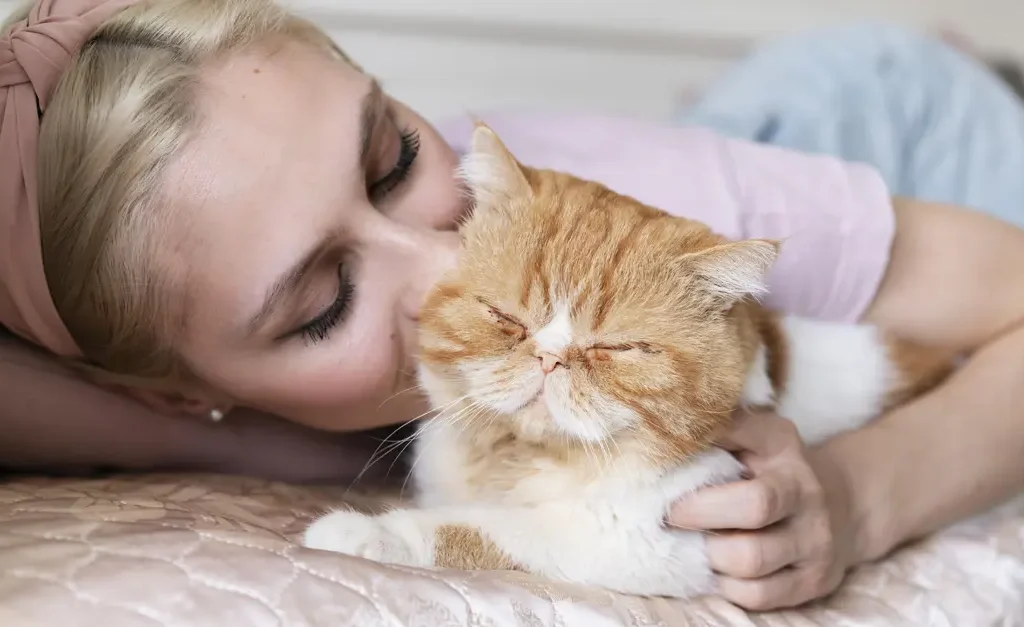
Cats don’t butt heads with everyone. They reserve this behaviour for those they’ve truly chosen, those they dare to be vulnerable in front of, those whose scent they want to blend with.
Every time your cat bumps her forehead against yours, she’s confirming that you’re part of her group, not because she has to, but because she wants to.
Frequently asked questions (FAQ)
Q: How should a cat react to a headbutt?
Ans: When your cat headbutts you, lean in gently and let her complete the contact, then lightly stroke her chin or cheek, because that’s where she just touched you. If she stays close, it means she wants more. But if she pulls away, assume that’s all she wanted.
Q: Is a cat headbutting a sign of affection?
Ans: Yes, because headbutting is reserved for people and animals the cat trusts and considers part of its social group.
Q: How do I tell my cat I love her?
Ans: Slow blinking is the most effective way. Make gentle eye contact with your cat, blink slowly, get down on it and show it some affection.
Q: How do you know if a cat is bonded to you?
Ans: A bonded cat will head butt you, follow you from room to room, sleep near or on you, wink slowly, greet you when you come home, and especially seek you out when she is upset or sick. She will bring her toys to you,
