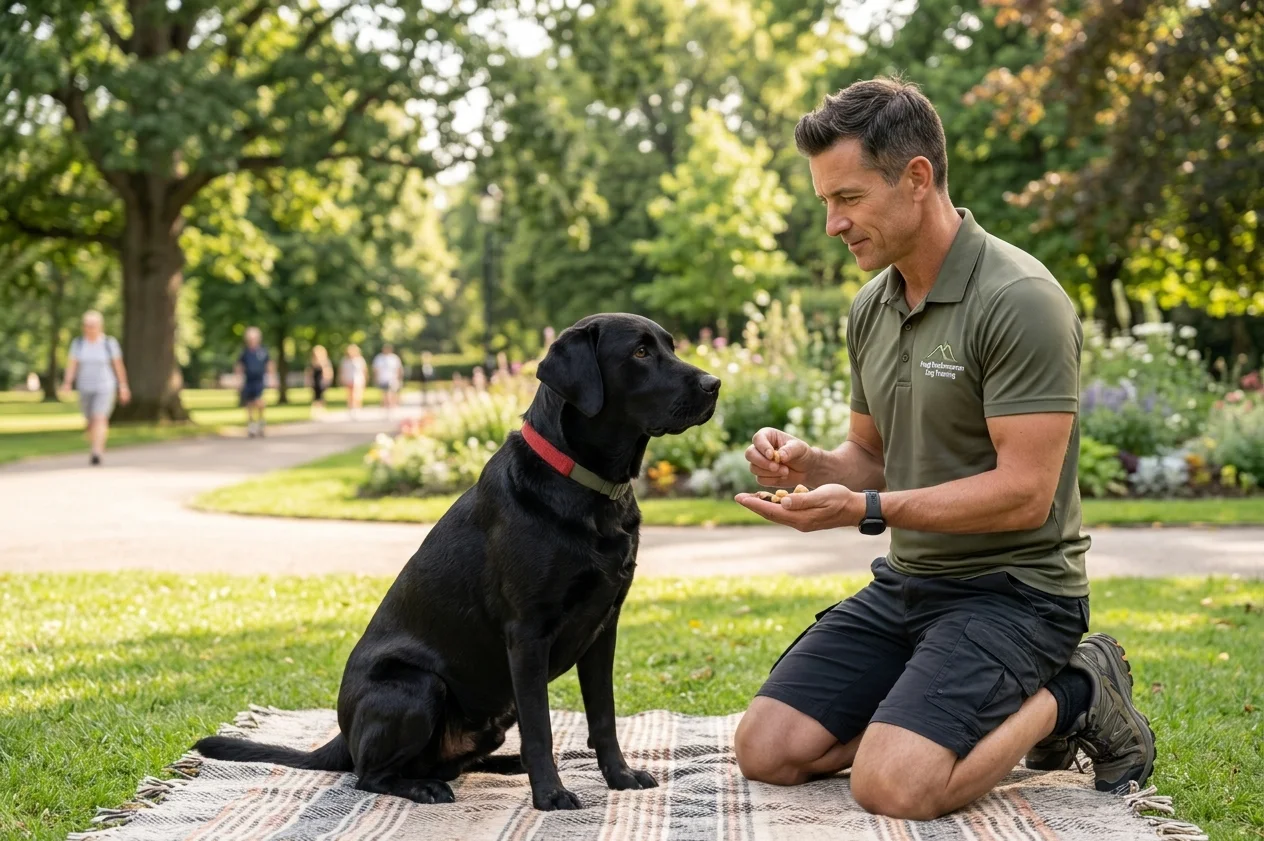

Teaching a dog to sit is one of the first skills most owners try, but it is also one of the most misunderstood. A reliable sit is not just about getting the dog’s bottom on the floor. It is about building clear communication, teaching calm choices, and giving your dog a simple way to earn good things in everyday life.
The goal is not a robotic dog that sits only when it sees food. The goal is a dog that understands that sitting is a useful, rewarding behavior that works in the kitchen, at the door, on walks, and around guests. This guide explains how to teach sit in a way that is clear, kind, and effective, without turning training into a battle of wills.
Why teaching sit is worth the effort
Sit is more than a party trick. It is a practical tool that can prevent jumping on visitors, rushing out of open doors, pulling on the leash, or barging into people and other dogs. A dog that sits cannot lunge forward as easily, cannot knock over a small child, and cannot bolt when the front door opens.
Sit also introduces your dog to the basic rules of training. The dog learns that a specific word or hand signal predicts a specific action, and that action predicts a reward. Once this pattern is clear, teaching other commands like down, stay, come, or leave it becomes much easier.
In short, sit is the foundation for polite behavior and future training. It builds a common language between you and your dog.
Before training, make sitting easy
Whether you’re trying to train your dog to sit for the first time or wondering how do I train my dog to sit without frustration, the process starts the same way with the right setup, not the word itself
Training works best when the dog is comfortable and focused. Choose a quiet area with minimal distractions for the first sessions. A non-slip surface such as a rug, mat, or grass is better than a cold, slippery floor, especially for puppies, senior dogs, or large breeds.
Have small, high value treats ready. These should be something your dog really wants but can eat quickly, such as tiny pieces of cheese, chicken, or commercial training treats. If your dog is more motivated by toys, a small tug toy can work just as well.
Keep sessions short. Five to ten minutes, or even several one-minute bursts spread through the day, are more effective than one long, tiring session. End on a success, even if it is small, so your dog finishes feeling confident.
Finally, check your own energy. Dogs respond to tension and frustration. If you are stressed or in a hurry, your dog will feel it. Training should feel like a game, not a test.
Let the behavior happen
There are two main ways to help your dog discover the sit position: lure-and-reward and capturing. Both are positive, force-free methods that let the dog figure out what earns the reward.
Lure-and-reward
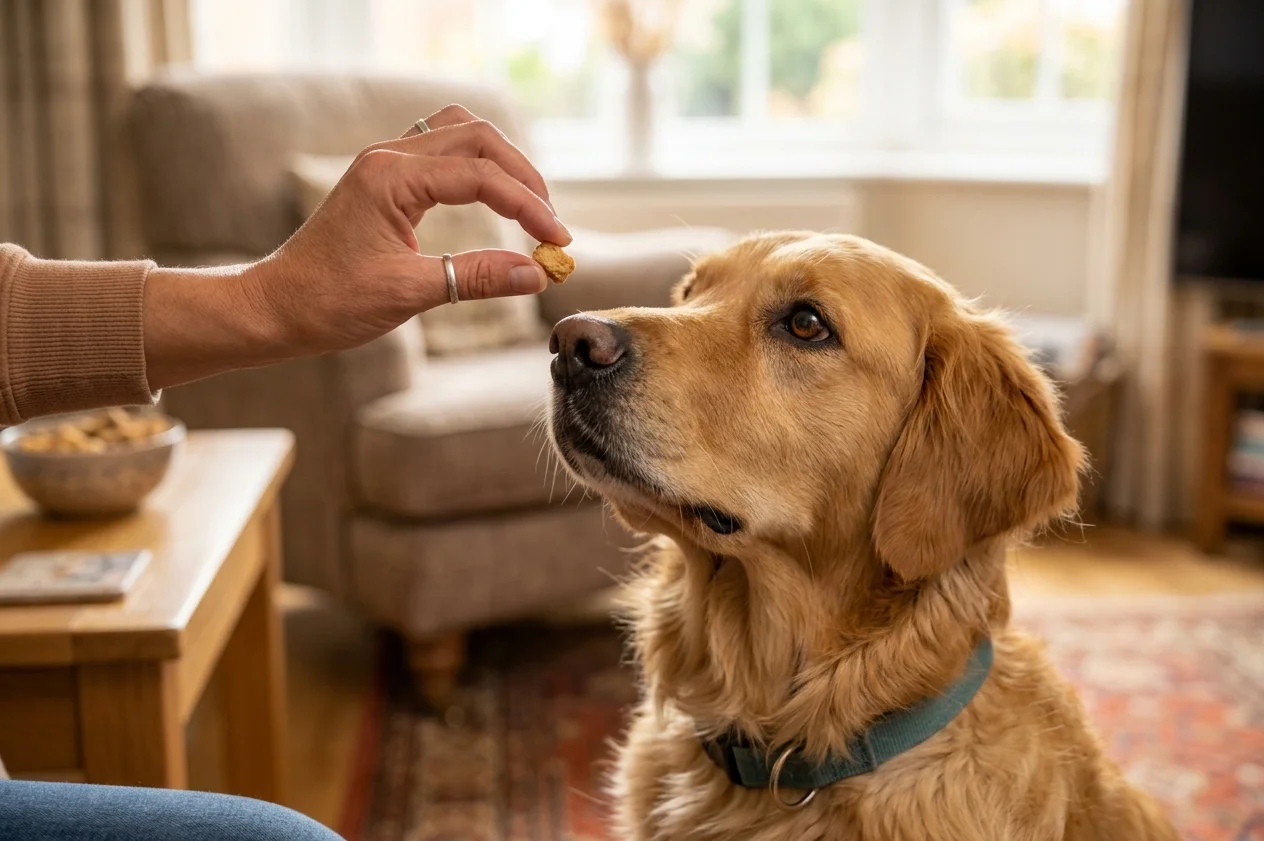
Stand or kneel in front of your dog in a calm posture. Hold a treat between your thumb and fingers so your dog can smell it but not grab it. Place your hand near the dog’s nose, then slowly move it upward and slightly backward over the head, as if drawing a gentle C shape.
As the dog follows the treat with its nose, the head lifts and the weight shifts backward. For most dogs, the rear naturally drops into a sit. The moment the bottom touches the floor, mark the behavior with a clear “Yes,” a click, or an enthusiastic “Good,” and immediately give the treat.
If the dog jumps up, the treat may be too high or moving too fast. Keep it closer to the nose and move more slowly. If the dog backs up instead of sitting, practice with the dog’s back near a wall or in a corner so there is less room to retreat.
Repeat this several times until the dog sits reliably when you move your hand. Keep your body relaxed and avoid leaning over the dog, which can feel intimidating.
Capturing
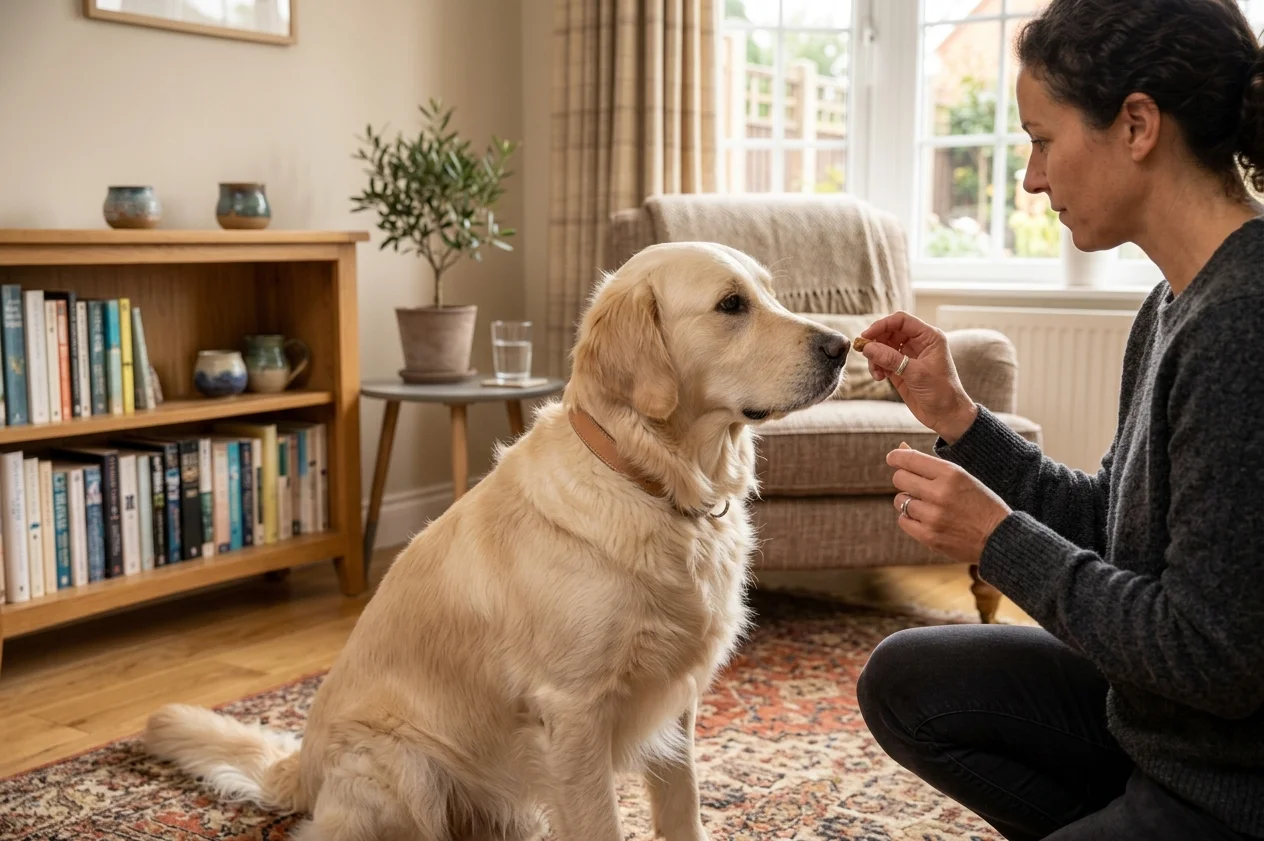
Capturing uses the dog’s natural behavior instead of a lure. During quiet time at home, watch for moments when your dog sits on its own. The instant the bottom hits the floor, mark and reward.
At first the dog may look confused, but after several repetitions it will start offering sits more often to make treats or toys appear. You can then begin adding the word “sit” just as the dog starts to move into position.
Capturing is especially helpful for shy dogs, dogs that dislike hands over their heads, or dogs that already sit frequently but do not yet understand the cue.
Give the behavior a name
Once your dog is sitting consistently, whether you’re using a lure or trying to teach your dog to sit through natural offers, it is time to attach the verbal cue. Say “Sit” clearly and calmly, wait about one second, then use your hand signal or lure to help the dog into position. Mark and reward as before.
Repeat this many times so the dog connects the word with the action. After a while, start saying “Sit” before you move your hand. If the dog responds, reward generously. If not, go back a step and continue pairing the word with the movement until the connection is solid.
Use the cue only once. Repeating “Sit, sit, sit” teaches the dog that the command is a string of words, not a single clear signal. If the dog does not respond, it usually means the training has moved too fast, the environment is too distracting, or the dog needs an easier step.
You can also teach a hand signal, such as an open palm rising from your side or a gentle upward motion in front of your body. Many dogs respond well to visual cues, and a hand signal can be useful in noisy places where your voice may not be heard.
Stop making the treat do all the work
A common problem is that the dog sits only when it sees food in the hand. This happens when the lure is not faded quickly enough. The treat becomes the cue instead of your word or gesture.
To fix this, start using the same hand motion without a treat in that hand. Reward from your other hand or from a pouch at your waist. Gradually make the hand signal smaller and more natural until it looks like a subtle lift of your fingers or a small upward movement by your side.
Over time, reward only the best sits and vary the reinforcement. Sometimes give a treat, sometimes praise, sometimes a quick game, sometimes access to something the dog wants, such as going through a door or meeting a person. Variable rewards keep the behavior strong without creating dependency on food every single time.
Teach the dog when the sit ends
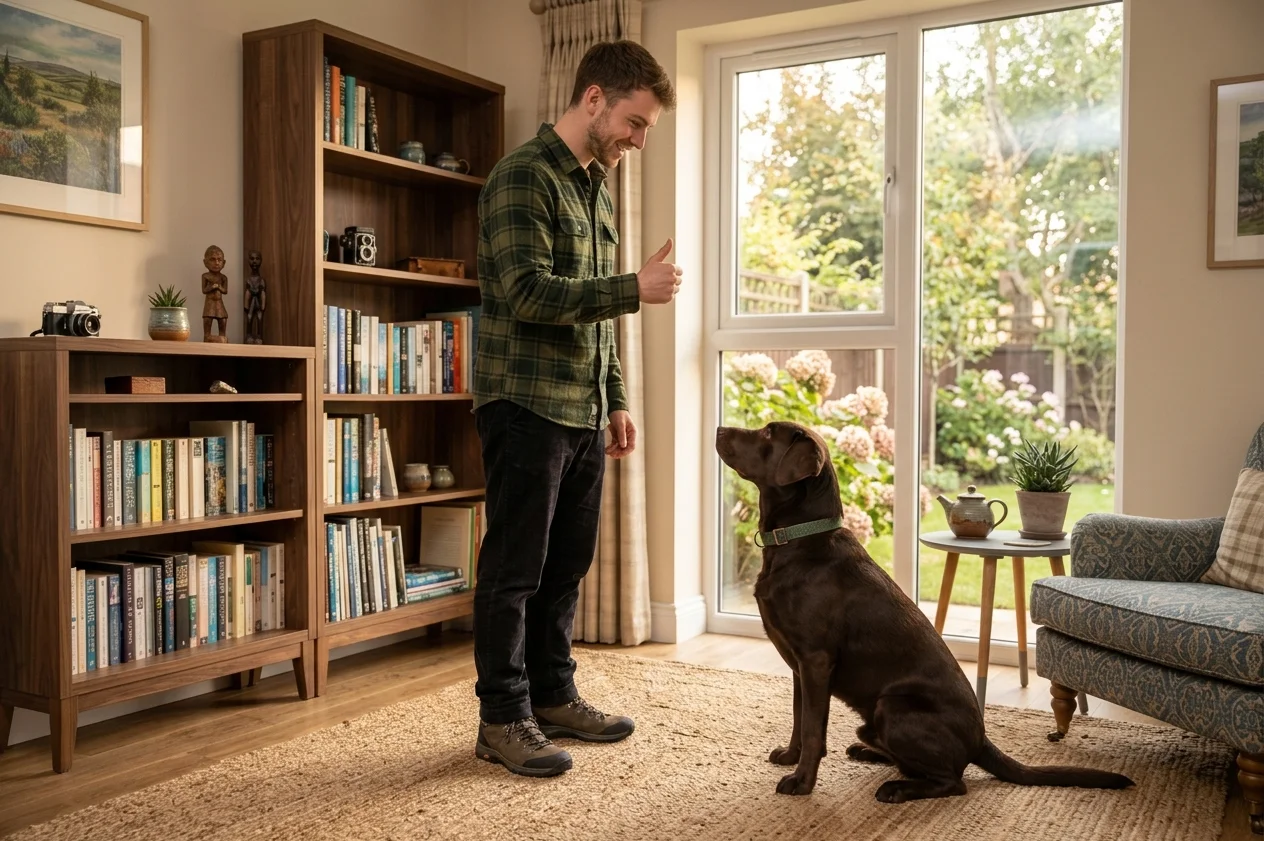
Many owners teach sit but forget to teach the dog how the sit ends. Without a release cue, the dog may pop up immediately after getting the treat or may not understand how long to stay in position.
Choose a simple release word such as “Okay,” “Free,” or “All done.” After your dog sits, wait one or two seconds, then say the release word in a friendly tone and encourage movement, for example by tossing a treat to the side or stepping back.
This teaches the dog that sitting continues until it hears the release. You can gradually increase the duration by waiting a little longer before releasing. Keep it easy at first. If the dog breaks the sit too early, you are likely asking for too much too soon. Return to a shorter duration and build up again.
Make sit useful outside the living room
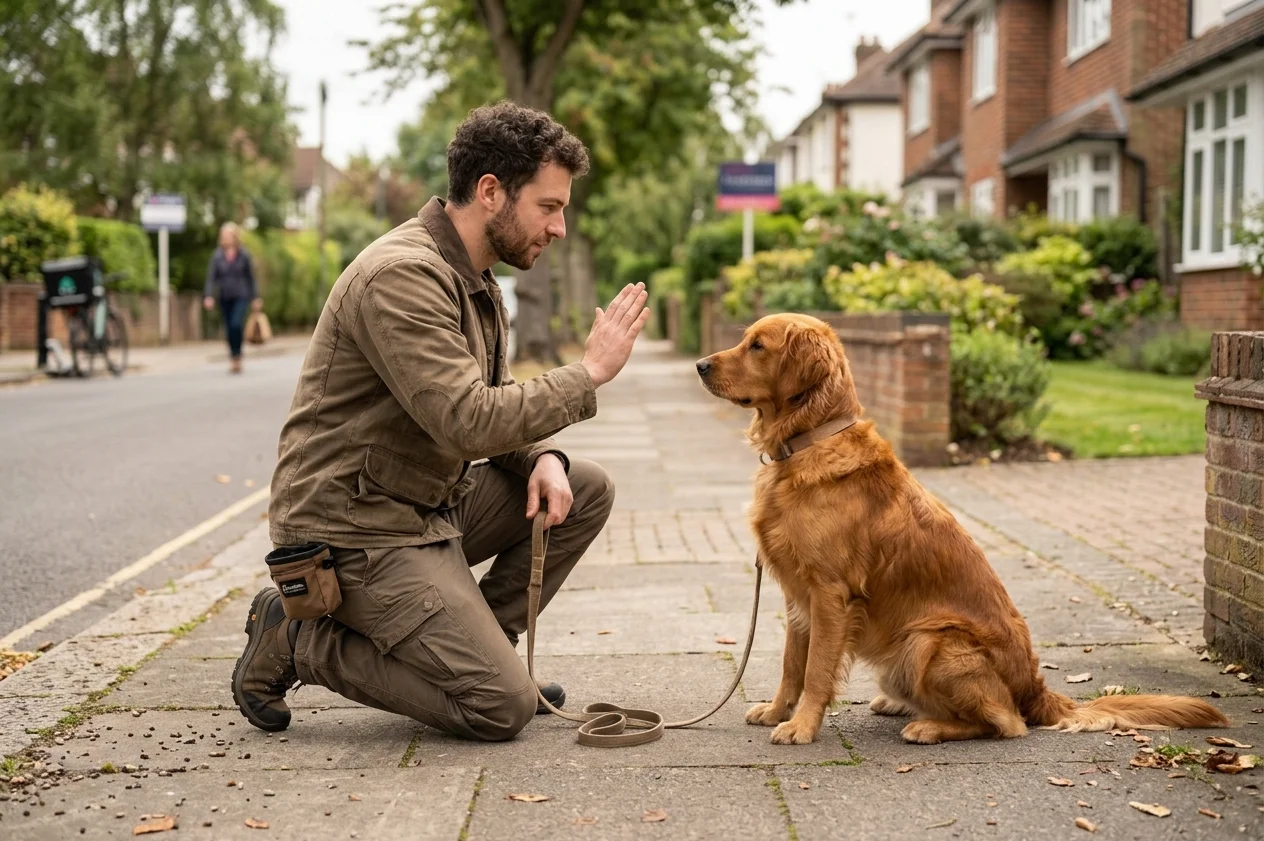
Dogs do not automatically generalize commands. A dog that sits perfectly on the kitchen rug may act as if it has never heard the word in the park. This is not disobedience; it is how dogs learn.
Practice sit in different rooms, on different surfaces, and with different family members. Train in the backyard, on the driveway, on quiet sidewalks, and eventually in slightly busier areas. Change your position too. Sit on the floor, stand up, turn to the side, or hold a baby or a bag. Your dog should learn that “sit” means the same thing no matter what else is happening.
Introduce distractions slowly. Start with mild movement, then add people walking by, toys on the ground, or other dogs at a distance. If the dog struggles, reduce the difficulty and work at an easier level before trying again.
Use real-life rewards to make sit meaningful. Ask your dog to sit before meals, before the leash goes on, before the door opens, before throwing a ball, or before greeting a visitor. This teaches the dog that sitting is a practical way to earn what it wants, not just a trick for treats.
What if the dog keeps getting up?
If your dog sits and immediately stands, the most common reason is that the reward is given after the dog has already moved. Timing matters. Mark and treat while the dog is still in the sit, not after it stands.
Another possibility is that the duration is too long for the dog’s current skill level. Reduce the waiting time to one or two seconds, reward, release, and gradually increase as the dog succeeds.
Some dogs break the sit because they are unsure what to do next. A clear release cue helps. Others may be uncomfortable on the surface, especially if it is cold, slippery, or hard. Try a softer or warmer spot.
If the dog sits crookedly or unevenly, do not correct or push. Simply reward the best attempts and keep sessions short. Over time, the position will become neater as the dog gains confidence and strength.
What if the dog will only sit for a treat?
This is the classic lure-dependency problem. The solution is not to remove treats completely, but to change how they are used.
Start by hiding the treat in your other hand or in a pouch. Use an empty hand to give the signal, then reward from the hidden location. Slowly reduce how often you reward with food and increase praise, play, or real-life rewards.
Practice in low-distraction areas first, then gradually add challenges. If the dog fails in a busy place, it does not mean training has failed. It means the environment is too difficult for that stage. Return to an easier setting and rebuild.
Remember that many dogs are highly food motivated. Using treats occasionally, especially in new or distracting situations, is perfectly fine. The aim is reliability, not perfection without rewards.
When sitting may be uncomfortable
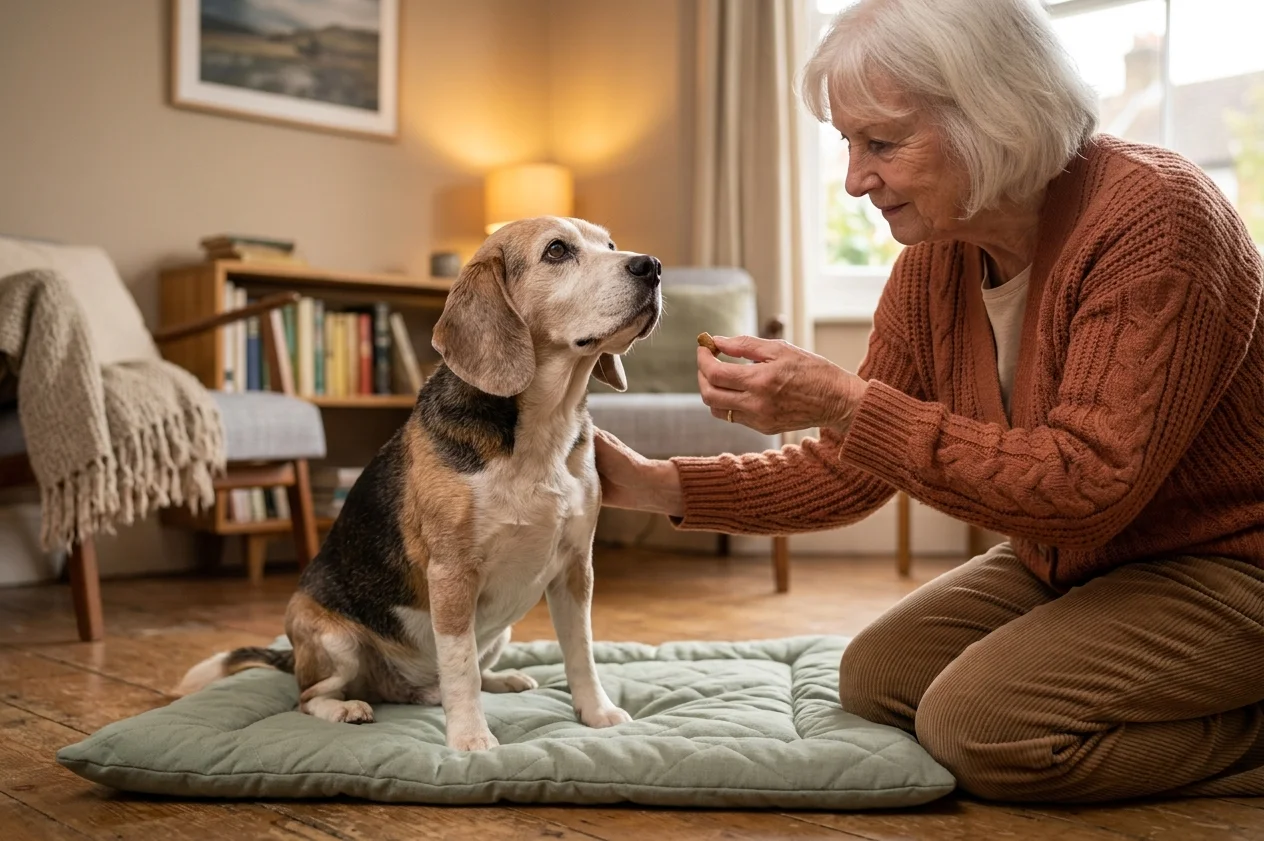
Not every dog that refuses to sit is being stubborn. For some dogs, the position is physically awkward or painful. This is especially true for certain breeds and individual dogs.
Greyhounds and other sight hounds often have long legs and a body structure that makes sitting from a stand feel unnatural. Some of these dogs find it easier to learn sit from a down position, gradually luring the front end upward while keeping the rear on the ground.
Senior dogs with arthritis, hip dysplasia, or back pain may avoid sitting because it hurts. Puppies with weak hindquarters or dogs recovering from injury may also struggle. If your dog suddenly resists sitting, sits unevenly, or seems stiff, consider a veterinary check before pushing harder in training.
Use comfortable surfaces, keep sessions brief, and never force the dog into position. Pushing the rear down, jerking the leash, or physically manipulating the hips can create fear, pain, or resistance. Positive, patient methods build trust and produce better long term results.
Puppies, seniors, and different personalities
Puppies can start learning sit as early as eight weeks. Their attention spans are short, so keep sessions very brief and fun. Use tiny treats and lots of praise. Capture natural sits throughout the day to build the habit.
Senior dogs can absolutely learn new skills, but they may need more time and comfort. Use soft bedding, avoid slippery floors, and respect any physical limitations. If hearing is reduced, rely more on hand signals and body language.
Shy or fearful dogs may be uncomfortable with hands moving over their heads. Try capturing, side positioning, or using a target stick to guide the nose upward without looming over the dog.
High-energy dogs may find sitting difficult when excited. Use calm moments, such as after play or before meals, to practice. Teach that calm behavior earns what they want, while frantic behavior delays it.
Every dog learns at its own pace. Progress is more important than perfection.
Sit versus stay: understanding the difference
Sit is a position. Stay is the decision to remain in that position until released. Many owners accidentally teach the dog that sit means “sit and pop up immediately,” because they reward after the dog has already stood.
To build a solid sit, reward while the dog is still sitting. To build stay, add duration, distance, and distractions gradually, one at a time. Ask for a sit, wait one second, release and reward. Then two seconds, then three, and so on. Later, add small steps backward before returning to reward.
Do not call the dog to you from a stay in the early stages, or it may learn that stay means “wait a moment, then come.” Always return to the dog to release and reward until the concept is clear.
Common mistakes to avoid
Several habits can slow down sit training or create confusion. Pushing the dog’s rear down can cause resistance or pain. Repeating the cue multiple times teaches the dog to ignore the first one. Moving too fast through the steps can leave the dog unsure what is expected.
Rewarding after the dog stands teaches the wrong behavior. Training only in one room creates a dog that sits only in that room. Using low-value treats in high-distraction places makes success unlikely.
Instead, keep training positive, clear, and gradual. Mark the exact moment the sit happens. Reward in position. Fade the lure. Add distractions slowly. Use real-life rewards. Be patient.
A simple training problem table
| Problem | Likely reason | Helpful adjustment |
| Dog jumps instead of sitting | Treat too high or moving too fast | Keep lure closer to nose, move slowly |
| Dog backs up instead of sitting | Too much space behind, uncomfortable surface | Train near a wall or on a rug |
| Dog sits only when it sees food | Lure not faded, treat always visible | Use empty-hand signal, vary rewards |
| Dog breaks sit immediately | Reward given after standing, duration too long | Reward while sitting, shorten wait time |
| Dog ignores cue in new places | Lack of generalization, too many distractions | Practice in many locations, add distractions gradually |
| Dog seems uncomfortable sitting | Pain, stiffness, slippery floor, body structure | Check with vet, use soft surface, adjust expectations |
The bigger picture
Training sit is not just about obedience. It is about building a relationship where your dog understands that calm choices lead to good outcomes. When your dog learns that sitting can earn food, play, attention, access, or safety, the behavior becomes something the dog wants to offer, not something it is forced to do.
Some sessions will be messy. The dog may sit crookedly, break early, or seem confused. That is normal. Learning is not about perfection; it is about progress. Meet your dog’s efforts with clarity, patience, and celebration.
Over time, sit becomes a default behavior that your dog offers when unsure, excited, or waiting. It becomes a tool you can use in real life, not just in training drills. And that is the true goal: a dog that sits not because it has to, but because it understands that sitting works.
Frequently asked questions (FAQ)
Can I teach sit without treats?
Yes. You can use a toy, praise, play, or real-life rewards such as opening the door or starting a walk. However, treats are often the easiest way to communicate clearly in the early stages. You can fade them later.
How long does it take to teach sit?
Some dogs learn the basic motion in a few minutes. Building a reliable sit in different places and situations can take days or weeks of short, consistent practice. Patience and timing matter more than speed.
Should I push my dog’s bottom down?
No. Physical pressure can cause pain, fear, or resistance. It also teaches the dog to respond to pressure instead of your cue. Positive methods using lures, capturing, and rewards are safer and more effective.
Can I teach sit from a down position?
Yes. This can be helpful for dogs that find sitting from a stand difficult, such as Greyhounds or dogs with mobility issues. Lure the head upward and forward so the front end rises while the rear stays down, then reward small improvements.
My dog sits at home but not outside. Why?
Dogs do not automatically generalize cues. Practice in many locations with gradually increasing distractions. Use higher-value rewards outside and keep sessions short.
Is sit enough, or should I teach stay too?
Sit is a position. Stay teaches the dog to remain in that position. Both are useful. Start with a solid sit, then add short stays and a clear release cue.
