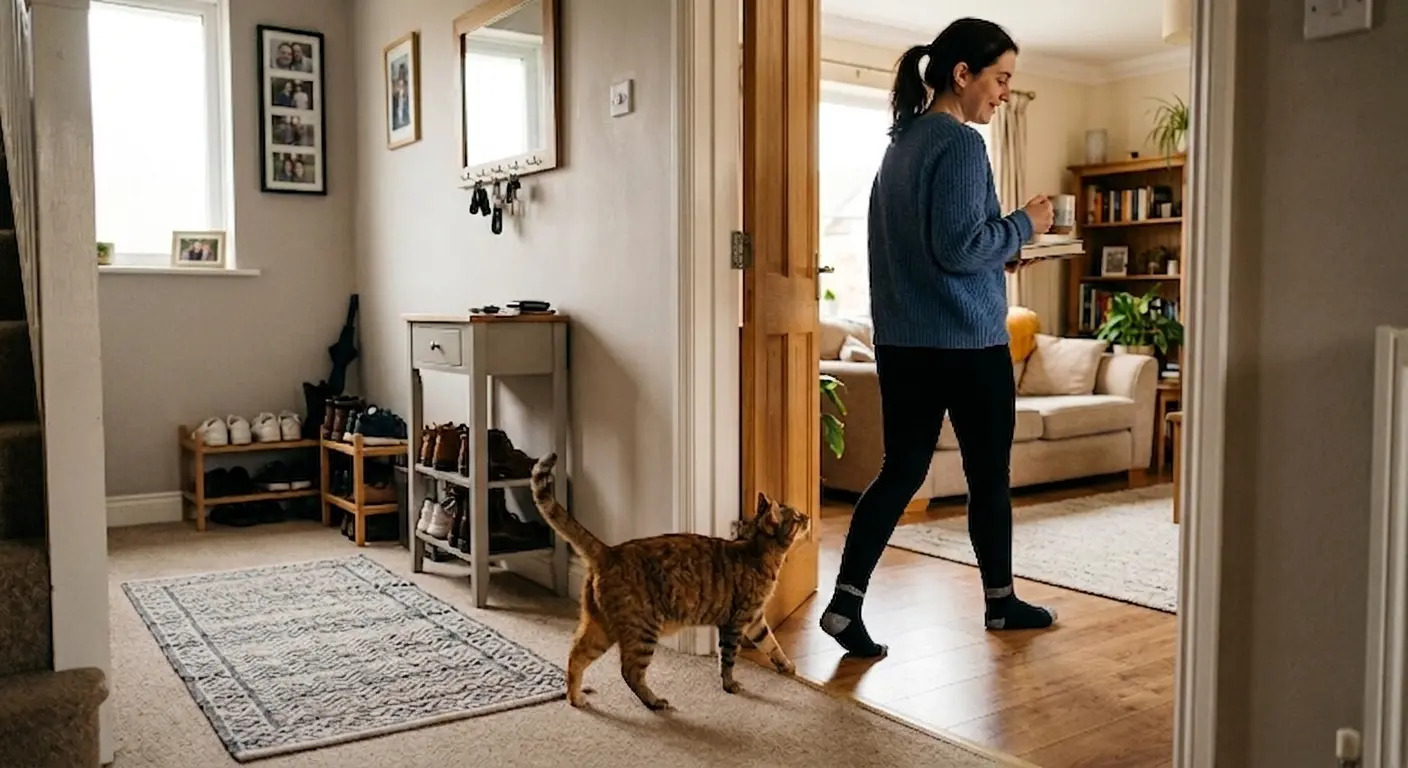
My cat followed me into the bathroom this morning. She sat outside the door. She waited. And as soon as I opened the door, she came running, licked my leg, and started meowing like she wanted to show me something.
If your cat does the same thing, you might be wondering why. So, the direct answer is that it depends on your cat what its mood is and what its purpose is for following you at that specific time.
10 Reasons at a Glance
| Reason | Type |
| Hunger — you control the food | Learned behavior |
| Genuine bond and attachment | Emotional |
| Curiosity — instinct to monitor territory | Instinct |
| Play — your movement triggers the hunting instinct | Instinct |
| Boredom — you’re the most interesting thing around | Environmental |
| Feeling safe near you | Emotional |
| Separation anxiety | Behavioral concern |
| Underlying illness or pain | Medical check with a vet |
| Scent marking/territory | Instinct |
| Accidentally trained by your reactions | Learned behavior |
10 reasons why does my cat follow me everywhere
1. They’re hungry and you control the food
Cats learn very quickly. My cat learned within the first two weeks that I was the one who put the food in the bowl. Now, as soon as I get up and walk three steps to the kitchen, she follows my feet. She comes back, meows, rubs her legs, and repeats the whole sequence over and over. And if I still don’t move toward the bowl, she sits in front of me and stares at me like a student staring at the last question on an exam.
The only solution I found was to create a feeding schedule and stick to it every day. Once the cat is confident that food will come at the same time every day, no matter what, she stops taking your every move as a cue to eat. It took about two weeks for my cat.
2. Your cat is genuinely bonded to you
The old misconception that cats are cold and uncaring is not true for most cats. According to a 2025 AVMA report, there are millions of cats in the United States, and research suggests that they have genuine attachments to their owners. A 2025 study by Van Belle et al. also showed that cats express attachment through behaviours such as physical contact, grooming, and proximity.
My cat sleeps with me every night in the exact same spot. And when he comes up behind you and sits down without asking you, that’s trust, that’s it.
3. Curiosity is wired into them
Every room you go into, every cupboard you open, or you can also make sounds with your mouth. It all becomes a subject of investigation for your cat.
Originally, the domestic cat descended from the African wildcat (Felis lybica), which was a solitary hunter that lived by staying alert to everything in its territory. Your domestic cat still has those instincts today, even if the biggest threat in its territory is your vacuum cleaner, which makes it very scared.
When a cat follows you around the house, it’s not just following you. It’s monitoring, investigating, and creating a complete map of everything going on in its territory.
4. They want to play and you’re the most interesting target
My cat does something strange. She follows me quietly into the hall and then suddenly pounces on my feet. Completely random. And every time I’m surprised.
This is her cue to play. When you walk around the house, your movements awaken the cat’s natural hunting instinct. The movement of your feet, your hand reaching out to grab something, the sudden change of direction, all of this sounds like prey to a cat in play mode.
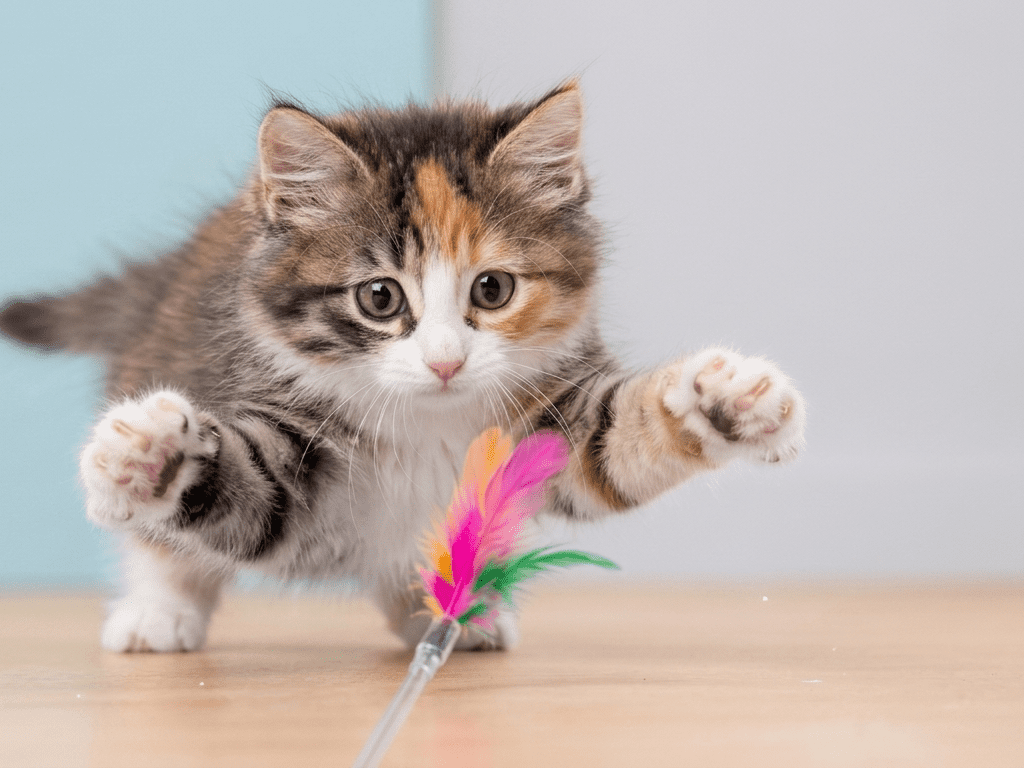
The solution is simple. Twice a day, feed her a wand toy for 10-15 minutes. A tired cat is a calm cat, and a calm cat means your feet are safe from attack.
So if your cat also attacks your feet, don’t think of it as a bad habit. It’s just an invitation to play. And it’s better for both of you to accept it.
5. You’re the most interesting thing in their world right now
Indoor cats have a small world; there’s only so much to explore within four walls.
My cat sleeps most of the day, and I mean most of it. She finds the sunniest spot in the house, curls up, and doesn’t move for hours. As soon as night falls, her behaviour changes abruptly, and she becomes very playful. She follows everyone around, knocks over things, and generally makes sure no one in the house gets a full night’s sleep.
It’s called crepuscular behaviour. Cats are naturally more active in the morning and evening. It’s in their nature. Knowing this doesn’t make the meowing at 2 a.m. any less annoying, but at least now you know it’s not against you personally. It’s the same instinct that causes cats to meow and become active at night.
Adding some enrichment helps cat trees by the windows, puzzle feeders, and spinning toys. Give them something to do when you’re not available yourself.
6. You make them feel safe
Even the bravest cat gets scared sometimes. Cats in the wild are both predators and prey. They have a dual nature, meaning one part of their brain is always on the lookout for danger.
When your cat runs after you, she’s getting closer to the only creature in her world that she trusts completely. You’re her refuge. When something shakes her sense of security. whether it’s a loud noise, a new guest, or a new furniture arrangement. She can only calm down by coming closer to you.
Some cats take this further and prefer lying directly on their owner’s chest for warmth and comfort, the same trust instinct, just closer contact.
7. Your cat may have separation anxiety
Research suggests a meaningful share of cats become anxious when separated from their owners, showing signs such as scratching, excessive meowing, and urinating outside the litter box on clothes or bedding.
Cats with separation anxiety don’t just follow you from room to room — they become distressed specifically when a closed door separates them from you. They scratch at doors and meow persistently, and this behaviour tends to intensify right after you return.
Cats without enough enrichment, or who spend long stretches alone, appear more likely to develop this kind of anxiety, which is a good argument for treating playtime and environmental enrichment as more than optional.
If you recognise these signs, don’t panic. A vet or certified cat behaviourist can guide a gradual plan to help your cat tolerate time alone. Your cat isn’t trying to guilt you; it genuinely finds separation difficult.
8. Something may be wrong physically
I’ve had cats for a long time, and now I know when it’s not normal for a cat to chase.
There’s one kind of chasing that’s out of play, curiosity, or hunger and another kind that’s very quiet. The cat isn’t jumping, she’s not running . She just wants to be close to you.
A 2025 study published in the American Journal of Veterinary Research, conducted by Gilbert, Powell, and Siracusa at the University of Pennsylvania, found that cats with stomach or skin conditions showed more attention-seeking behaviour from their owners than healthy cats. Specifically, the sick cats purred more, were more sociable with people, and were more trainable, all behaviours that are associated with staying close and seeking comfort.
Common causes include an enlarged thyroid gland (hyperthyroidism, which makes the cat restless and hungry), urinary tract infections that cause pain and distress, joint pain (arthritis), and mental decline in older cats (feline cognitive dysfunction).
And if this behaviour started suddenly, and is accompanied by a change in appetite, weight, or litter box habits, get it checked out by a vet right away. If your cat is over 7 years old, any change in behaviour is significant; don’t ignore it.
9. They’re marking you as part of their territory
When your cat rubs against your legs and then chases you, it’s not just affection. It’s a declaration.
Cats have scent glands on their faces, chins, cheeks, and entire bodies. When they rub against you, they’re leaving their scent on you, declaring you their property. To your cat, you’re their property.
And chasing you is their way of maintaining that ownership. You’re the most important part of their world, and they’re not just chasing you; they’re protecting what’s most precious to them.
10. You accidentally trained them to do it
Think about it, every time your cat chases you, what do you do? Maybe you look at it, say something, lean over and pet it, or give it a treat. From a cat’s perspective, each response is a reward.
So over and over again, quite by accident, you’ve taught it that chasing brings good things. And cats do what works.
Now here’s a trick to change this habit: When your cat is sitting quietly in its spot, content and relaxed. Then go to your cat and give it a treat. This way, your cat will stop following you. It takes time, but the pattern changes. Trust me, I have tried this myself.
Why did my cat suddenly start following me everywhere?
If your cat has never been this clingy before and suddenly has this habit, it’s time to think about it.
The most common reason is a change in your schedule. If you used to live away from home and now work from home, or vice versa, you’re spending more time outside, which can disrupt your cat’s familiar daily routine.
Changes in the home can also make a difference. A new baby, a new pet, someone moving out, or the noise of renovations can all be so upsetting to a cat that they seek comfort near you.
Always keep health issues in mind, too. A 2025 University of Pennsylvania study found that sick cats intentionally stay close to their owners. Don’t ignore sudden changes in behaviour in adult and older cats.
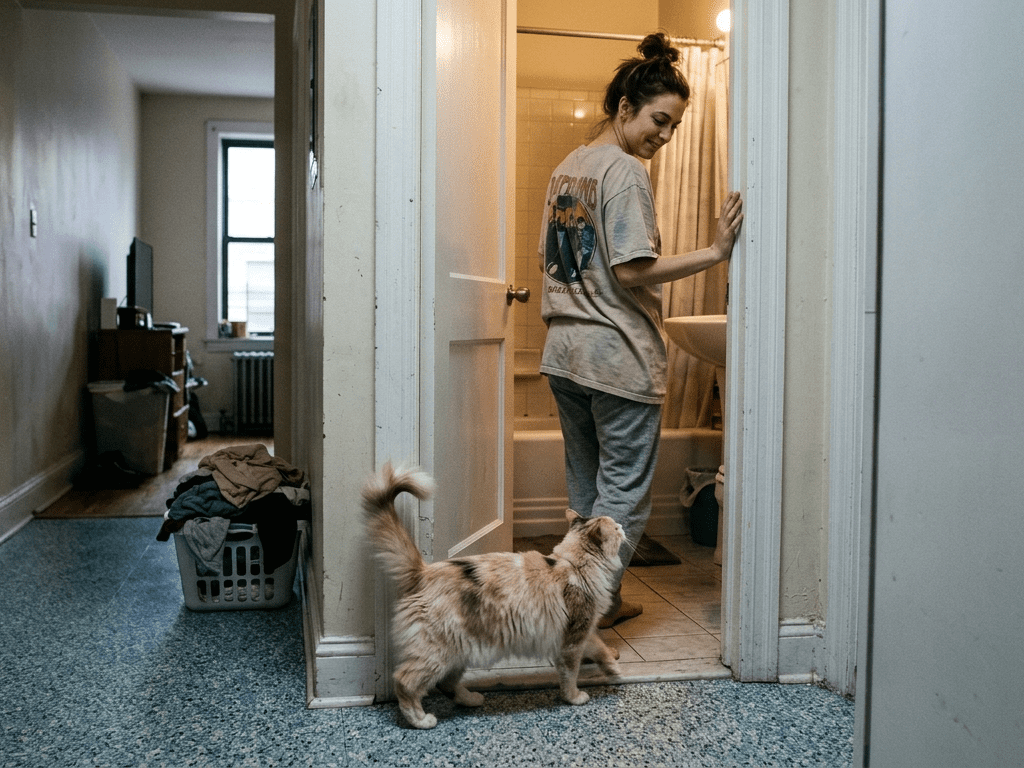
Why does my cat follow me to the bathroom?
Your cat follows you into the bathroom because it knows you’re going to be there for a while — not going anywhere. It’s a great opportunity for it to get your attention.
Cats learn their owner’s daily routine very quickly. They know when you wake up, when you eat, when you go to bed, and when you go to the bathroom; it feels like it’s their turn to be near you.
At the same time, the bathroom is an exciting place for a cat, the water is running, there are different scents, and it’s a small, enclosed space that they consider part of their territory. They want to see what’s going on there.
My cat comes to the bathroom with me every morning. I’ve accepted it too; it’s a habit for her, and now it’s become a routine for me too.
Which cat breeds follow their owners the most?
Some cats are just wired to be more social and people-oriented. These are often called velcro cats.
According to a 2025 study by Van Belle et al 63.3% of cat owners in the United States have more than one cat, and the way cats bond varies greatly by breed and personality.
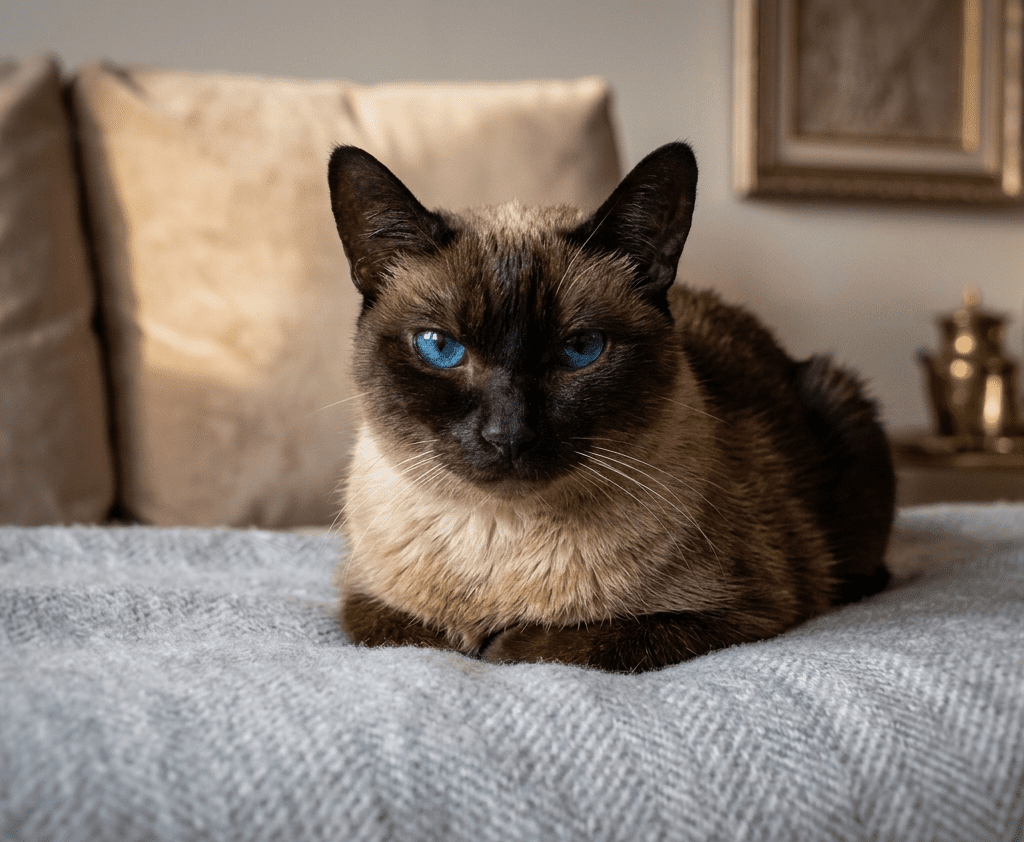
- Siamese cats are the most famous example of this. They talk a lot, are very sociable, and follow you everywhere, all the while talking as if they were actually talking to you.
- Ragdoll cats are very gentle and very attached to their owners. When you pick them up, they become completely relaxed, as if they are not there. And just as comfortably, they follow you around all day, from room to room.
- Maine Coons cats are often said to be as loyal as dogs. They follow you, greet you at the door, and want to be involved in everything you do, but not pushy. They just want to be there quietly.
- Bengals have a lot of energy, and they want to be involved in everything. They follow you around because they need to be part of everything happening around them; otherwise, they feel like they are missing out.
- Sphynx Cats need human company, and they get really sad when left alone for too long.
- Abyssinian cats are naturally very curious and agile. So they follow you around and scrutinise your every move, whether you’re cooking something in the kitchen or just looking for your phone.
- Tonkinese are as friendly as Siamese cats, but have a slightly gentler temperament. They are very affectionate and very attached to their family; they won’t leave you alone.
Kitten vs adult cat: Is the behaviour different?
Kittens often follow you because they are imprinted on the person who first fed them and cared for them; they bond with you as if you were their mother.
I have raised cats since they were babies and have also adopted older cats. Cats that have been with me since they were babies tend to be more attached. The bond that forms from the start is really different.
Older cats follow for a variety of reasons: habit, affection, boredom, territorial guarding, or anxiety. And older cats, especially those over 10 years old, sometimes follow more because their senses are fading. When their eyesight and hearing are declining, being close to a trusted human gives them the support they can no longer get from their environment.
How to manage a cat that follows you everywhere
A few things that genuinely work.
Set a feeding schedule. At the same time every day. When the cat becomes confident that food will come at that time, it will stop chasing you because of hunger. The main thing is to have a routine.
Play with them daily. Playing with a stick toy for 10 or 15 minutes twice a day will burn off her energy and give her the activity she’s looking for. A tired cat is a very calm cat.
Create a space that’s actually appealing for them. A bed by a sunny window, a cat tree with a nice view, and a warm corner with her favourite blanket. If she has something else nice to do instead of chasing you, she’ll sometimes choose that.
Practice gradual separation. Leave the room for a while and come back. Do this several times. Gradually reassure him that you will always come back. This is the basis on which habit training works; you just have to be consistent.
Try a pheromone diffuser. Something like Feliway releases a synthetic scent that can reduce anxiety-related behaviour. Using it for 2 or 3 weeks straight often makes a difference, especially in cats who are withdrawn due to stress.
When should you actually be worried?
Most of the time, it’s perfectly normal for your cat to chase you.
- But be sure to contact your vet if:
- The behaviour started suddenly and for no apparent reason,
- It’s accompanied by excessive or strange meowing, especially at night,
- There’s been a big change in your cat’s eating habits,
- He’s losing weight,
- Or he seems confused and disoriented.
A 2025 University of Pennsylvania study specifically found that cats with chronic inflammatory disease who were given corticosteroids experienced a significant increase in repeated licking and separation behaviours. If your cat’s chasing behaviour is accompanied by any of these symptoms, get it checked out by a vet as soon as possible.
Conclusion
My current cat follows me from room to room and jumps on me when I’m walking. When I’m not quite ready, it begs for food all the time, sleeps all day, and then spends a good portion of the night trying to keep anyone else in the house from sleeping. And sleeps with me every night in the same place.
If your cat follows you everywhere, it’s not a problem. It’s your cat’s way no matter how many languages she knows, understanding why she does it will only help you respond better whether that’s adjusting mealtimes, playing more, or recognizing early on that something’s not right and needs a vet.
Your cat can’t talk. But she communicates with you every day through her behaviour. And when she follows you from room to room, it’s her clearest way of saying that you’re important to her.
Frequently asked questions
Why does my cat follow me and not my partner?
Because you are the closest person to him. Usually, this is the person who feeds him and spends the most time with him. If you want, your partner can take over responsibility for feeding him daily for a few weeks. This will strengthen the bond.
What does it mean when a cat follows you and meows a lot?
She is telling you something. Usually, hunger, a request to play, discomfort, or anxiety. If this behaviour is new or has become more than before, then definitely get checked by a doctor.
Why is my cat being so clingy and vocal?
Sudden clinging and excessive meowing often indicate stress, anxiety, or a physical problem. A 2025 University of Pennsylvania study found that sick cats intentionally stay close to their owners. If it’s been going on for a few days and there’s no obvious reason, talk to your vet.
Why is my cat following me everywhere all of a sudden?
Something has changed. In your schedule, the home environment, or perhaps the cat’s health. Watch for other symptoms as well, and see a doctor if the change is significant.
Which cat breed is the most clingy?
Siamese and Ragdoll come out on top. Then the Sphynx, Maine Coon, Bengal, Tonkinese, and Abyssinian are among the most distant breeds.
Why does my cat keep following me and sleeping on me?
Because you are the safest, warmest, and most trusted place in his world. A cat sleeping with a person one of the greatest signs of trust
What should I do when my cat won’t stop following me?
Get the reason first. Hunger, boredom, anxiety, or a health problem, then fix it. Mealtimes, daily playtime, his own favourite space, and gradual separation practice are the four most effective methods. If it’s too much or bothering you, seeing a doctor or an experienced kit behaviourist is a good next step.
