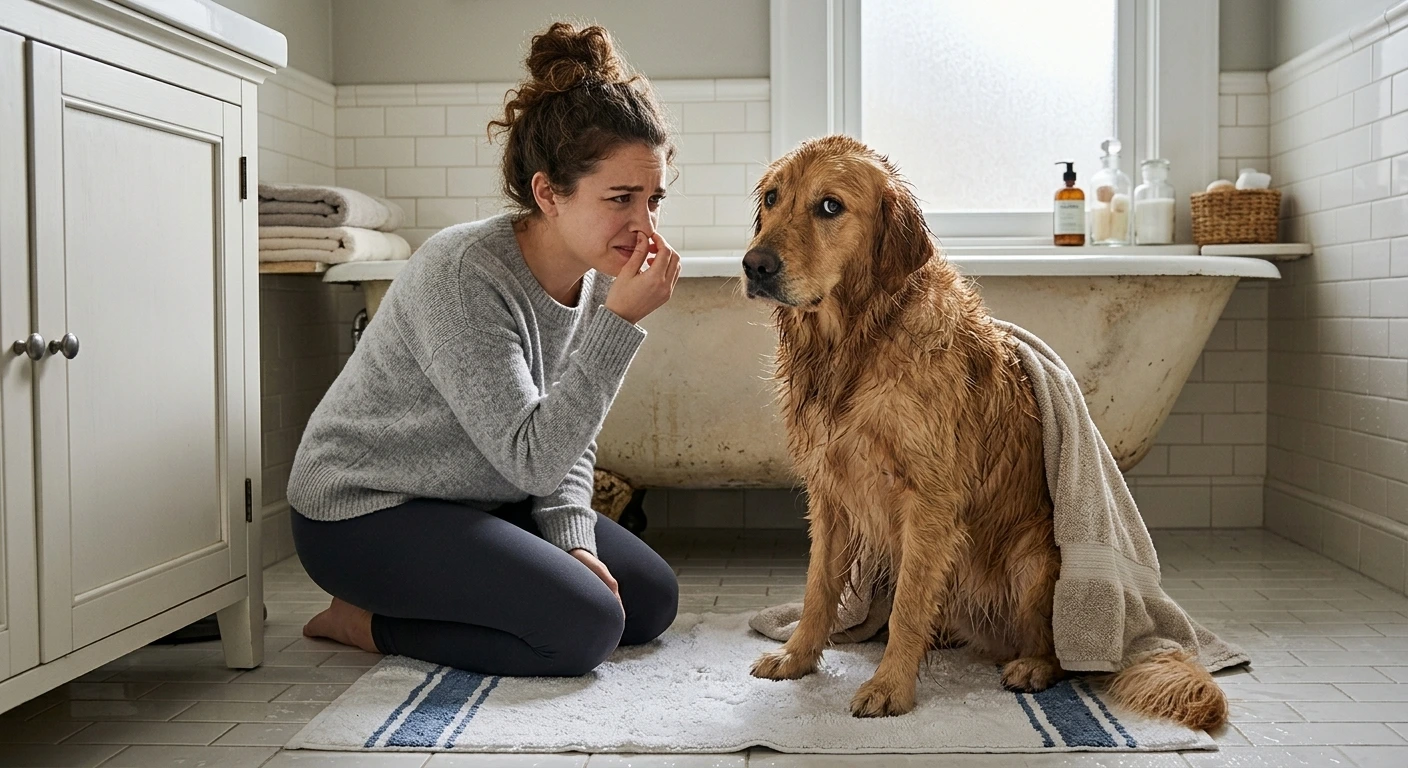
A well washed dog may not smell all that fresh, but the source isn’t on the coat. It may be due to the coat not being dry enough, leftover shampoo, skin yeast or bacteria, ear infection, dental disease or anal gland issues.
The wet-dog smell is normal and will vanish when the coat is dry. If the smell persists after your dog is dry, returns within a day, or is accompanied by itching, redness, discharge, scooting, or bad breath, find the cause rather than re-bathing.
Is wet dog smell after a bath normal?
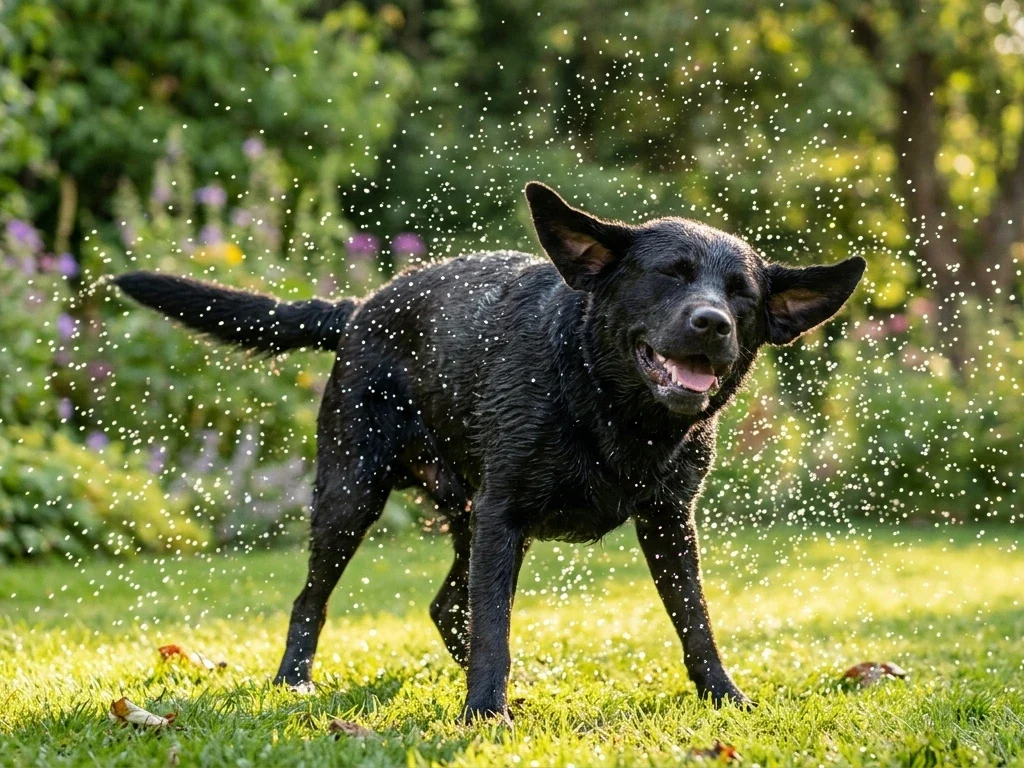
Yes, for a few minutes. Most dog skin and coat naturally hosts bacteria and yeast and, when it gets wet, moisture opens up the coat and allows the compounds that create the “wet dog smell” to be released into the air.
That smell should become much less noticeable after the coat is fully dry. If your dog smells fine when dry, but smells worse when wet, this typically is not a medical issue.
It may start that the smell is still there after drying, or comes right back or is extremely strong. At that point, the bath may not be working for the origin of the smell.
First, find where the smell is coming from
Before buying a stronger shampoo or giving another bath, check different parts of your dog separately. A smell concentrated in one area often points to a specific cause.
| Where you notice the smell | What it may suggest | What to check next |
|---|---|---|
| Whole coat | Damp undercoat, shampoo residue, or a skin condition | Check whether the coat is dry close to the skin |
| Head or ears | Ear infection, wax buildup, or trapped moisture | Look for discharge, redness, odor, or head shaking |
| Mouth | Dental disease, diet, or an internal health issue | Check breath, drooling, gums, and eating habits |
| Rear end | Anal gland problem | Watch for scooting, licking, swelling, or a fishy smell |
| Paws | Yeast, moisture, or outdoor contamination | Check between the toes and paw pads |
| Skin folds | Trapped moisture, yeast, or bacterial infection | Check the face, neck, armpits, and groin |
| Smell returns after lying down | Bedding, collar, harness, or towels | Wash or replace fabric items |
This check does not diagnose your dog. It helps you decide whether the issue is likely a grooming problem or something that needs veterinary attention.
Bath mistakes that can leave odor behind
Your dog was not dried completely
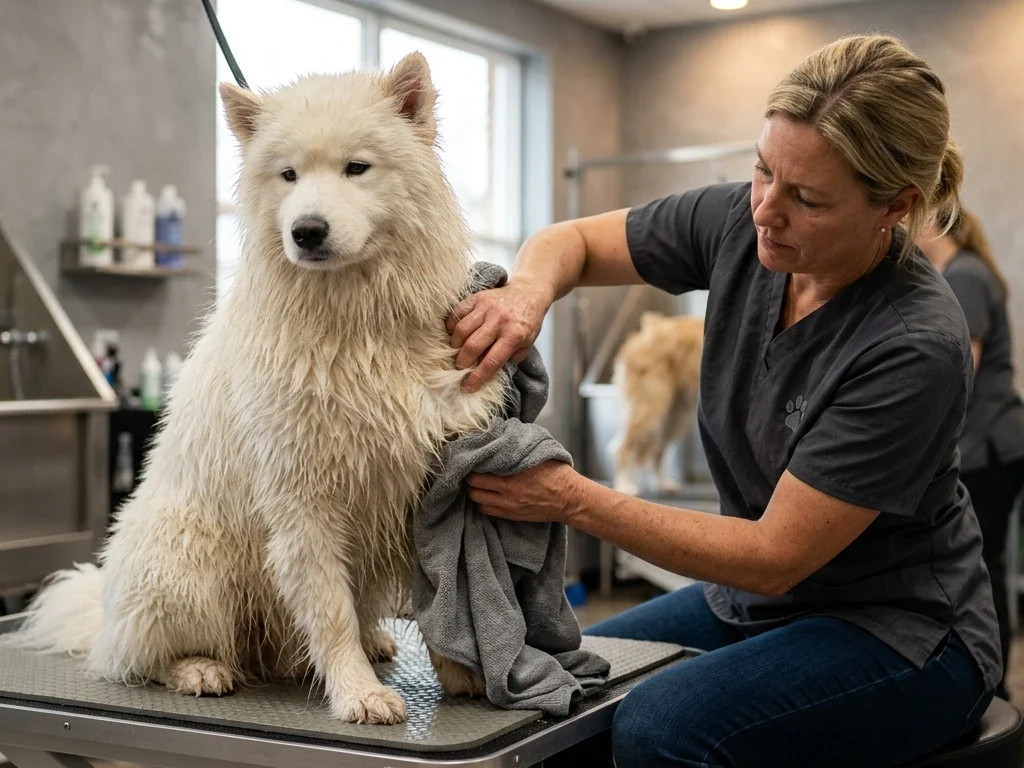
The most prevalent problem following a bath is moisture being trapped against the skin. The face coat may be very dry and the undercoat belly groin, paws, underarms, or all areas underneath floppy ears are still damp.
The wet fur can intensify the scent and there may be an environment that promotes yeast and bacteria growth. Often, this occurs in dogs with thick long curly, or double coats.
Allow your dog to dry by patting all over with a towel but avoid scrubbing aggressively. Your coat or towel should be absorbing water. Remember to do this in sections, mainly if your dog has thick hair, covering the underside groin feet, tail, and behind the ears.
If you have a dryer, use a cool/low setting and move it around. Do not hold hot air directly on your pet’s skin.
Shampoo or conditioner was not rinsed out
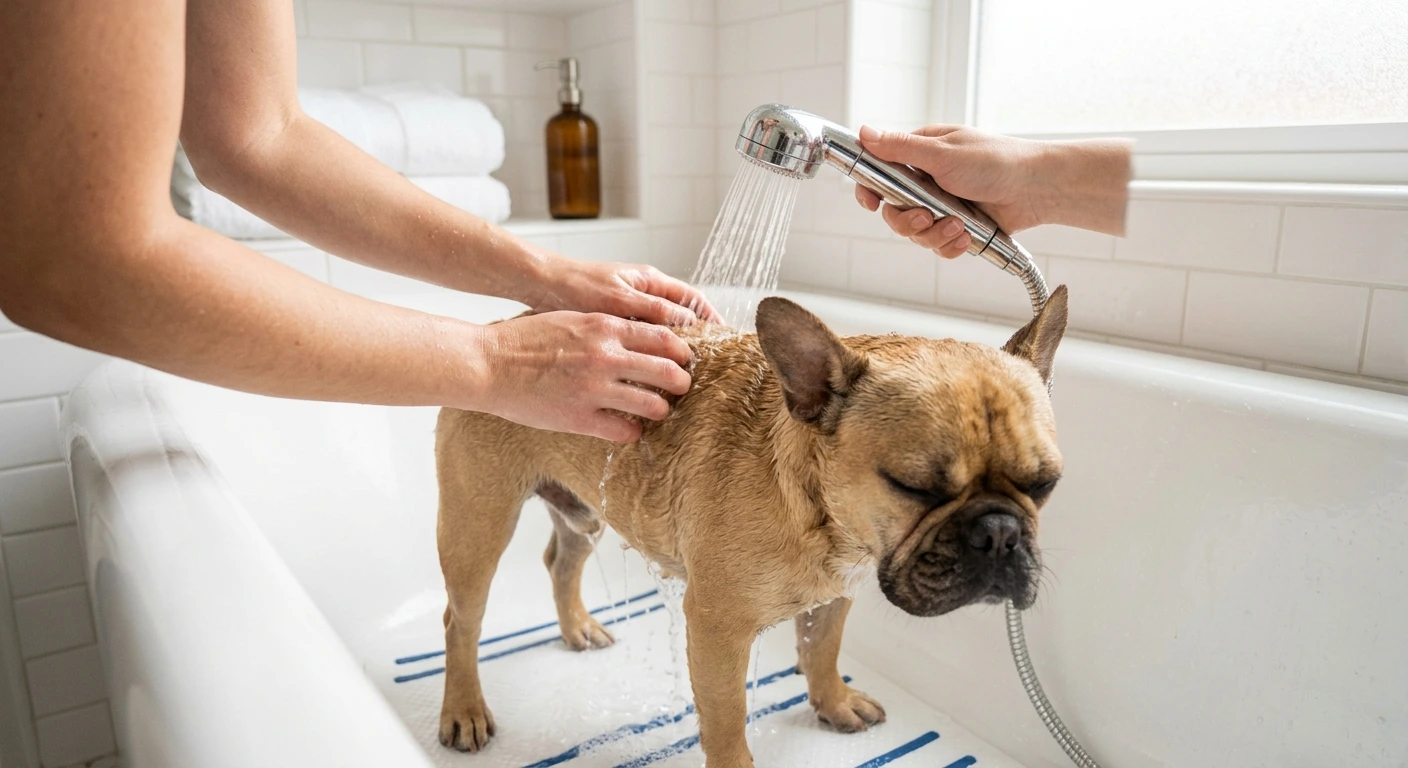
Residual shampoo may be left on the skin, most of all in thick coats. It can cause the coat to feel slick or coated, and it can bring irritation or a stale smell.
Use more rinses than you think you need. After you’ve rinsed, put your fingers in several places in the coat. If it still feels oiled or product-y, you need more rinses.
It is not to come out with a strong scent. It is to wash away dirty oils, debris, dirt, and shampoo residue.
You used the wrong shampoo
Human shampoo, dish soap and fragranced products can upset your pup’s skin barrier and remove their oils. This could cause their skin to become more irritated, or it could cause their skin to become more dry.
Choose a dog shampoo if your dog is itchy, has greasy skin, flaking, or if he has a history of allergies, consult your veterinarian for the best choice of dog shampoo.
Avoid changing shampoos every time the scent reappears. A product can assist with normal grooming, but it cannot treat an untreated infection or allergy.
Your dog is picking up odor from bedding and accessories
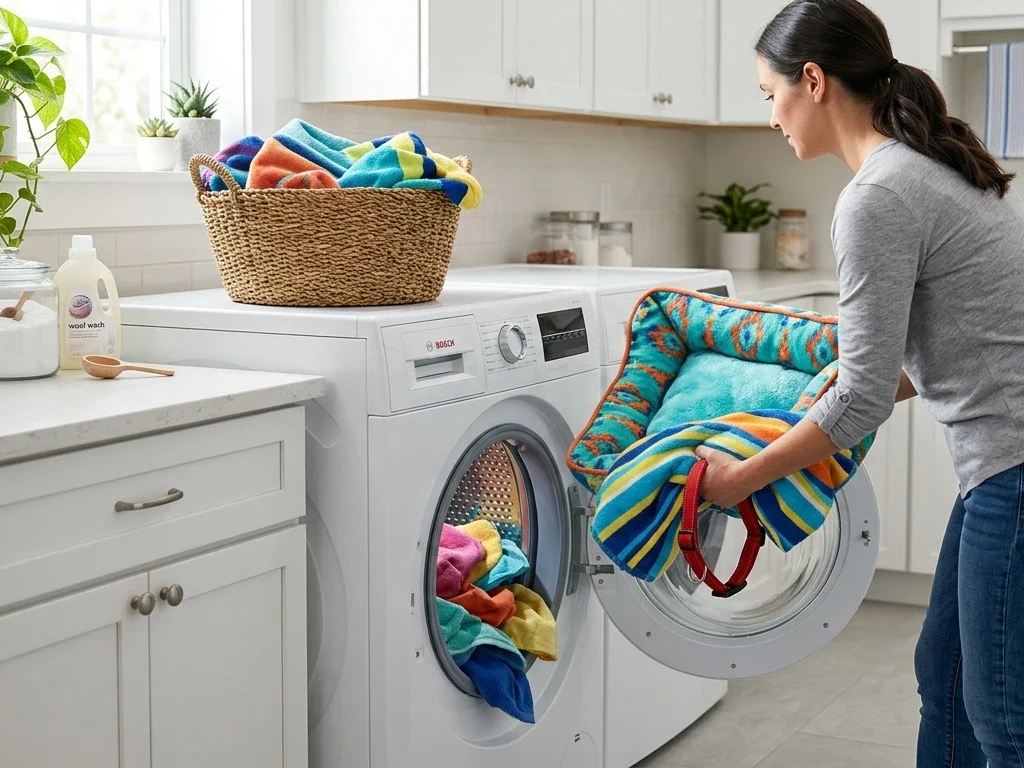
Occasionally, the dog smells fresh and the odor recurs as soon as they come out of the bath because the odor is lingering on the collar harness bed blanket crate mat, towel, or fabric toy.
Wash or replace the most frequently used items like bedding, and collars. Choose a pet safe detergent. Avoid using strong fabric softeners or perfumed detergents.
Medical reasons your dog may still smell
Yeast or bacterial skin infection
Yeast and bacteria yeast and bacteria will naturally grow on your dog’s skin. But when the skin is compromised or unhealthy, they can overgrow and lead to a musty, sour, or even “corn chip” smell.
Common signs may include itching licking redness, greasy fur flakes thickened skin, hair loss, or frequent paw chewing. Yeast commonly affects the ears paws skin folds, armpits, neck, and groin.
A bath can temporarily remove surface odor, but will not address an infection. Your veterinarian may advise testing and treatment with medicated shampoo, a topical medication or oral medication.
Ear infection
For odors most intense at or near the head/ears, ears may be contributing. Many ear infections are caused by yeast bacteria allergy, moisture, or debris.
Watch for head shaking, ear scratching redness swelling discharge smell or tenderness when you touch the ear. It can be easier for ear infections to develop in floppy-eared dogs.
Avoid deep insertion of cotton swabs in the ear canal. Do not place vinegar alcohol peroxide, or home remedies in the ear. Consult a veterinarian if the ear appears inflamed, painful, or has an abnormal discharge.
Dental disease and bad breath
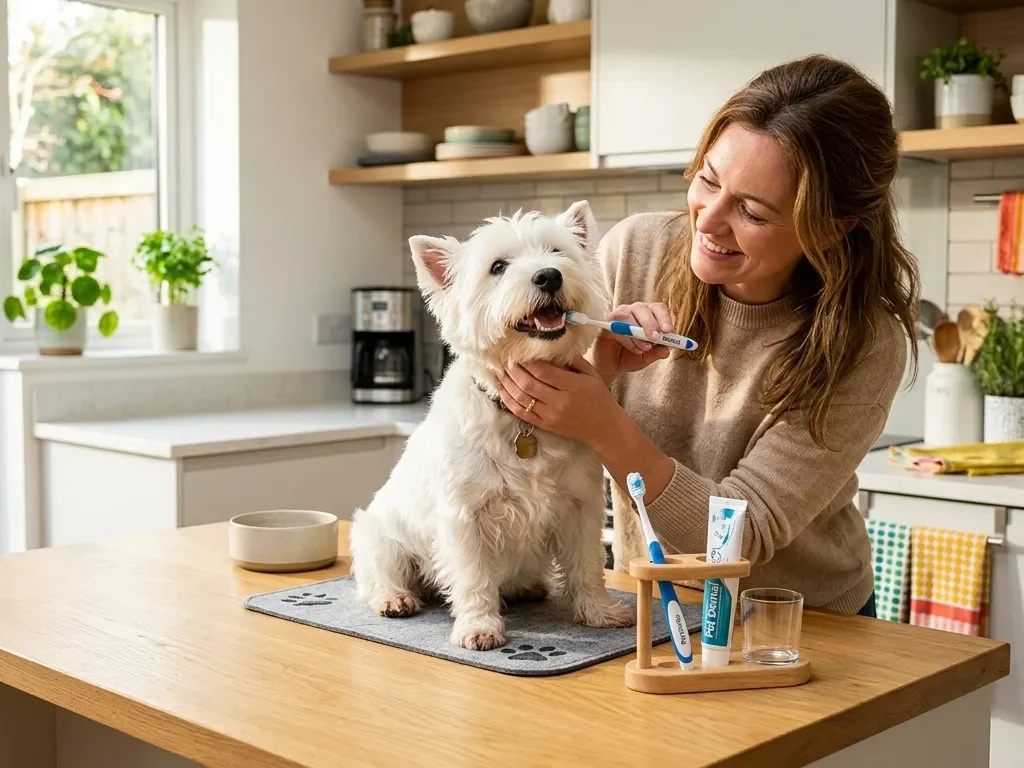
Sometimes “dog smell” is actually bad breath. Dental disease, plaque, tartar, infected gums, or an oral problem can create a persistent unpleasant odor that bathing cannot fix.
Other signs include drooling, red or bleeding gums, difficulty chewing, dropping food, pawing at the mouth, loose teeth, or heavy tartar.
Regular tooth brushing with dog-safe toothpaste and veterinary dental checks can help. If your dog’s breath is suddenly very foul, sweet, fruity, or urine-like, contact your veterinarian promptly.
Anal gland problems
A strong fishy smell near the rear often points to the anal glands, also called anal sacs. These glands normally release a small amount of fluid during bowel movements.
When they become full, irritated, or impacted, the odor can be intense. Your dog may scoot across the floor, lick or bite at the rear, sit uncomfortably, or show swelling near the anus.
A bath cleans the outside of the body but cannot resolve an impacted or infected anal gland. Do not try to forcefully express anal glands at home without veterinary guidance.
Allergies and recurring skin irritation
Allergies can affect a dog’s skin rather than causing sneezing or watery eyes. Food, environmental allergens, fleas, or contact irritants may lead to itching, licking, redness, and secondary infections.
When a dog scratches or licks repeatedly, the skin barrier can become damaged. That makes it easier for yeast and bacteria to grow, which can create a sour or musty smell.
If odor returns soon after bathing and your dog is also itchy, ask your veterinarian about allergy evaluation and a long-term skin-care plan.
Digestive issues and gas
Sometimes the odor is coming from the rear rather than the coat. Diet changes, food intolerance, eating something unusual, intestinal parasites, or digestive upset can cause gas.
If gas is occasional and your dog seems well, it may not be urgent. If gas is frequent, severe, or comes with vomiting, diarrhea, appetite loss, or weight loss, schedule a veterinary visit.
Less common health causes
Unusual body or breath odor can occasionally be linked with systemic illness. Kidney disease, diabetes, liver problems, hormonal conditions, infections, and some tumors may change the way a dog smells.
These causes are less common, but they matter more when odor appears with weight loss, increased thirst, increased urination, low energy, vomiting, appetite changes, or obvious discomfort.
What different dog odors may mean
| Odor | Common location | Possible explanation | Recommended next step |
|---|---|---|---|
| Wet-dog or musty smell | Whole coat | Normal while damp, or incomplete drying | Dry completely and monitor |
| Corn-chip or yeasty smell | Paws, ears, folds | Possible yeast overgrowth | Veterinary evaluation if persistent |
| Sour or foul smell | Skin or ears | Possible bacterial infection or dermatitis | Veterinary examination |
| Fishy smell | Rear | Possible anal gland issue | Veterinary or groomer assessment |
| Strong bad breath | Mouth | Dental disease, diet, or illness | Veterinary dental check |
| Sweet or fruity breath | Mouth | Possible diabetes-related issue | Prompt veterinary advice |
| Urine-like breath | Mouth | Possible kidney-related issue | Prompt veterinary advice |
| Smell returns after resting | Bedding or collar | Dirty fabric items | Wash bedding and accessories |
Why bathing again may not fix the problem
Another bath is not always the answer. If the odor comes from an ear infection, dental disease, anal glands, allergies, or a skin infection, bathing will only provide temporary relief.
Frequent bathing can also dry the skin and disturb its natural protective oils. That may make itching, flaking, and odor worse in some dogs.
Instead of repeating the same bath routine, ask three questions:
- Is my dog completely dry, including the undercoat?
- Where exactly is the smell strongest?
- Are there other symptoms besides odor?
If the answer to the third question is yes, veterinary care is usually the better next step.
When to call the veterinarian
Contact your veterinarian if your dog still smells after a complete bath and thorough drying, especially if the odor returns quickly.
Seek veterinary advice if the smell comes with:
- Significant itching, licking, or chewing.
- Red, painful, greasy, flaky, or crusty skin.
- Hair loss or bald patches.
- Ear discharge, swelling, odor, or repeated head shaking.
- Scooting, licking the rear, or swelling near the anus.
- Bad breath, drooling, bleeding gums, or difficulty eating.
- Vomiting, diarrhea, appetite loss, weight loss, or low energy.
- A sudden sweet, fruity, or urine-like breath odor.
A persistent odor alone does not confirm an infection, but it is a useful signal that something deserves examination.
What a veterinarian may check
A veterinarian will usually start with a history and physical examination. They may ask when the odor began, how often it returns, what shampoo you use, and whether your dog has itching, ear problems, dental issues, or digestive symptoms.
Depending on the findings, they may check:
- Skin and coat condition.
- Ears for infection, debris, or inflammation.
- Mouth, teeth, and gums.
- Anal glands.
- Paws and skin folds.
- Skin samples or cytology.
- Ear swabs.
- Blood work or other tests if a systemic illness is suspected.
Treatment depends on the cause. It may include medicated bathing, topical or oral medication, allergy management, ear treatment, dental care, or anal gland treatment.
How to bathe a smelly dog properly
Use this routine for a healthy dog with ordinary coat odor. If your dog has irritated skin, open sores, ear discharge, or a suspected infection, ask your veterinarian before bathing.
- Brush out loose hair, tangles, and debris before the bath.
- Check the ears, mouth, paws, skin folds, and rear for odor clues.
- Use lukewarm water and a shampoo made for dogs.
- Lather thoroughly, including the belly, legs, paws, and tail.
- Rinse until the water runs clear and the coat no longer feels slippery.
- Blot the coat with an absorbent towel instead of rubbing harshly.
- Dry the coat completely, especially the undercoat, ears, paws, groin, and skin folds.
- Wash bedding, towels, collars, harnesses, and washable toys.
- Monitor the smell once your dog is completely dry.
- Contact your veterinarian if the odor returns quickly or comes with other symptoms.
How to prevent the smell from returning
Prevention works better than masking odor with perfume or frequent baths.
- Brush regularly to remove loose hair, debris, and dried saliva.
- Bathe at a frequency suited to your dog’s coat, activity level, and skin condition.
- Dry your dog completely after baths, swimming, rain, and muddy walks.
- Wipe paws after outdoor walks when needed.
- Keep ears dry unless your veterinarian has advised a specific cleaning routine.
- Brush your dog’s teeth regularly with dog-safe toothpaste.
- Wash bedding, collars, harnesses, towels, and washable toys.
- Schedule routine veterinary checkups.
- Treat itching, redness, or ear problems early instead of waiting for odor to worsen.
What not to do
Avoid these common mistakes:
- Do not use human shampoo, dish soap, bleach, vinegar, hydrogen peroxide, or borax on your dog.
- Do not put cotton swabs deep into the ear canal.
- Do not forcefully express anal glands at home.
- Do not use perfume, body spray, or heavily scented products to cover odor.
- Do not keep bathing repeatedly if the smell keeps returning.
- Do not assume a medicated shampoo will solve a problem that has not been diagnosed.
- Do not ignore odor that appears with pain, vomiting, appetite loss, or behavioral changes.
The bottom line
Your dog smells worse after a bath? You don’t necessarily need a stronger shampoo. Confirm that the coat is dry, the shampoo has been thoroughly rinsed, and that the odor originates from the ears, mouth, paws, body folds, or hind end.
A normal wet-dog smell should fade as your dog dries. If the odor is persistent or unusual, it’s a clue to a possible problem, not just a grooming issue. Finding the source and involving a veterinarian if needed will help your dog more than simply covering the smell with fragrance.
Frequently asked questions
Why does my dog smell bad even after a bath?
Your dog may still smell because the odor is coming from somewhere other than the coat. Common causes include incomplete drying, shampoo residue, yeast or bacterial skin problems, ear infections, dental disease, or anal gland issues.
Is wet dog smell after a bath normal?
Yes, temporarily. A wet coat can release odor-causing compounds from naturally occurring skin microbes. The smell should fade as the coat dries completely.
How long should wet dog smell last after a bath?
Wet-dog odor should usually fade within a few hours as the coat dries. If it lasts more than a day, returns quickly, or remains after the coat is fully dry, look for another cause.
Why does my dog smell like corn chips?
A corn-chip, musty, or yeasty smell is often associated with yeast on the skin, especially around the paws, ears, or skin folds. If it is persistent or comes with itching or redness, have your veterinarian check it.
Why does my dog smell like fish after a bath?
A fishy smell near the rear is often related to anal glands. Bathing cannot resolve an impacted or infected anal gland, so veterinary assessment is recommended if the odor is strong or your dog is scooting.
Can an ear infection make my dog smell bad?
Yes. Ear infections can cause a strong musty, sour, or cheesy odor. Other signs include head shaking, scratching, redness, swelling, or discharge.
Can dental disease cause dog odor?
Yes. Dental disease and oral infections can cause persistent bad breath that may be mistaken for body odor. A veterinary dental examination can identify the cause.
Can I use human shampoo on my dog?
No. Human shampoo is not formulated for canine skin and may disrupt the skin barrier. Use a dog-specific shampoo, especially if your dog has sensitive or itchy skin.
How often should I bathe a smelly dog?
It depends on your dog’s coat, lifestyle, and skin health. Many healthy dogs do well with occasional baths, but dogs with certain skin conditions may need a different schedule. Ask your veterinarian rather than increasing baths on your own.
When should I take my smelly dog to the vet?
Take your dog to the vet if the smell persists after thorough bathing and drying, returns quickly, or occurs with itching, discharge, scooting, pain, bad breath, vomiting, appetite changes, or low energy.
