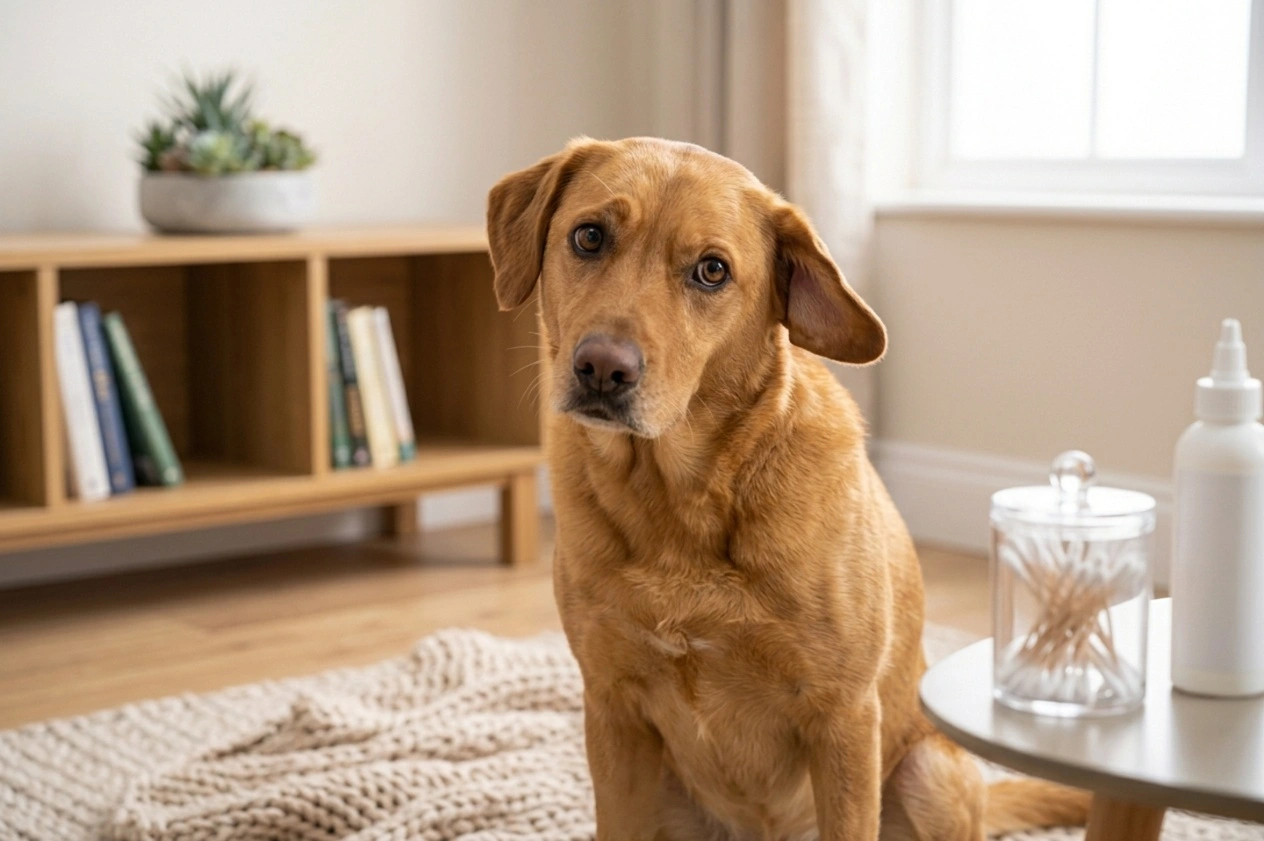
If your dog is scratching one ear, shaking its head, or developing an unpleasant smell, it is natural to search for a dog ear infection home remedy you can try immediately. Gentle home care can sometimes help with minor irritation, trapped moisture, or routine ear hygiene. But an active ear infection is not something you can reliably diagnose or cure with a kitchen ingredient.
Bacteria, yeast, ear mites, allergies, and foreign objects can create similar symptoms, while the safest treatment is different for each cause. The wrong liquid can irritate an already painful ear, worsen inflammation, or cause serious problems if the eardrum is damaged. The safest approach is to use home care for support and prevention, while involving a veterinarian whenever infection is likely.
Is it irritation or an infection?
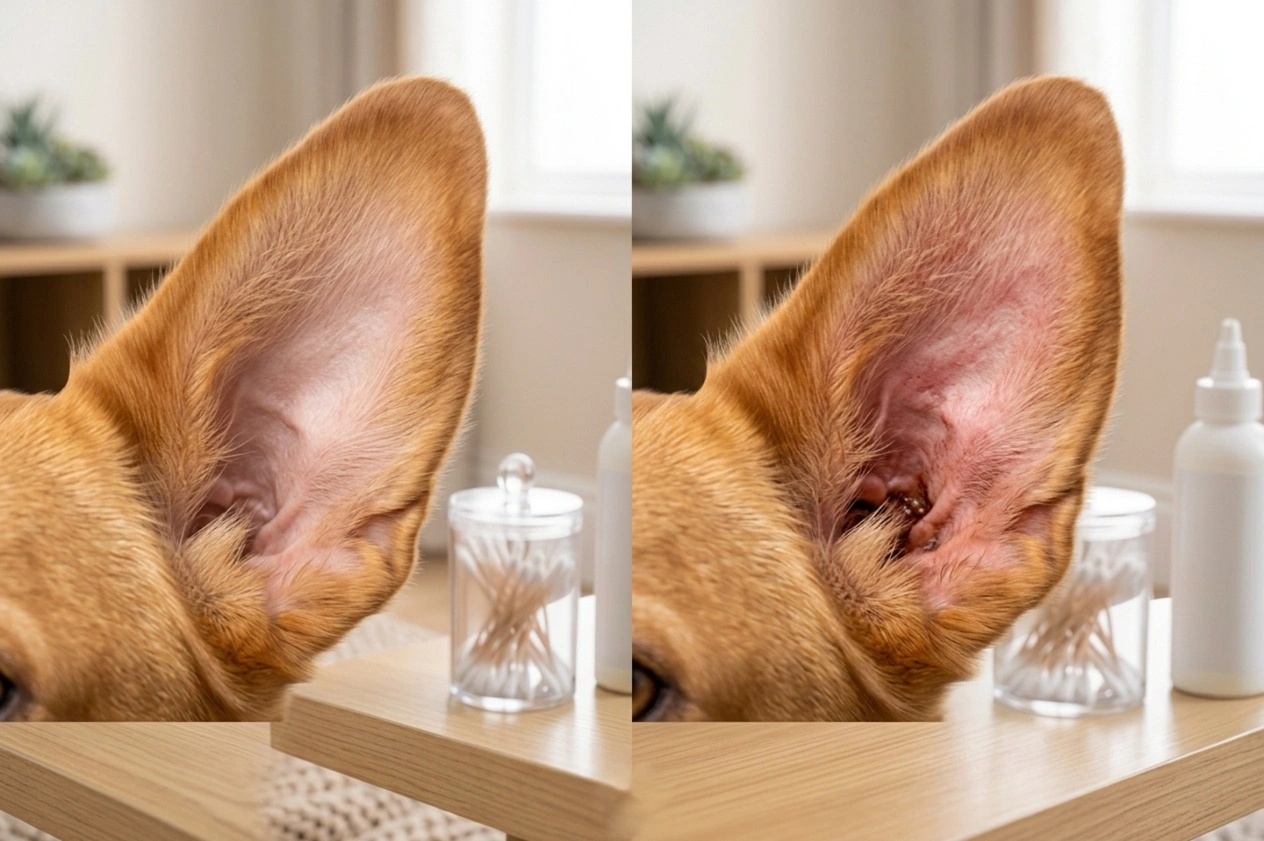
Healthy dog ears are generally clean, smooth, and free from a strong odor. A small amount of wax may be normal, but repeated scratching, frequent head shaking, redness, swelling, or unusual discharge suggests that something is wrong.
A mild irritation after swimming may improve when the outer ear is gently dried. An active infection is different. Dogs with an infection may have a strong or yeasty smell, brown or black debris, yellow or green discharge, painful ears, or skin that looks inflamed and raw.
It is also possible for a dog to have ear inflammation without a bacterial infection. Allergies, ear mites, trapped moisture, and foreign material can all produce similar signs. That is why looking at the discharge is not enough to decide whether the problem is yeast or bacteria.
Why do dogs get ear infections?
Most dog ear infections affect the outer ear canal, a condition veterinarians call otitis externa. The ear canal can become inflamed when yeast or bacteria multiply excessively. This often happens because another factor has changed the ear’s normal environment.
Moisture from swimming or bathing can create warmth that allows microorganisms to grow. Floppy ears and heavy hair around the ear opening may reduce airflow and trap debris. Allergies can inflame the skin and make the ear canal more vulnerable. Ear mites, a foreign object, or excessive cleaning can also start or worsen irritation.
Certain dogs are more prone to recurring ear problems, including Cocker Spaniels, Basset Hounds, Poodles, Bulldogs, and other breeds with floppy ears, narrow canals, or allergy tendencies. Breed may increase risk, but any dog can develop an ear infection.
Signs your dog may need treatment
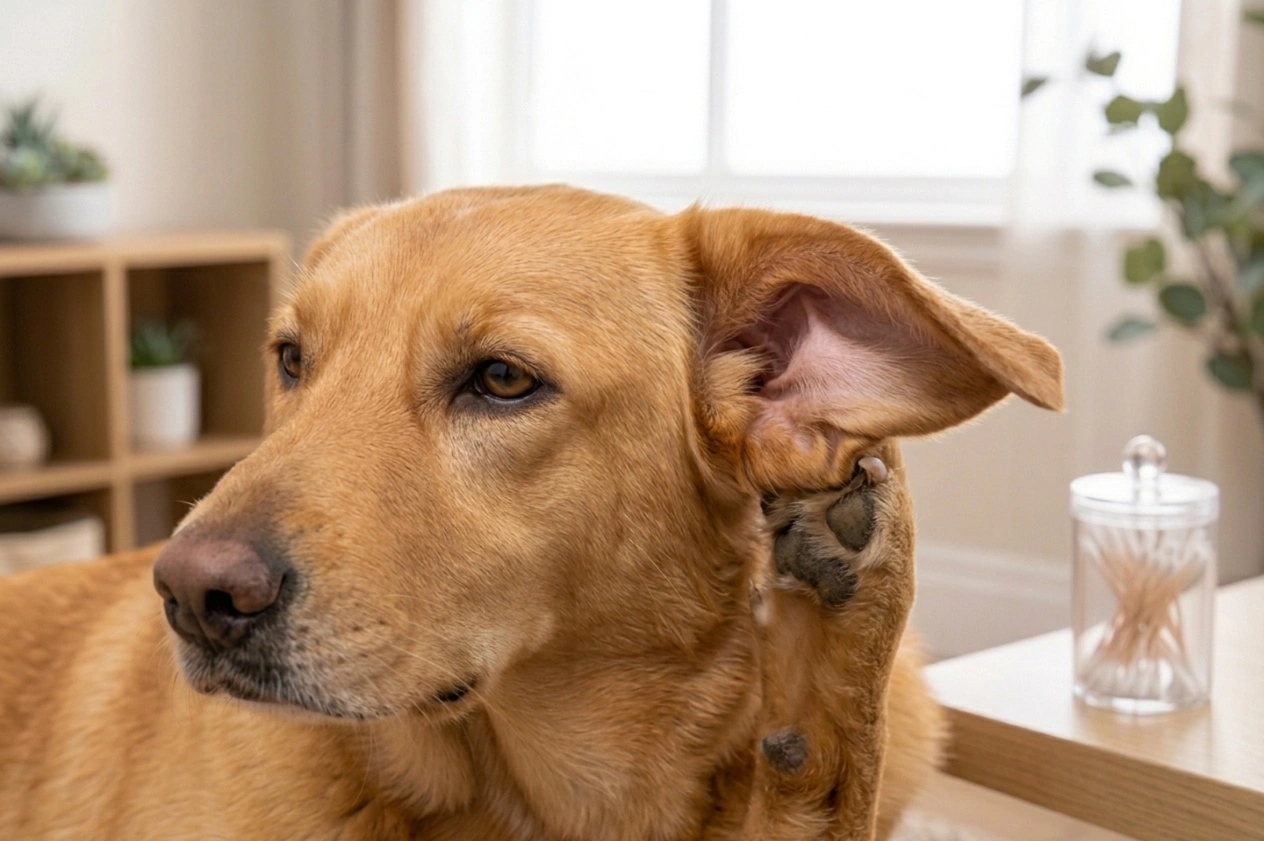
Your dog may have an ear problem if it repeatedly scratches or rubs the ear, shakes its head, holds one ear lower than usual, or pulls away when you touch the ear flap. A musty or foul odor is another common warning sign.
You may notice brown, black, yellow, green, or bloody discharge. The ear flap may become red, swollen, crusted, or warm. Some dogs lose fur around the ear because of constant scratching.
More serious signs include head tilting, stumbling, walking in circles, nausea, vomiting, reduced appetite, or difficulty hearing. These symptoms can suggest that inflammation has moved beyond the outer ear and needs prompt veterinary attention.
What home care is reasonably safe?
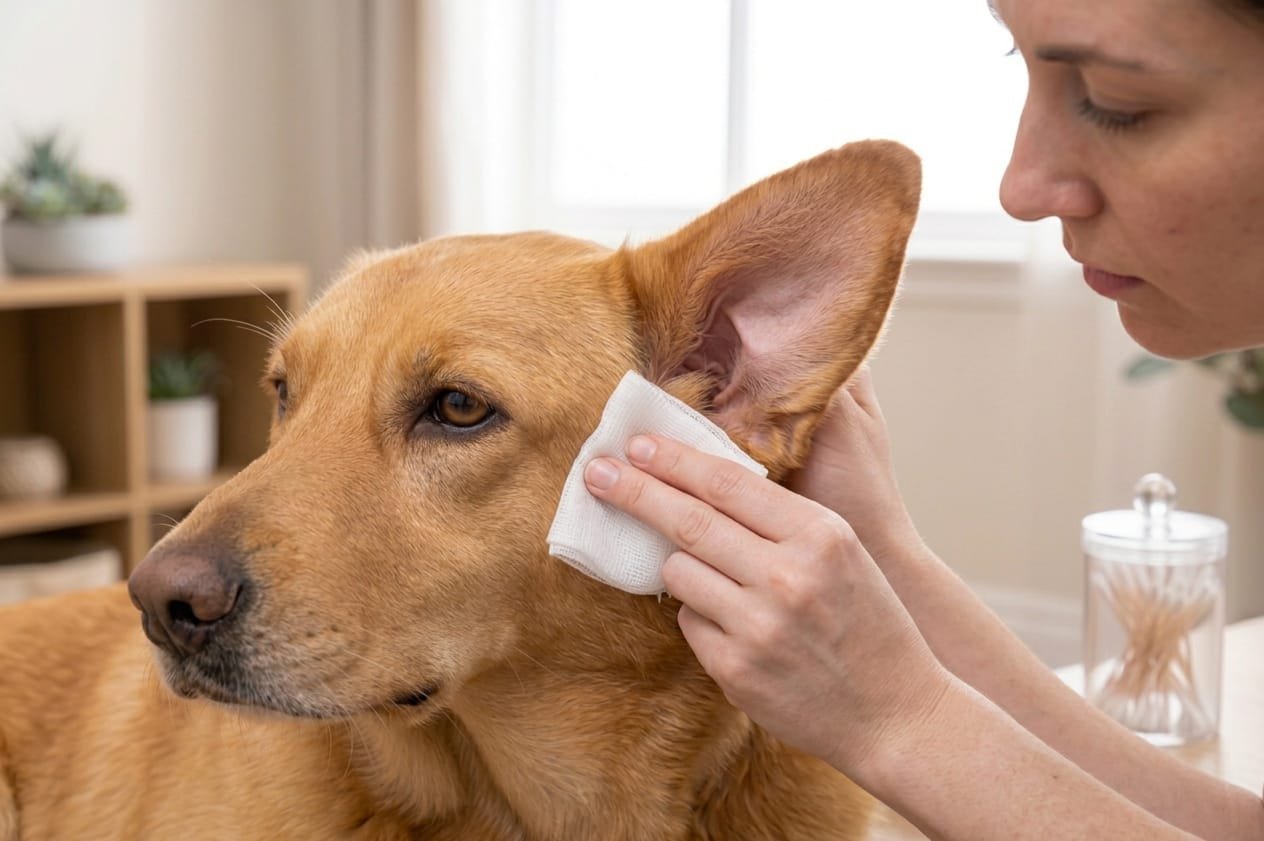
The safest home care depends on what your veterinarian has already diagnosed and recommended. If your dog has a history of mild irritation and your vet has confirmed that the eardrum is intact, a dog-specific, veterinarian-approved ear-cleaning solution may help remove wax and debris.
Lift the ear flap gently and follow the product instructions. The solution should be applied without force. Massage the base of the ear softly for around 20 to 30 seconds, then allow your dog to shake its head. This natural shaking can bring loosened debris toward the outer opening.
Use a cotton ball or a piece of gauze to wipe away only the material you can see. Do not push your finger deeply into the canal, and do not continue if your dog appears painful or frightened. Ear cleaning should feel like gentle maintenance, not a struggle.
If your dog has just been swimming or bathed, gently dry the outer ear with a clean towel. A low, cool airflow may help with surface moisture, but never use hot air or force air deep into the canal. Drying is useful for prevention, not a cure for an established infection.
What should never go in the ear?
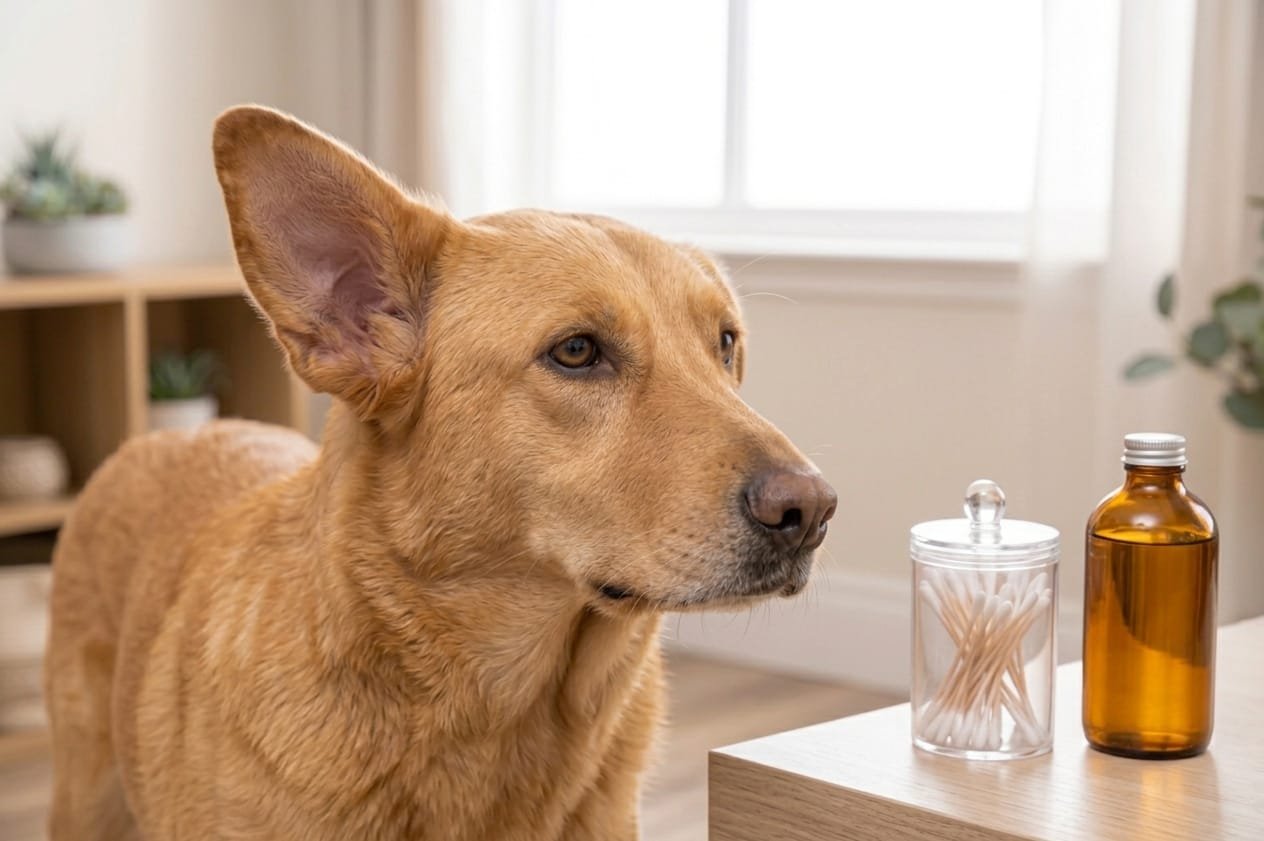
Hydrogen peroxide and rubbing alcohol are commonly suggested online, but they can irritate the delicate lining of the ear canal. They may sting broken skin, disrupt healthy tissue, and make inflammation worse.
Apple cider vinegar is another popular suggestion. Even when diluted, it can burn or sting raw, inflamed tissue. You also cannot confirm at home whether the eardrum is intact, so pouring an acidic solution into the canal creates unnecessary risk.
Essential oils, including tea tree oil and oregano oil, should not be placed in your dog’s ear. Some essential oils can be toxic to dogs, particularly when concentrated or used near the face. Coconut oil, olive oil, herbal tinctures, CBD products, silver solutions, and homemade rinses may also irritate the ear or trap moisture. “Natural” does not automatically mean safe.
Never use human ear drops unless a veterinarian specifically tells you to. Human products are formulated for human ears and may contain ingredients that are unsuitable for dogs. Cotton swabs are also unsafe because they can push debris deeper, pack discharge against the eardrum, or injure the canal if your dog moves suddenly.
Why home remedies often fail
The main problem with a homemade remedy is not only that it may be weak. It may also treat the wrong problem.
A yeast infection, bacterial infection, ear mite infestation, allergy, and foreign body can look similar from the outside. A remedy that reduces odor for a short time may create the impression that the ear is healing while the underlying inflammation continues.
Recurring infections are especially unlikely to be solved by repeated cleaning alone. If the same ear keeps flaring up, your dog may have an allergy, hormonal problem, narrow ear canal, chronic skin disease, or another trigger that needs investigation. In older dogs, hormonal and other health changes can also make ear problems return more often
Untreated inflammation can make the ear canal thicker and narrower. In advanced cases, infection may spread toward the middle or inner ear, affecting hearing and balance. A home remedy should never delay treatment when the ear is painful, swollen, or producing abnormal discharge.
When should you see a veterinarian?
Arrange a veterinary appointment if your dog has a strong odor, visible redness, swelling, dark or unusual discharge, or pain when the ear is touched. These signs are more consistent with an infection or significant inflammation than simple moisture.
Do not try home treatment if the ear is raw, bleeding, severely swollen, blocked by discharge, or too painful to handle. A head tilt, loss of balance, stumbling, circling, vomiting, or sudden hearing change deserves prompt attention.
You should also contact your veterinarian when symptoms do not begin to improve within 48 to 72 hours of gentle supportive care, or when the problem repeatedly returns. A dog that appears lethargic, stops eating, or behaves unusually should be examined rather than monitored at home.
How a veterinarian finds the cause
A veterinarian may examine the ear with an otoscope to look down the canal and assess the eardrum. This is important because some ear cleaners and medications are not safe if the eardrum is ruptured.
A sample of the ear discharge may be examined under a microscope. Cytology can help identify yeast, bacteria, inflammatory cells, or other clues. If mites, a foreign body, or a deeper infection is suspected, additional testing may be needed.
Treatment may include a prescription ear medication aimed at bacteria, yeast, inflammation, or parasites. Severe pain, heavy debris, or a blocked canal may make sedation necessary for a safe examination and thorough cleaning. Treating an underlying allergy or other medical condition is often essential when infections keep returning.
Preventing future ear problems
Once an active infection has been treated, prevention becomes more useful than searching for another emergency remedy. Check your dog’s ears regularly, especially after swimming, bathing, or outdoor activities. Look for changes in odor, redness, discharge, or sensitivity.
Keep the outer ears dry and ask your veterinarian how often cleaning is appropriate. Healthy ears do not always need frequent cleaning, and over-cleaning can itself cause irritation. Dogs with floppy ears, allergies, heavy ear hair, or a history of infections may need an individualized routine.
If your dog has recurring infections, discuss allergies with your veterinarian. Food allergies, environmental allergens, and chronic skin inflammation are common reasons that ear problems return. Changing the diet randomly may not identify the trigger; a supervised diet trial is more reliable.
Keep grooming gentle. If hair around the ear opening traps moisture, ask a professional about safe trimming rather than aggressively plucking hair from the canal.
Home care at a glance
| Situation | Safer response | Avoid |
| Mild surface moisture after bathing | Dry the outer ear gently | Hot air or forceful airflow |
| Routine cleaning recommended by your vet | Use a dog-specific ear cleaner and gauze | Cotton swabs or deep probing |
| Strong odor or unusual discharge | Arrange a veterinary examination | Homemade vinegar or peroxide mixtures |
| Pain, swelling, or raw skin | Stop home treatment and contact a vet | Oils, alcohol, and essential oils |
| Repeated infections | Investigate allergies or other causes | Treating every flare-up the same way |
| Head tilt or balance problems | Seek prompt veterinary care | Waiting to see if a remedy works |
The safest takeaway
A dog ear infection home remedy should never be treated as a substitute for diagnosis. Gentle drying, vet approved cleaning, and careful monitoring can support ear health, especially after water exposure or after your veterinarian has confirmed a suitable routine.
Avoid hydrogen peroxide, alcohol, essential oils, vinegar, human ear drops, cotton swabs, and random kitchen mixtures. If your dog has pain, odor, discharge, swelling, head tilt, balance changes, or recurring symptoms, arrange a veterinary examination promptly.
The most effective treatment is the one matched to what is actually affecting the ear. Once the cause is identified and treated, prevention becomes much easier and your dog is far less likely to face the same painful problem again.
Frequently asked questions
Can I treat my dog’s ear infection at home without a vet?
You may be able to provide supportive care for mild irritation or clean the ears with a veterinarian-approved product if your vet has shown you how. A true infection often needs diagnosis and prescription treatment, particularly when there is pain, odor, discharge, or swelling.
Is apple cider vinegar safe for a dog’s ear infection?
It is not a reliable treatment and may sting inflamed or broken skin. Because you cannot confirm the condition of the eardrum at home, it is safer not to put vinegar into a suspected infected ear without veterinary advice.
Can I use hydrogen peroxide in my dog’s ear?
Hydrogen peroxide can irritate the sensitive lining of the ear canal and worsen inflammation. Veterinary focused guidance recommends avoiding it, especially when infection or damaged skin is possible.
How can I clean my dog’s ears safely?
Use a veterinarian approved ear cleaner, gently massage the base of the ear, allow your dog to shake its head, and wipe visible debris with cotton balls or gauze. Stop if your dog shows pain, and never use cotton swabs inside the canal.
How long does a dog ear infection take to heal?
Mild problems may begin improving within a few days after appropriate treatment, but more significant infections can take several weeks. If there is no clear improvement within a few days or symptoms worsen, your dog needs veterinary reassessment.
Why does my dog keep getting ear infections?
Recurring infections are often linked to allergies, moisture, ear structure, parasites, hormonal disease, or chronic skin inflammation. Repeated home cleaning may remove debris temporarily without correcting the cause.
