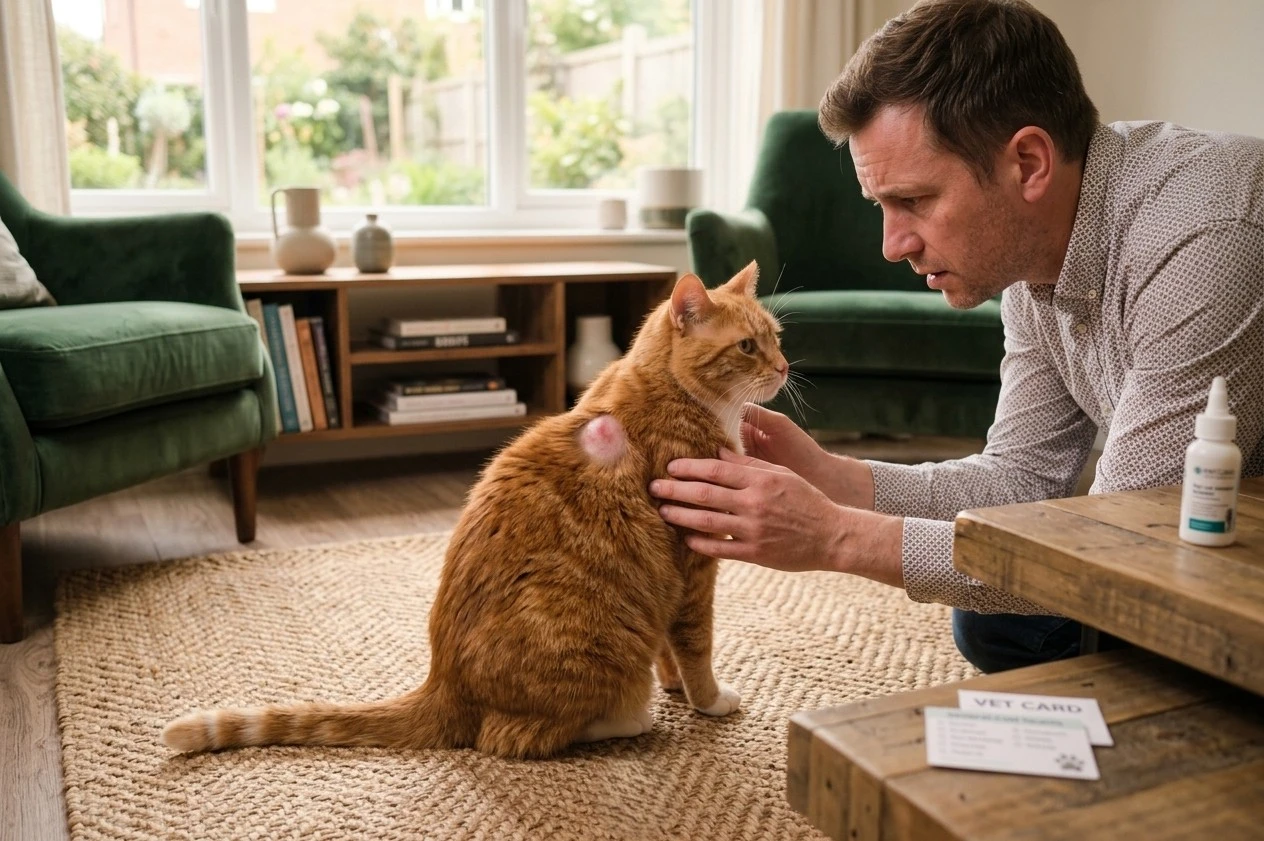
If you’ve noticed your cat losing hair or even just your cat losing fur more than the usual amount . It’s natural to feel concerned.
Cats are known for their sleek, shiny coats, so noticing thinning fur or bald patches can be worrying. Hair loss in cats is different from normal shedding and often signals an underlying issue that needs attention. Common causes include parasites, allergies, overgrooming from stress or pain, infections, and medical conditions.
The location of hair loss, the appearance of the skin, and your cat’s grooming behavior can help narrow down the cause. However, accurate diagnosis usually requires a veterinary examination, because many causes look similar on the surface. This article explains what normal shedding looks like, what real hair loss looks like, the most common causes, and when to seek professional care.
Normal shedding or real hair loss?
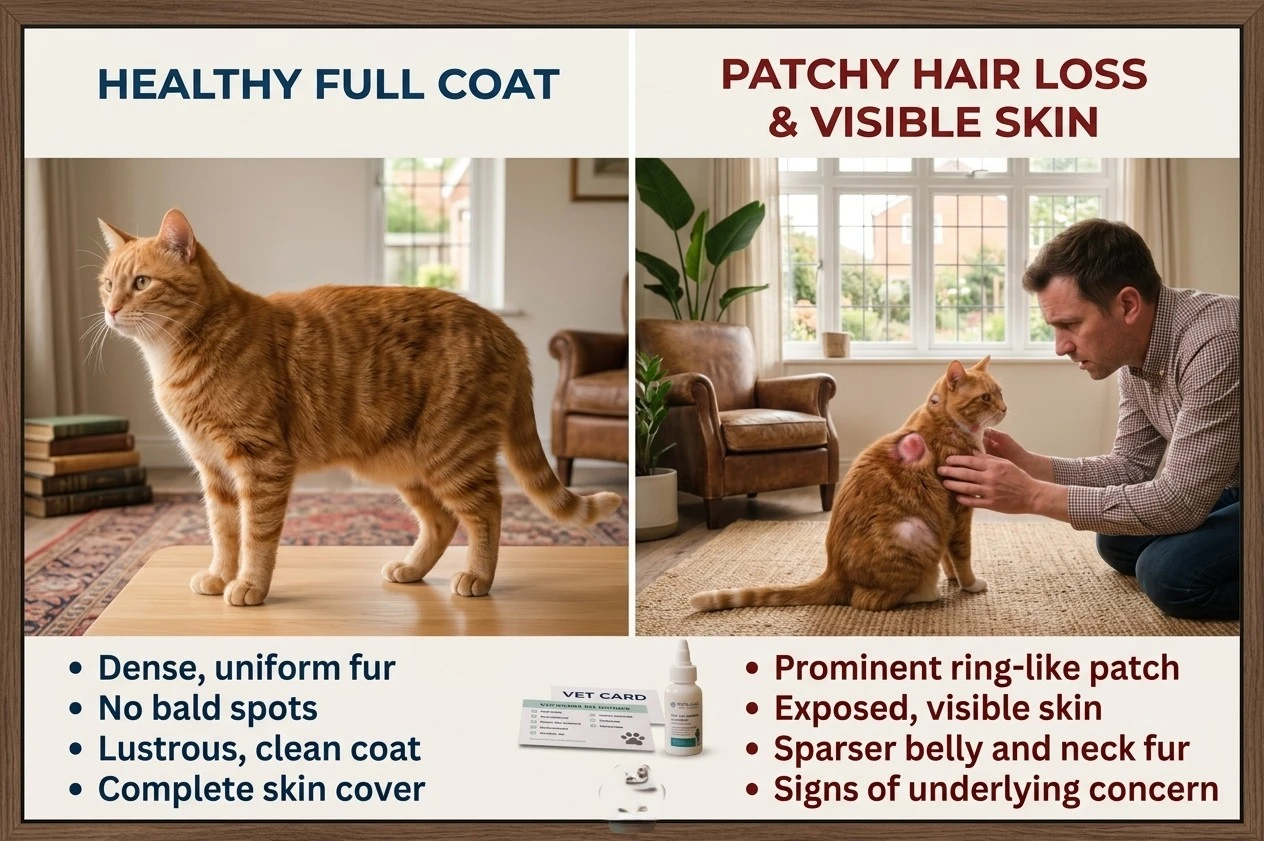
All cats shed fur as part of their natural coat cycle. Indoor cats often shed year-round, while outdoor cats may shed more seasonally. With normal shedding, fur collects on furniture, clothing, or your hands when you pet your cat, but the coat still looks full and even. The skin underneath appears healthy, without redness, scabs, or bald patches.
Hair loss, also called alopecia, looks different. Signs that suggest a problem include visible bald spots, areas where the skin can be seen, fur that feels thinner or uneven, and skin that looks red, scaly, greasy, or irritated. Behavior changes such as excessive licking, scratching, or chewing at one area are also important clues. Shedding alone does not usually cause bald patches or changes in skin texture.
What does cat hair loss look like?
Hair loss in cats can appear in several patterns. Some cats develop a bald patch on cat skin that looks like small, round spots, while others show widespread cat hair loss patches across multiple areas of the body. The skin in the affected area may look normal, red, inflamed, scaly, crusty, or wounded. In some cases, the fur is not completely missing but broken, giving the coat a rough or patchy appearance.
Cats that overgroom may create smooth, symmetrical bald areas on the belly, inner thighs, or along the sides. Parasites and allergies often cause hair loss along the back, tail base, neck, or ears. Fungal infections such as ringworm frequently create circular patches with scaly edges. Hormonal or metabolic conditions may cause more generalized thinning rather than distinct bald spots.
Noticing the pattern helps your veterinarian narrow down the cause, but it does not replace a proper exam.
Common causes of hair loss in cats
1) Fleas and flea allergy dermatitis
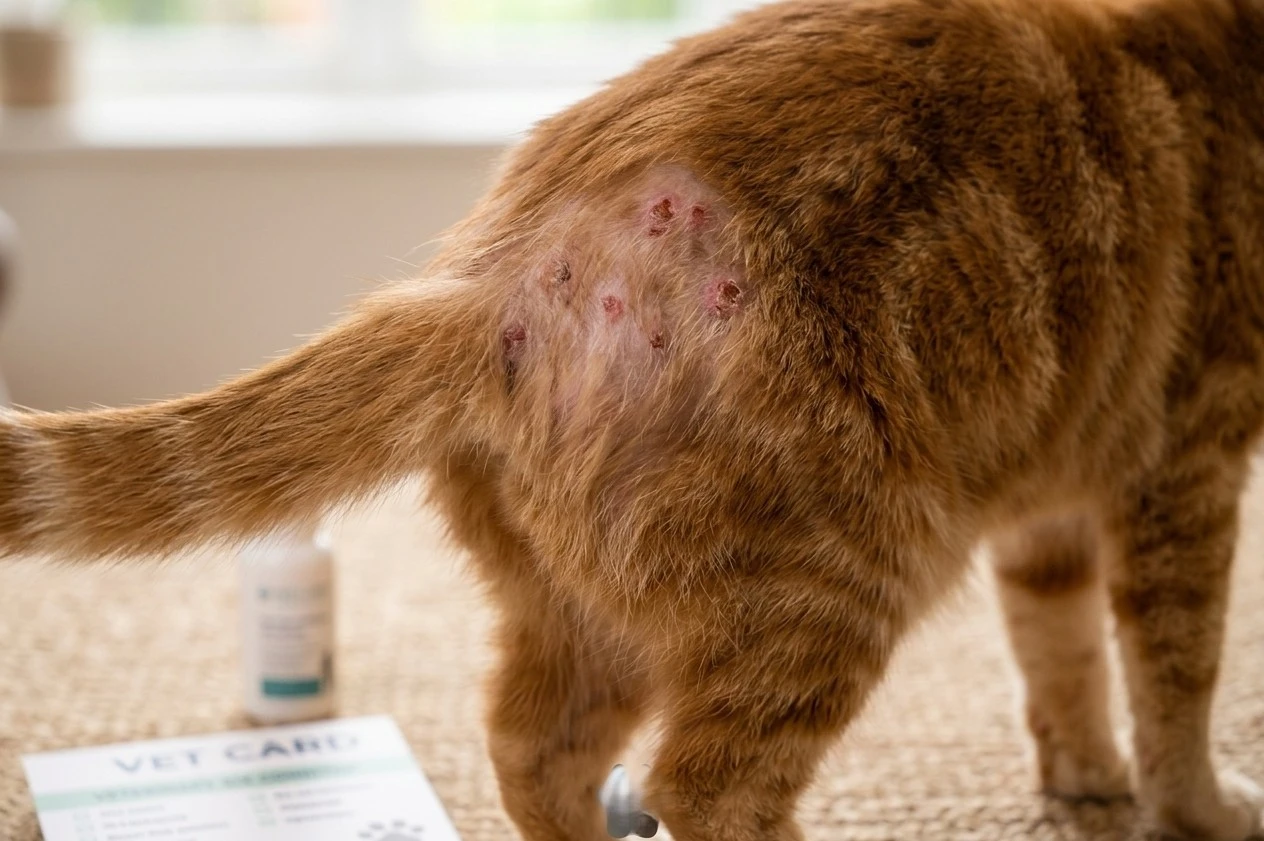
Fleas are one of the most common causes of hair loss in cats, even when you never see a flea. Some cats are extremely sensitive to flea saliva, and a single bite can trigger intense itching. This condition is called flea allergy dermatitis.
Affected cats may lick, scratch, or chew their fur so much that bald patches develop. Hair loss is often seen around the lower back, tail base, neck, and thighs. Small black specks that turn reddish when wet may be visible on the skin. Because cats groom so efficiently, fleas may be hard to find, but the allergy reaction continues long after the bite.
Year-round veterinary-approved flea prevention is essential, even for indoor cats, because flea eggs can survive in the environment and be brought inside on clothing or other pets.
2) Mites and other parasites
Beyond fleas, other parasites such as ear mites, harvest mites, and mange mites can irritate the skin and cause hair loss. Mites may burrow into the skin or live in the ear canal, leading to intense itching, redness, and scaly patches.
Diagnosis often requires skin scrapings or ear swabs examined under a microscope. Treatment depends on the specific parasite identified and may include prescription medications for the cat and environmental control to prevent reinfestation.
3) Ringworm and fungal infection
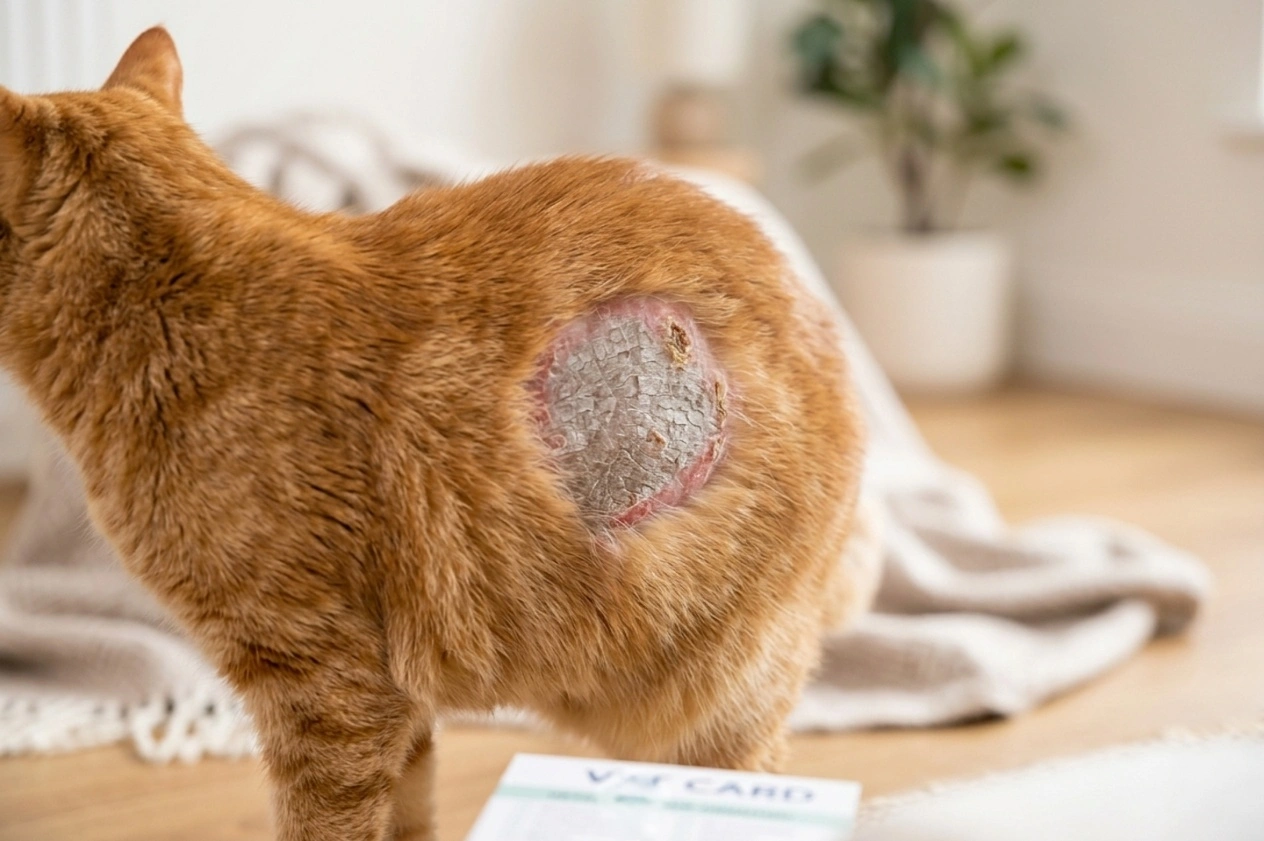
Ringworm is not a worm but a fungal infection that affects the skin, hair, and claws. It commonly causes circular patches of hair loss with scaly or crusty skin and sometimes red edges. The infection can spread to other pets and to humans, especially in households with young children or immunocompromised individuals.
Veterinarians diagnose ringworm using fungal testing and treat it with antifungal medications until the infection clears. Environmental cleaning is important to prevent recurrence. Because ringworm is contagious, suspected cases should be evaluated promptly.
4) Food and environmental allergies
Cats can develop allergies to food ingredients, pollen, dust mites, mold, cleaning products, or other environmental factors. Allergic reactions cause itchy, inflamed skin, which leads to scratching, licking, and eventually hair loss.
Food allergies may involve specific proteins or additives and can cause itching focused on the belly, legs, face, or ears, sometimes with digestive signs such as vomiting or diarrhea. Environmental allergies may follow a seasonal pattern or persist year-round depending on the trigger.
Diagnosis can be challenging. Food allergies often require a supervised elimination diet trial, while environmental allergies may be diagnosed by ruling out other causes or through specialized testing. Treatment focuses on reducing exposure to known allergens, supporting skin health, and managing symptoms under veterinary guidance.
5) Overgrooming from stress
Cats often use grooming as a self-soothing behavior. When stressed, some cats lick repeatedly, especially on the belly, legs, or sides. This is sometimes called psychogenic alopecia or stress-related overgrooming.
Common stressors include changes in routine, moving to a new home, new pets or people, conflict with other cats, loud noises, boredom, or lack of environmental enrichment. The skin in these areas may look normal because the hair loss is caused by mechanical removal rather than infection or allergy.
However, stress should not be assumed too quickly. Medical causes of itching and discomfort must be ruled out first, because many cats with medical issues are misdiagnosed as “just stressed.” One study found that most cats presumed to have psychogenic alopecia actually had an underlying medical cause.
6) Pain related overgrooming
Pain is an important but often overlooked cause of hair loss. A cat may overgroom one specific area because it is painful. Joint pain can lead to excessive licking of a leg or foot. Bladder discomfort or urinary tract issues can cause a cat to lick the belly repeatedly. Localized injuries or internal discomfort can also trigger focused overgrooming.
If your cat consistently licks one spot, especially if the behavior is new or worsening, pain should be considered. A thorough physical examination and, in some cases, a trial of pain medication can help determine whether discomfort is contributing to the hair loss.
7) Hormonal and medical conditions
Hormonal imbalances such as hyperthyroidism can affect coat quality and lead to thinning fur. Cats with hyperthyroidism may also show weight loss despite a strong appetite, increased thirst, restlessness, or an unkempt coat. Cushing’s disease is rare in cats but can cause fragile skin and hair loss.
Other medical conditions such as kidney disease, diabetes, or systemic illness can also affect the skin and coat. These conditions are usually accompanied by additional signs such as changes in appetite, water intake, urination, energy level, or weight. Blood work and other diagnostic tests are needed to identify these causes.
8) Poor nutrition
A balanced diet is important for healthy skin and coat. Inadequate protein, essential fatty acids, vitamins, or other nutrients can lead to a dull, dry, brittle coat that sheds more easily. Nutritional deficiencies are less common in cats fed complete commercial diets but can occur with unbalanced homemade diets or poor-quality food.
If nutrition is suspected, discuss dietary changes with your veterinarian rather than switching foods randomly, especially if your cat has other health issues.
9) Age and breed related thinning
Some cats experience natural coat changes with age. Older cats may groom less effectively or have reduced hair follicle activity, leading to thinner fur. Certain breeds naturally have finer coats or specific patterns of hair thinning.
Examples include Rex breeds with delicate fur that breaks easily and Siamese-related breeds that may show thinning around the ears. Understanding breed tendencies helps distinguish cosmetic changes from medical concerns, but new or progressive hair loss should still be evaluated.
What does the location of hair loss mean?
The area where hair loss appears can provide helpful clues. Hair loss near the tail base or lower back often points to fleas or flea allergy. Belly hair loss is common in overgrooming related to stress, pain, or urinary discomfort. Leg or inner thigh hair loss may reflect joint pain, itchiness, or focused licking.
Hair loss on the face, ears, or neck can suggest allergies, mites, or fungal infection. Circular patches are typical of ringworm. Widespread thinning may indicate hormonal, metabolic, nutritional, or generalized skin issues. A single bald spot may result from localized irritation, pain, or overgrooming.
Location alone does not confirm a diagnosis, but it helps guide the veterinary workup.
Hair loss comparison table
| Feature | Normal shedding | Parasites | Allergies | Overgrooming | Fungal infection | Hormonal or medical |
| Coat appearance | Full and even | Patchy, especially back and tail | Patchy or localized | Smooth bald areas | Circular scaly patches | Generalized thinning |
| Skin changes | Healthy | Redness, scabs, flea dirt | Red, inflamed, itchy | Often normal | Scaly, crusty, red edges | Variable |
| Itching | Mild or none | Often severe | Common | May be absent | Possible | Variable |
| Common areas | All over | Back, tail base, neck | Face, ears, belly, legs | Belly, legs, sides | Anywhere, often circular | Widespread |
| Other signs | Fur on furniture | Flea dirt, hairballs | Seasonal or persistent itch | Stress or pain signs | Contagious risk | Weight change, thirst, appetite change |
How veterinarians diagnose hair loss
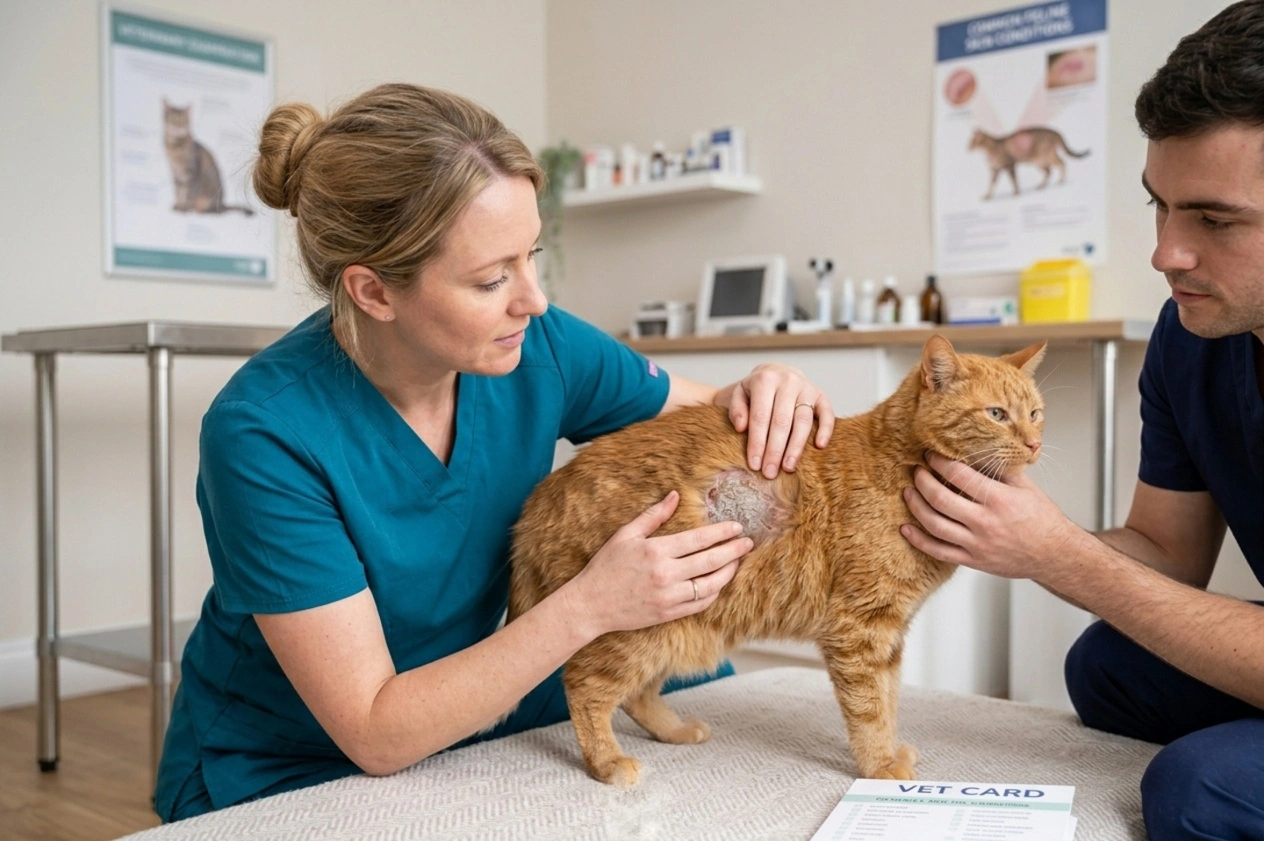
Diagnosing hair loss involves identifying what is affecting the skin or coat so treatment can address the root cause rather than the symptoms alone. A veterinarian begins with a full physical examination and detailed history, including diet, grooming habits, environment, and recent changes at home.
The affected area is examined for redness, scaly skin, infection, parasites, or flea dirt. Diagnostic testing may include skin impressions and scrapings viewed under a microscope, fungal testing for ringworm, blood work to screen for endocrine conditions, and diet trials to assess food allergies. Urinalysis may be recommended if urinary discomfort is suspected.
Pet owners are encouraged to share photos of hair loss progression or skin changes, which can help track patterns over time. These tools help ensure treatment addresses the true cause rather than just the symptoms.
How cat hair loss is treated
Treatment for fur loss depends entirely on the diagnosis. Most cats respond well once the underlying cause is identified and addressed. The goal is to restore skin health, reduce discomfort, and support steady fur regrowth over time.
Parasite-related hair loss is treated with prescription flea prevention, medications for mites based on the specific type identified, and environmental control to prevent reinfestation. Consistent, year-round parasite prevention helps minimize the chance of repeat hair loss.
Allergies are managed by reducing exposure to known allergens, using veterinary-recommended diets for food trials, and, when appropriate, medications to control itching and inflammation. Fungal infections require antifungal treatment and environmental cleaning. Hormonal and metabolic conditions need veterinary medication and monitoring.
Stress-related overgrooming is addressed after medical causes are managed. Environmental enrichment, predictable routines, interactive play, calming diffusers, and behavior support can help. Pain-related overgrooming requires diagnosis and appropriate pain management.
At-home remedies such as human allergy medications, essential oils, or unapproved topical products can be dangerous and should be avoided unless specifically recommended by your veterinarian.
When should you call the vet?
You should contact a veterinarian if you notice bald patches, thinning areas, visible skin, or changes in skin texture. A vet visit is also important if your cat is scratching, licking, or chewing excessively, or if hair loss is accompanied by redness, scabs, scales, wounds, or odor.
Hair loss with other symptoms such as weight loss, increased thirst, changes in appetite, lethargy, vomiting, diarrhea, or behavior changes needs prompt evaluation. If you suspect fleas, mites, or ringworm, professional diagnosis and treatment are important to prevent spread and discomfort.
Attempting to self-diagnose or treat your cat’s condition at home can worsen the issue. With the help of a good medical history, thorough physical examination, and appropriate tests, most causes of hair loss can be identified and managed effectively.
Can cat fur grow back?
In many cases, fur can grow back once the underlying cause is treated. Regrowth depends on the cause, the extent of skin damage, how long the hair loss has been present, and whether the cat continues to overgroom the area.
Cats with parasite-related or allergy-related hair loss often show improvement within weeks after effective treatment and prevention. Cats with stress-related overgrooming may need more time and environmental support. Hormonal and medical conditions require ongoing management, and coat quality may improve gradually as the condition is controlled.
Persistent or recurrent hair loss should be re-evaluated, because the original cause may not be fully resolved or a new issue may have developed.
Conclusion
Hair loss in cats is different from normal shedding and often signals an underlying issue that needs attention. Common causes include parasites, allergies, overgrooming from stress or pain, infections, and medical conditions. The location of hair loss, the appearance of the skin, and your cat’s grooming behavior provide important clues, but accurate diagnosis requires a veterinary examination.
With the right care plan, most cats experience healthy regrowth over time. If you have noticed your cat losing hair, schedule an appointment with your veterinarian to identify the cause and provide treatment options to restore your cat’s coat to its full, healthy state.
Frequently asked questions
Why is my cat losing hair on its belly?
Belly hair loss is common in overgrooming related to stress, pain, or urinary discomfort. Allergies and skin irritation can also affect the belly. A veterinary exam helps determine the cause.
Why does my cat have bald patches on its skin?
A single bald spot can result from localized irritation, pain, overgrooming, parasites, or fungal infection. The shape, skin appearance, and your cat’s behavior provide clues, but diagnosis requires an exam.
Can fleas cause hair loss in cats?
Yes. Flea allergy dermatitis is a frequent cause of hair loss, especially around the back, tail base, and neck. Even indoor cats need year-round flea prevention.
Is ringworm contagious to humans?
Yes. Ringworm is a fungal infection that can spread to other pets and people. Suspected cases should be evaluated and treated promptly.
Can stress cause bald patches in cats?
Yes. Stress can lead to overgrooming and bald patches, usually on the belly, legs, or sides. Medical causes must be ruled out before assuming stress is the main factor.
When should I take my cat to the vet for hair loss?
Contact a vet if you see bald patches, thinning fur, skin changes, excessive grooming, or hair loss with other symptoms such as weight change, increased thirst, or behavior changes
