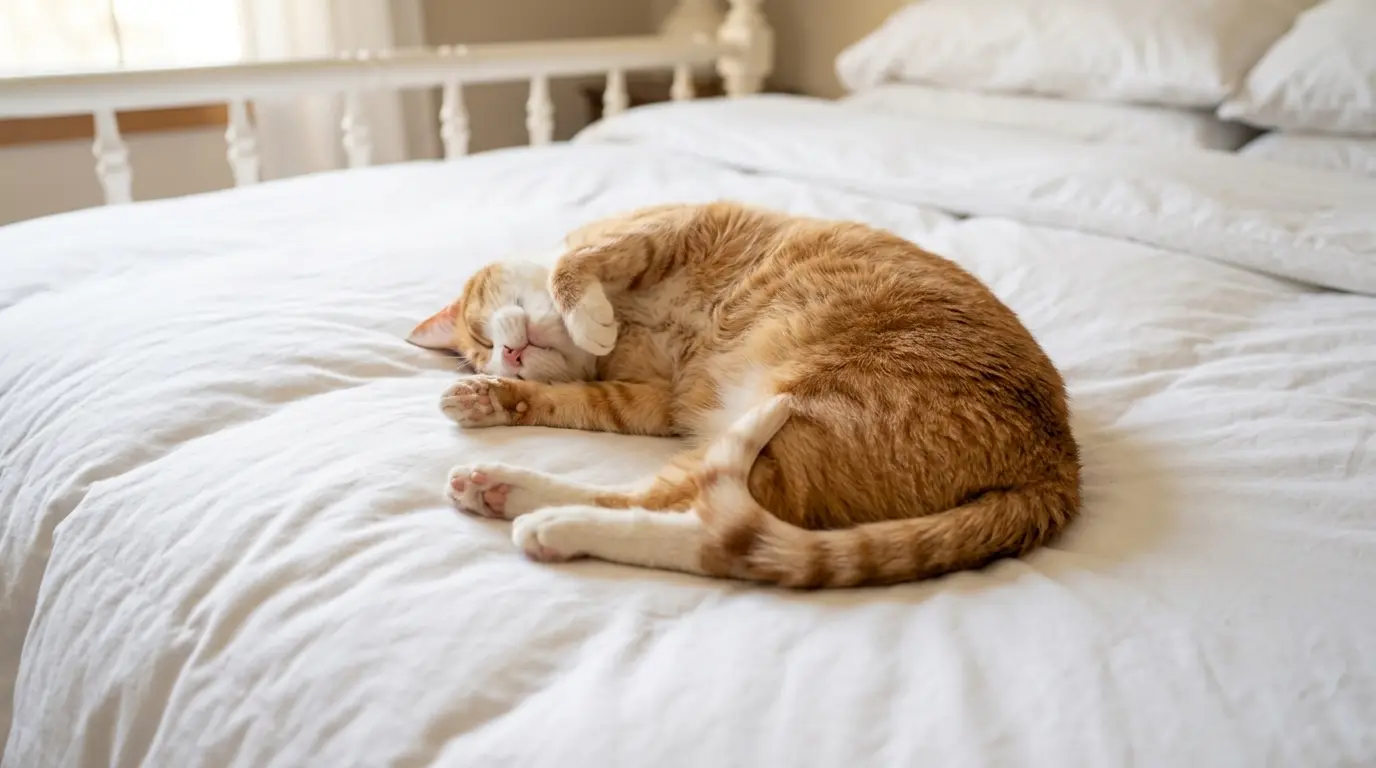
My cat sleeps so much that one afternoon, I checked her breathing, just to make sure she was okay. When I checked it, everything was completely fine. There was no issue with it.
If you go near your cat and think, “Why does she sleep so much?” you’re not alone, because this question crosses the minds of almost every cat owner.
The answer is a little bit of physiology, a little bit of nature, and the rest is that your cat is simply doing what cats have been doing for thousands of years.
How Many Hours Do Cats Actually Sleep?
Most adult cats sleep 12 to 16 hours a day, and some can go as long as 20 hours, especially when the weather is cold.
And yes, the weather does play a role, as cats sleep more on cloudy days. According to researchers, this is linked to their sensitivity to light intensity, which affects their circadian rhythms (i.e., active at dawn and dusk).
Age changes the numbers, too:
| Age | Average Sleep |
|---|---|
| Kittens | 18–20 hours |
| Adults | 12–16 hours |
| Seniors | 16–20 hours |
Kittens sleep up to 20 hours a day. Because their brains and bodies are constantly developing, such rapid growth really needs rest.
Adult cats, on the other hand, sleep an average of 12 to 16 hours, and that too in short naps rather than one long sleep.
Senior cats sleep more often, 16 to 20 hours, partly because their energy levels have declined, and partly because conditions like arthritis make it difficult for them to move.
According to the Cornell Feline Health Center, the wide range is normal. What matters more than the number is whether your cat’s pattern has changed.
Why do cats sleep this much? 6 Reasons
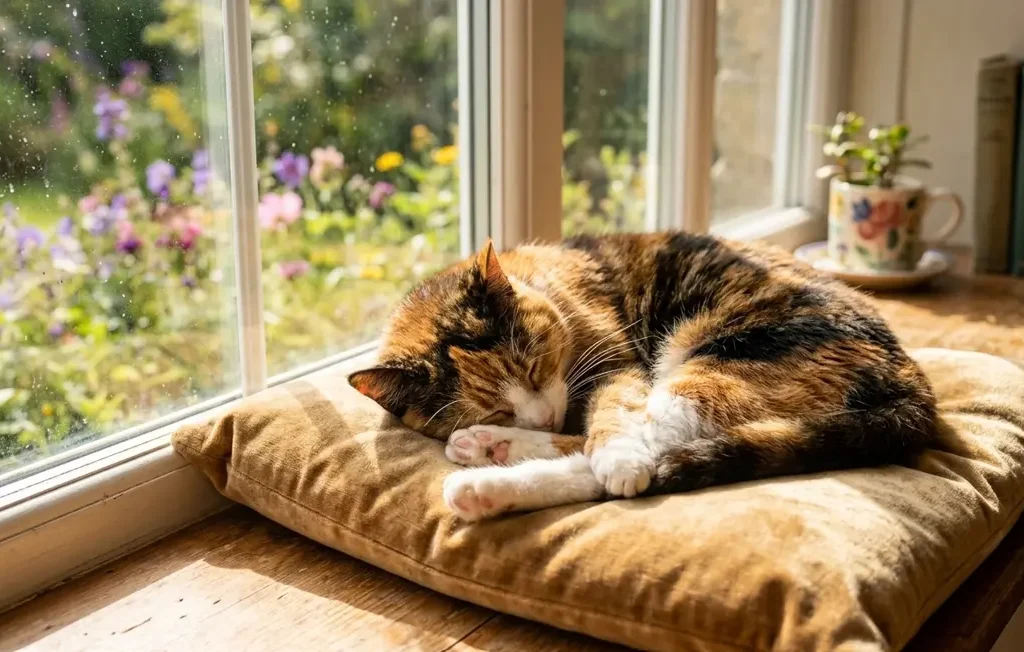
1. They Are Built for Burst
Your cat’s ancestors were ambush hunters; they needed explosive energy for short, short-term hunts, not support for long chases, and the result of that lifestyle is that their bodies are accustomed to deep rest between activities.
And although your cat today doesn’t hunt anything except the occasional fly, this system is still there. Its body expects it to sleep, recover, hunt, eat, and sleep again, repeating itself every day.
This cycle is sometimes called “hunt, eat, groom, sleep,” and it’s so deeply ingrained in its nature that even the most pampered house cat performs it automatically.
2. Cats Are Crepuscular
This is the one that surprises most people. Cats are not nocturnal. They are crepuscular, meaning their peak activity naturally falls at dawn and dusk.
If your cat seems to sleep all day and then appears at 5 am like a tiny, chaotic alarm clock, this is why. The quiet hours between dawn and dusk are when cats naturally rest. Your sleeping schedule just happens to overlap with theirs in the worst possible ways.
3. They take several short naps instead of one long sleep
Cats are polyphasic; they sleep in several sleep sessions throughout the day, just as humans don’t sleep all night long.
About three-quarters of their sleep is light sleep, where they are partially awake, their ears move, their eyes occasionally open a little, while the other quarter is deep sleep, and that too for only five minutes at a time, during which you will see their legs flapping, paws twitching, and whiskers twitching, and this is perfectly normal REM activity.
4. Inactivity increases sleep hours
Domestic cats sleep more than outdoor cats, and the reason is simple: less stimulation means the brain has less reason to stay awake.
A cat with nothing to do will go to sleep. it’s not laziness, but a lack of reason to stay awake. If your cat is sleeping more than usual and is not interested in being let out when you let him out, address the inactivity before assuming a medical problem. Puzzle feeders, a window seat with a view of the outside, and 15 minutes of daily play with a stick toy can really make a difference.
5. Stress Causes More Sleep
Cats respond to stress differently from humans. While a stressed human might fidget or be restless, a stressed cat will often isolate itself and sleep more.
New people in the house, a new pet, a new furniture arrangement, or a change in your schedule can all push your cat to sleep more as a way to cope.
Stress-related sleepiness often goes hand in hand with other behaviours, such as suddenly urinating on your clothes. If the increased sleepiness comes with another change, it’s likely that the two are related.
6. Breed Makes a Difference
Not all cats sleep the same. Persians and Ragdolls are known to sleep significantly more than average, sometimes reaching up to 20 hours a day on a lazy day, while Siamese cats, by contrast, are more talkative and active, with sleep closer to the low end.
If your breed is known for being high-energy, increased sleep is noticeable, whereas it’s not as significant for naturally calm breeds.
How to Tell Normal Sleep from Lethargy
A normally sleeping cat: Wakes up easily when you approach, purrs normally, shows interest in eating at normal times, and talks when called.
A lethargic cat: Is difficult to wake, moves slowly or stiffly when awake, shows little interest in eating, and avoids normal favourite conversations.
The difference is not in the hours, but in the quality of the periods of wakefulness: a cat that sleeps for 18 hours and is fully alert and engaged for the other 6 hours is probably fine, while another cat that sleeps for 14 hours and appears dull and listless for the other 10 hours is not fine.
When to Worry
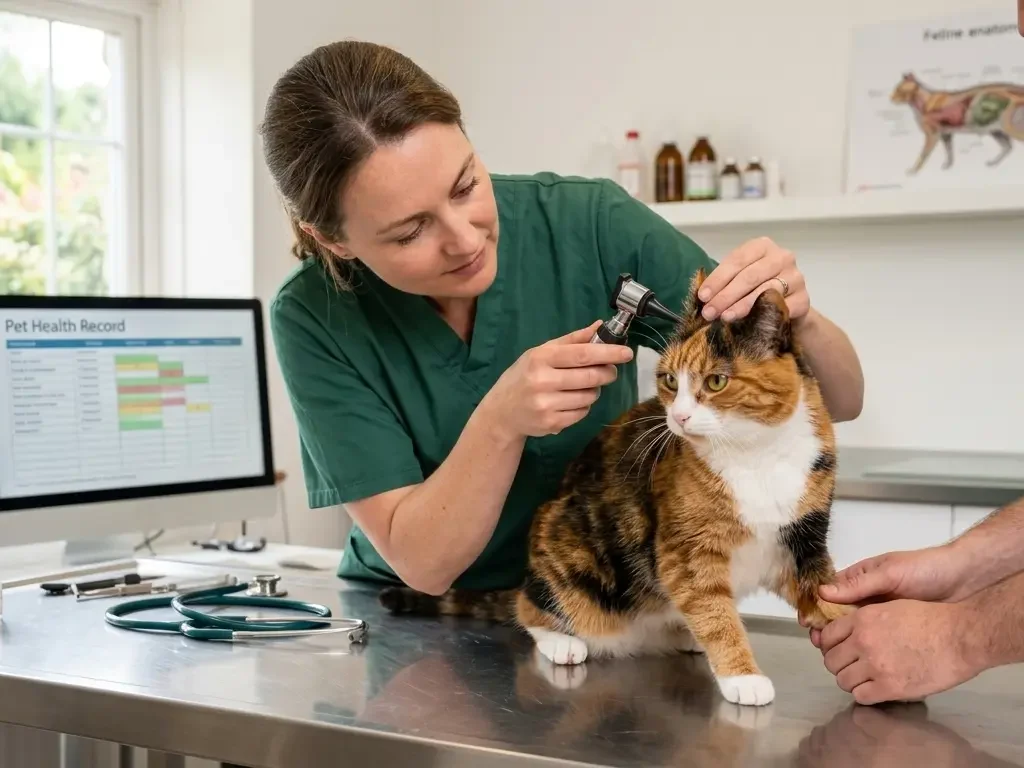
Excessive sleepiness alone is not an emergency, but call your vet if you notice these combinations:
- Increased sleepiness and decreased appetite. Cats crave food by sniffing, and a cat that sleeps more and eats less is telling you that something is wrong.
- Increased sleepiness and altered quality of wakefulness, such as difficulty waking up or feeling drowsy and groggy upon waking.
- Increased sleepiness and laboured or noisy breathing.
- Increased sleepiness and vomiting, diarrhoea, or apparent weight loss.
Sudden changes in an older cat. If an older cat starts sleeping significantly more, especially with confusion or vocalisations at night, this could indicate Cognitive Dysfunction Syndrome. According to International Cat Care, changes in sleep patterns are one of the earliest recognisable signs of CDS in cats, so a cat that is sleeping more and meowing at night should be discussed with a vet as soon as possible.
Common medical causes of lethargy include anaemia, heart disease, kidney disease, diabetes, infections, and chronic pain conditions like arthritis. The American Veterinary Medical Association recommends twice-yearly checkups, especially as you age, because these conditions are often caught early through routine blood tests rather than by owner observation.
How Cats Adapt to Your Schedule Over Time
Cats are surprisingly adept at aligning their sleep with yours.
A cat that has been with you for years often knows your morning routine better than you do. She wakes up before you do, waits by the bedroom door, and goes back to sleep when you leave for work. This is no coincidence; cats observe and adapt, gradually adjusting their light sleep periods to coincide with your presence.
This is one of the quiet ways cats show they cherish this relationship, which is why the stereotype “they just sleep all day and ignore you” seems a little unfair.
Conclusion
They are predators built to conserve energy in the midst of intensity, a cat’s normal sleep is very long by human standards, and you really have to look at patterns, not numbers your cat’s basic routine is your guide, and any change from that routine, especially when accompanied by other symptoms, then the question is no longer about normal cat biology and is worth talking to a vet about.
Frequently Asked Questions
Why does my cat sleep so much more in winter?
Lower light levels in the winter actually affect crepuscular animals less. Daylight means less natural activity, so cats often sleep an extra hour or three during cold or cloudy months. Unless there are other symptoms, this is seasonal and perfectly normal.
Is it normal for a cat to sleep 20 hours a day?
For kittens and older cats, yes. For healthy adult cats, 20 hours of sleep on most days is on the high end and should be monitored if this is a new routine. For naturally quiet breeds like Persians, it can be completely normal, so context is more important than numbers alone.
Why does my cat sleep on me instead of beside me?
Sleeping directly on you or laying on your chest, rather than next to you, is a sign of a higher level of trust and comfort. Cats who sleep on a specific person have found that person to be their primary safe haven, and while warmth helps, heart rate is also important; cats actually find it calming.
Should I wake my cat during the day so they sleep at night?
This is generally not recommended, as disrupting a cat’s natural sleep cycle increases stress and can cause the very nighttime restlessness you’re trying to prevent. A better approach is to increase daytime activity through play, which naturally tires them out at appropriate times.
