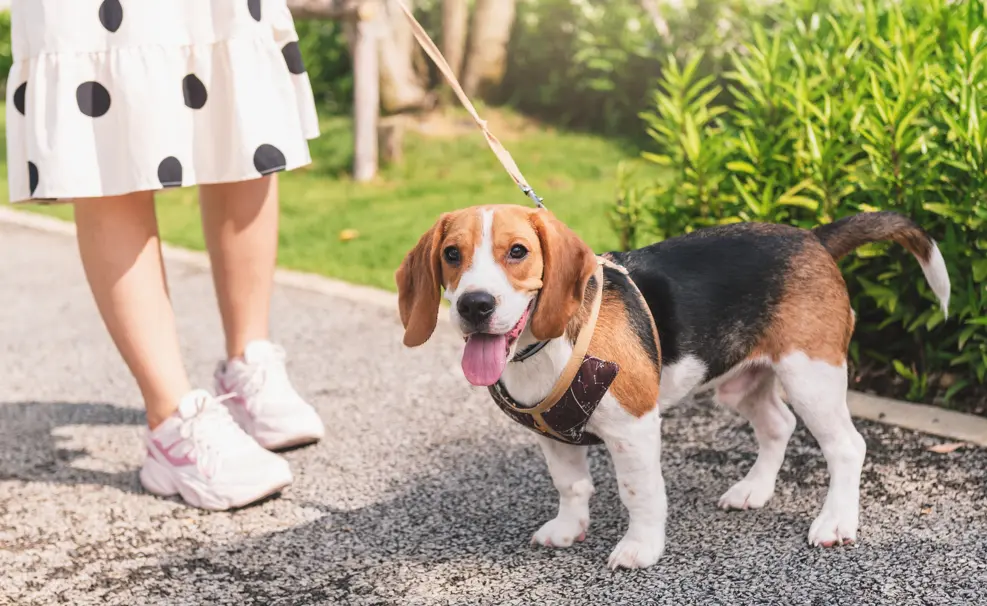
Most owners buy a leash and use it for everything. For a casual walk, it works fine. But for real training, the wrong leash can slow your progress more than you think.
The best training leash for dogs depends on one thing: what you’re trying to teach at the time.
Here’s what you need to know about finding the best training leash for dogs sorted by type, material, and training stage.
What Makes a Leash Good for Training
A training leash isn’t just a restraint. It’s a line of communication between you and your dog.
Every time your dog pulls, stops, or changes direction they feel it through the leash. That feedback tells them whether they’re in the right position. If the leash absorbs that signal or gives inconsistent tension the dog isn’t getting the information they need to learn.
Three things determine whether a leash supports training:
Fixed length — The dog pulls and gets nowhere. Every time. That consistency is what they learn from.
No stretch — Stretchy leashes absorb feedback. The dog feels resistance, yet moves on. Wrong lesson.
Comfortable grip — Training walks are daily. A leash that starts to cut into your palm means your responses are always late.
The 4 Types of Training Leashes Explained
1. Standard Fixed Leash (4 to 6 Feet)
Four to six feet gives your dog a natural range of motion while keeping them close enough to respond quickly. The AKC recommends this as the standard length for leash manners training.
Best Uses: Heel training, loose leash walking, high-activity environments, vet visits, everyday control.
2. Long Line (15 to 50 Feet)
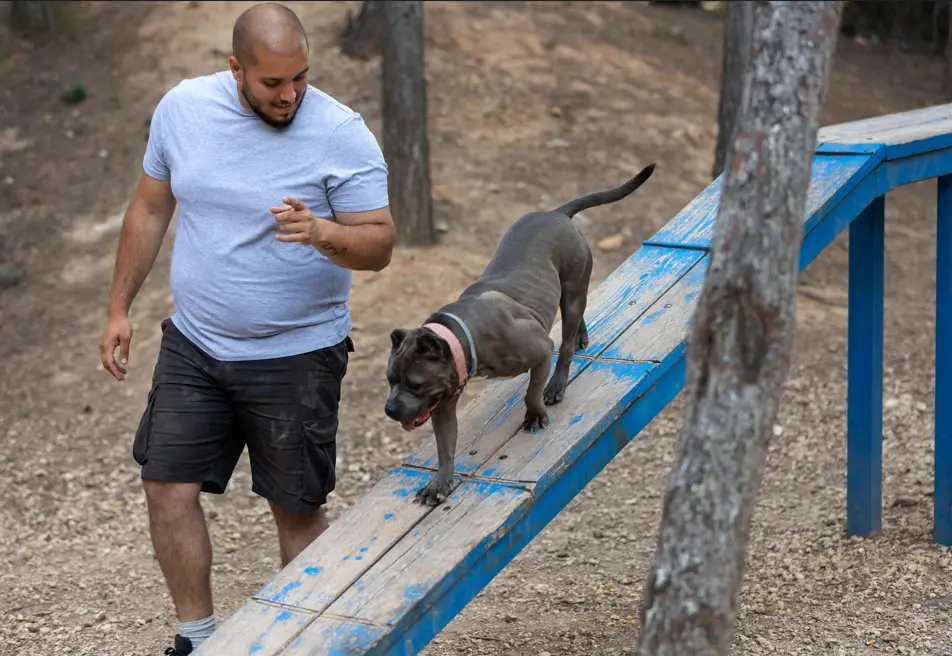
A long line is the least used training tool for the average dog owner.
It gives your dog a sense of freedom while you remain in control. This is where recall training truly takes place. There is no real choice on a 6-foot leash. On a long line in an open field, your dog chooses to come back and is rewarded.
It is this voluntary decision that makes for reliable recall Dogs struggling with separation related distress often benefit from this confidence building style of training
Long leashes are also useful for reactive dogs who need to be away from triggers. You stay connected without forcing them to go near things that trigger them. A long leash is especially useful when working on excessive barking from a safe distance.
Best Uses: Recall training, outdoor exercise, working with a reactive dog from a distance, decompression walks.
3. Tab Leash or Traffic Lead
A short leash. Usually 6 to 18 inches. Attaches to a collar or harness and hangs loosely.
Most owners have never heard of this. Trainers use it all the time.
A tab leash is for dogs who are moving toward being reliable off-leash. The handler grabs it when needed, but the dog is not being controlled by the full leash all the time. It bridges the gap between leash dependency and truly being off leash.
Best Uses: Intermediate to advanced dogs, quick catch situations, transitioning to off-leash.
4. Slip Lead
A slip lead is both a leash and a collar in one loop. It tightens when the dog pulls and loosens when it stops.
Common in shelters and vet clinics. For training, the loop should be at the top of the neck, just behind the ears. Any lower than that will sit on the trachea (windpipe) . where injury can occur.
Not suitable for dogs who are just learning not to pull. For a dog that is already walking well, this is a simple one-piece option.
Best Uses: Quick use situations, already trained dogs, vet and shelter environments.
Material Comparison Table
| Material | Grip in Rain | Easy to Clean | Durability | Best For |
| Biothane | Excellent | Wipe clean | Very high | All-weather daily training |
| Leather | Poor when wet | Needs conditioning | High (dry use) | Dry weather, experienced handlers |
| Rope | Good | Hand wash | Medium | Heavy pullers, hand comfort |
| Nylon | Slippery | Machine wash | Medium | Budget option, casual use |
Biothane is the most practical for everyday training. Waterproof, odor-resistant, and cleans up in seconds. Maintains grip in rain or heat. Many professional trainers prefer biothane for all weather training . High drive working breeds in particular respond best to consistent equipment.
Leather gets better with use as it softens and molds to your grip. A quiet material that some dogs respond to better. Requires conditioning and can deteriorate with repeated exposure to water.
Rope distributes grip pressure over a wider area, reducing hand fatigue during intense pulling sessions. Heavy and waterlogged when wet.
Nylon is available everywhere and is inexpensive. Flat edges concentrate pressure on your palm. Prevents odor and bacteria without regular washing. Fine for casual walks, but not ideal for training.
What to Avoid: Leashes That Hurt Training
Retractable Leashes
Retractable leashes teach dogs to actively pull.
The mechanism expands as pressure increases. Your dog learns that pulling makes the leash longer the exact opposite of what training wants.
Aside from the training issue, retractable cables have been documented to cause injuries when they suddenly lock when fully extended. The Afsh notes these safety hazards directly.
Avoid them for any stage of training.
Bungee Leashes
Bungee leashes reduce impact on the joints, which seems to help.
The problem is that they absorb the feedback your dog needs to learn the limit. The dog pulls, feels resistance, and still goes forward they learn the wrong lesson.
Fine for jogging with a dog that already walks well. Not for dogs learning leash manners.
Leash Type by Training Stage
| Training Stage | Best Leash Type | Attachment |
| Just starting out | 6-foot fixed, biothane or rope | Front-clip harness |
| Working on recall | 20 to 30-foot long line | Front-clip harness or collar |
| Reactive dog work | Long line, 15 to 30 feet | Front-clip harness |
| Advanced, near off-leash | Tab leash or traffic lead | Collar or harness |
| Off-leash reliable | Tab leash as backup | Collar |
Harness vs Collar: Which to Attach The Leash To
For dogs that are not learning to pull, use a front clip harness.
When the dog pulls, the front clip turns their body toward you. This stops the momentum of the pull and creates the moment where you reward the correct position.
A back clip harness allows the dog to lean into the pull reinforcing the exact behavior you are trying to stop.
Collars work for leash training, but they put more pressure on the neck with each correction. For dogs that pull hard, a front clip harness is a safer and more effective choice.
Leash reactive dogs benefit from the same threshold based approach mentioned in our Dog Training Leash Guide . where you always work below the dog’s point of reaction.
Hardware: The Part Most Owners Ignore
The clip is the part of any leash that is most likely to fail.
Metal swivel bolt snaps are standard for training leashes. The swivel rotation prevents twisting during active training movements. Brass or stainless steel resists rust.
Plastic clips fail at reactive moments. If your dog snaps and the clip comes loose you lose control at the worst possible time.
Metal hardware is strongly recommended for training leashes.
Conclusion
The best training leash for dogs is one that gives your dog clear, consistent feedback on your current training stage.
The best training leash for dogs to start with is a fixed 4 to 6 foot biothane or rope leash with metal hardware, and it is attached to the front clip harness. Add a longer line as recall training becomes the focus. Switch to a tab leash when your dog is close to being reliable off-leash.
The leash does not train your dog you do. But the wrong leash will slow down the momentum your training is trying to build.
If you want professional guidance specific to your dog, a certified trainer through the CCPDT can recommend the right setup for your situation.
Frequently Asked Questions (FAQ)
What length leash is best for training?
Four to six feet for everyday training. Fifteen to thirty feet for recall in open areas.
which is better a harness or a collar?
A front clip harness is better for dogs that pull. It turns the dog toward you when pulled.
is retractable leashes bad for training?
Yes. It lengthens when pulled, teaching the wrong behavior and eliminating consistent feedback.
What is the most durable training leash material?
Biothane waterproof, quick to clean, and holds its grip in all weathers.
