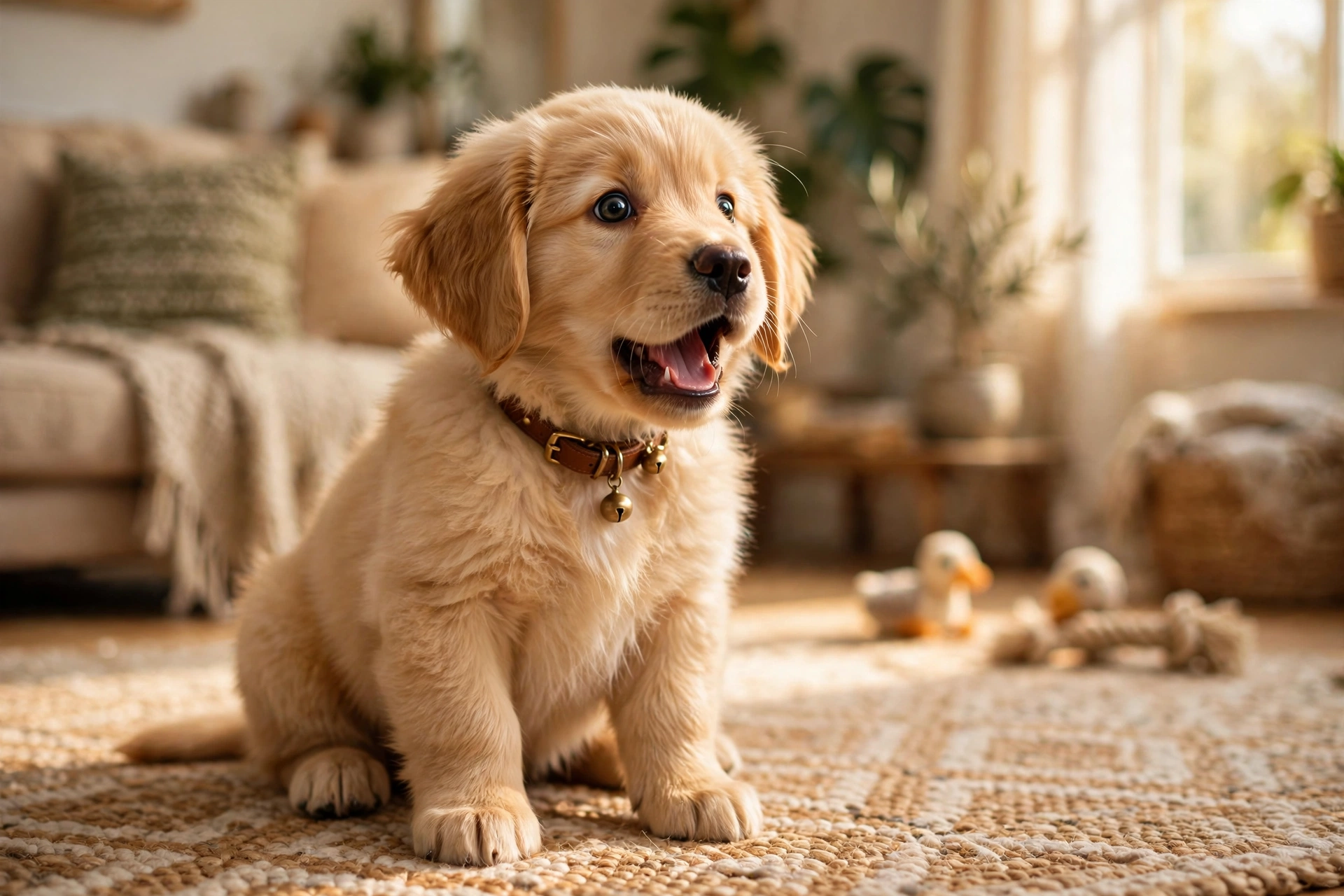
Your puppy has hiccups all the time because its diaphragm, the muscle that powers breathing, is still maturing, and because puppies eat too fast, get excited easily, and swallow air while they play. This is normal: most bouts pass within a few minutes, and most puppies outgrow hiccups by about 4 to 6 months of age.
Below are the 7 most common triggers, how to stop a bout fast, and the exact signs that mean it is time to call the vet.
Key Takeaways
- Hiccups are normal in puppies even daily hiccups usually mean nothing is wrong.
- The usual culprits are eating or drinking too fast, excitement, cold, tiredness, and swallowed air.
- Most bouts end on their own within a few minutes.
- A slow-feeder bowl and smaller, more frequent meals prevent most episodes.
- Call the vet if hiccups last over an hour, happen several times a day, or come with vomiting, lethargy, or breathing trouble.
What Is a Puppy Hiccup, Exactly?
A hiccup starts with a sudden, involuntary spasm of the diaphragm. That is the dome-shaped muscle under the lungs that powers every breath your puppy takes. The spasm makes your puppy inhale sharply; a split second later the glottis the opening between the vocal cords snaps shut, making the classic “hic” sound. Your puppy cannot control any of this.
The American Kennel Club notes that scientists still do not actually know why mammals hiccup at all. Theories range from clearing gas to a leftover from the womb, where a fetus “test-drives” its breathing muscles before birth.
Are Puppy Hiccups Normal?
Hiccups show up far more often in puppies than in adult dogs, and a healthy puppy can hiccup daily without anything being wrong. Puppies have weaker muscles than adult dogs, including the diaphragm, so the muscle misfires more easily.
Most puppies do not even seem bothered by it. They might look confused for a second, then carry on as if nothing happened. If your puppy is eating and playing normally, hiccups are almost certainly just a normal part of puppyhood.
Why Do Puppies Get Hiccups More Than Adult Dogs?
An immature diaphragm and phrenic nerve. The phrenic nerve controls the diaphragm. In a young puppy, both the nerve and the muscle are still developing, so they are easier to irritate. A small trigger that would not bother an adult dog can set off a whole bout in a puppy.
The puppy lifestyle. Puppies eat like someone is about to steal their food, gulp water, sprint everywhere, and treat every visitor like a long-lost best friend. All that fast eating, heavy breathing, and excitement is a perfect recipe for hiccups.
As your puppy grows, the diaphragm strengthens, the nerves mature, and the hiccups fade.
7 Common Causes of Puppy Hiccups
Almost every bout traces back to one of these triggers. Most of them are things you can actually fix.
1. Eating Too Fast
This is the number one cause. A puppy that inhales its food swallows a lot of air along with it. That air fills the stomach, the stomach presses on the diaphragm, and the diaphragm starts to spasm. If your puppy finishes meals in under a minute, this is your culprit.
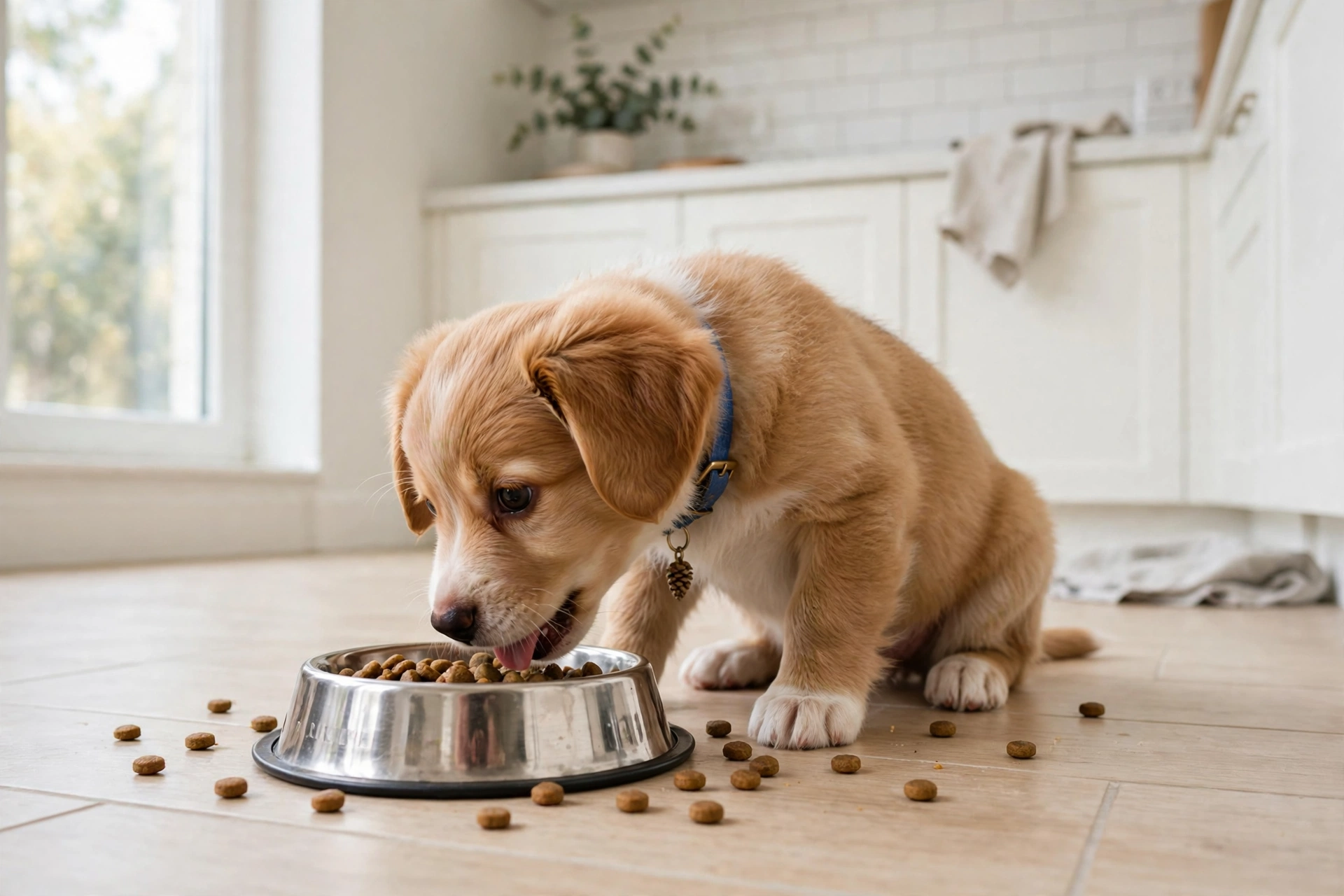
Image: Puppy eating kibble too fast from a bowl, a common cause of hiccups
2. Drinking Too Fast
Same problem, different bowl. Gulping water, especially when panting after play, sends air straight down with it.
3. Excitement and Hard Play
Zoomies, visitors at the door, a brand new toy excitement makes puppies breathe fast and shallow, and that irritates the diaphragm. Bouts often start right after wild play.
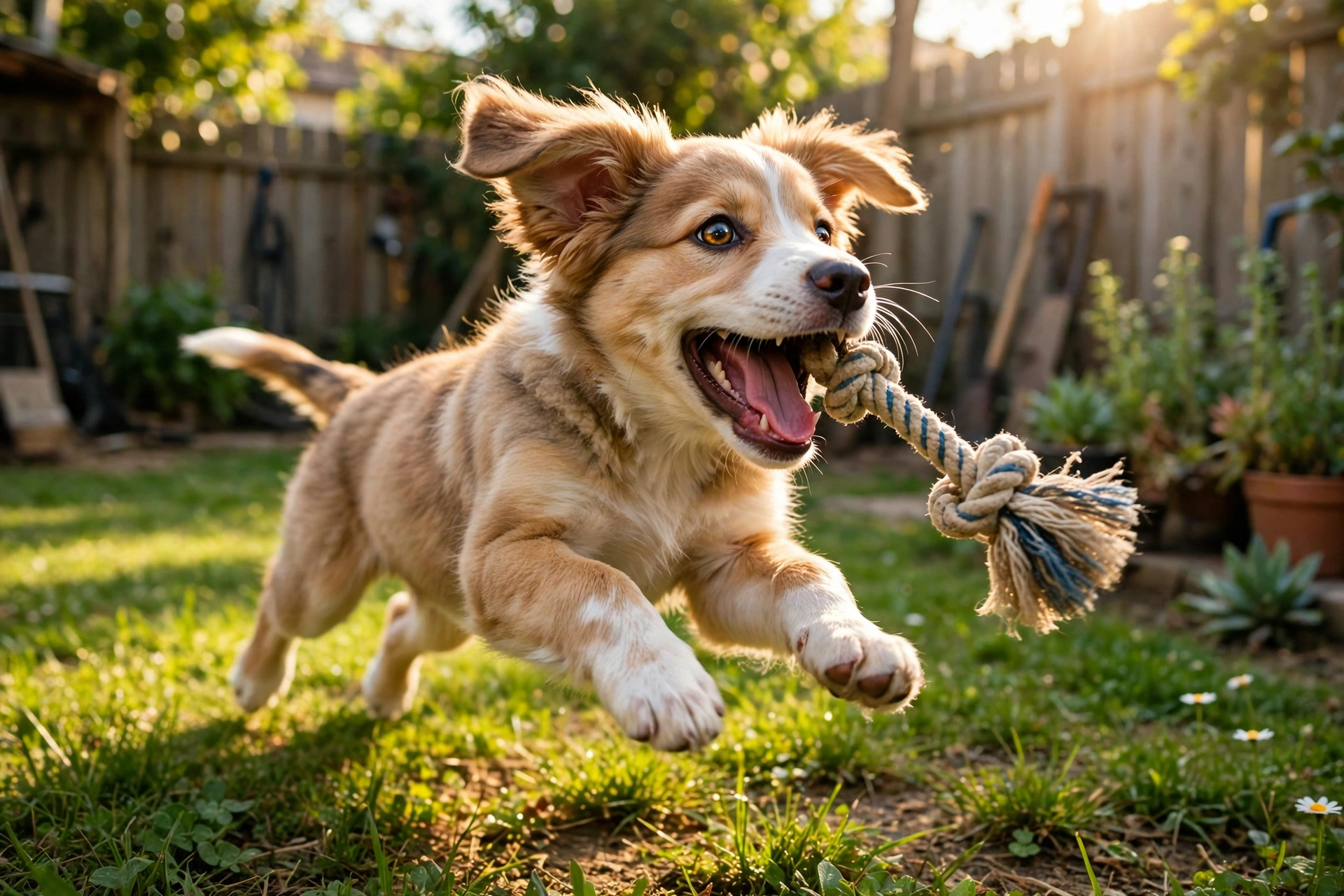
Image: Excited puppy playing with a rope toy in the backyard
If the excitement spills over into constant barking, that is a habit worth calming early.
4. Swallowed Air and Gas
Panting, barking, and chewing can all push air into the stomach. Once gas builds up, it irritates the diaphragm and triggers hiccups.
5. Overeating
A full stomach presses upward on the diaphragm. Big meals, or a puppy that counter-surfs its way to a second dinner, can both end in hiccups.
6. Cold or a Sudden Temperature Change
Cold air can trigger hiccups, and so can a sudden switch from cold to warm. A puppy coming inside from a chilly yard, or drinking very cold water, may start hiccuping within minutes.
7. Stress or Anxiety
New home, first vet visit, fireworks, a house full of guests stress changes how a puppy breathes, and that can set off hiccups. Puppies who panic when left alone often hiccup more during goodbyes and reunions, so calming the stress usually calms the hiccups too.
Flat-faced puppies hiccup even more. Pugs, French Bulldogs, Bulldogs, and Boxers have shorter airways, so they work harder to breathe and swallow more air slow feeding and calm play matter even more for them.
Hiccups or Something Else? A Quick Decoder
The big difference is rhythm: hiccups come in a steady, even beat. When in doubt, record a short video — it is the most useful thing you can show your vet.
| What you see and hear | What it probably is | What to do |
| Rhythmic “hic”, belly jerks each time | Hiccups | Wait it out; offer calm sips of water. |
| Loud snorting, air in through the nose | Reverse sneezing | Usually passes in seconds. |
| Harsh hacking, chest heaving | Coughing | Vet visit if it keeps happening. |
| Retching, pawing at the mouth | Gagging or choking | Emergency if your puppy cannot breathe. |
| Whole-body shaking, no sound | Tremors or shivering | Warm your puppy up; vet if it continues. |
How to Stop Your Puppy’s Hiccups
You rarely need to do anything most bouts stop on their own within a few minutes. But these five steps help.
- Do nothing. Seriously. Let the bout run its course.
- Offer small sips of water. A calm drink can steady the diaphragm. Never force it.
- Give a gentle belly or chest rub slow strokes calm the breathing, and the breathing calms the hiccups.
- Take a slow, calm walk on a comfortable leash. A short, leisurely stroll (not a sprint) helps regulate breathing.
- Distract your puppy. A favourite toy or a quick training game even just asking for a sit can break the cycle.
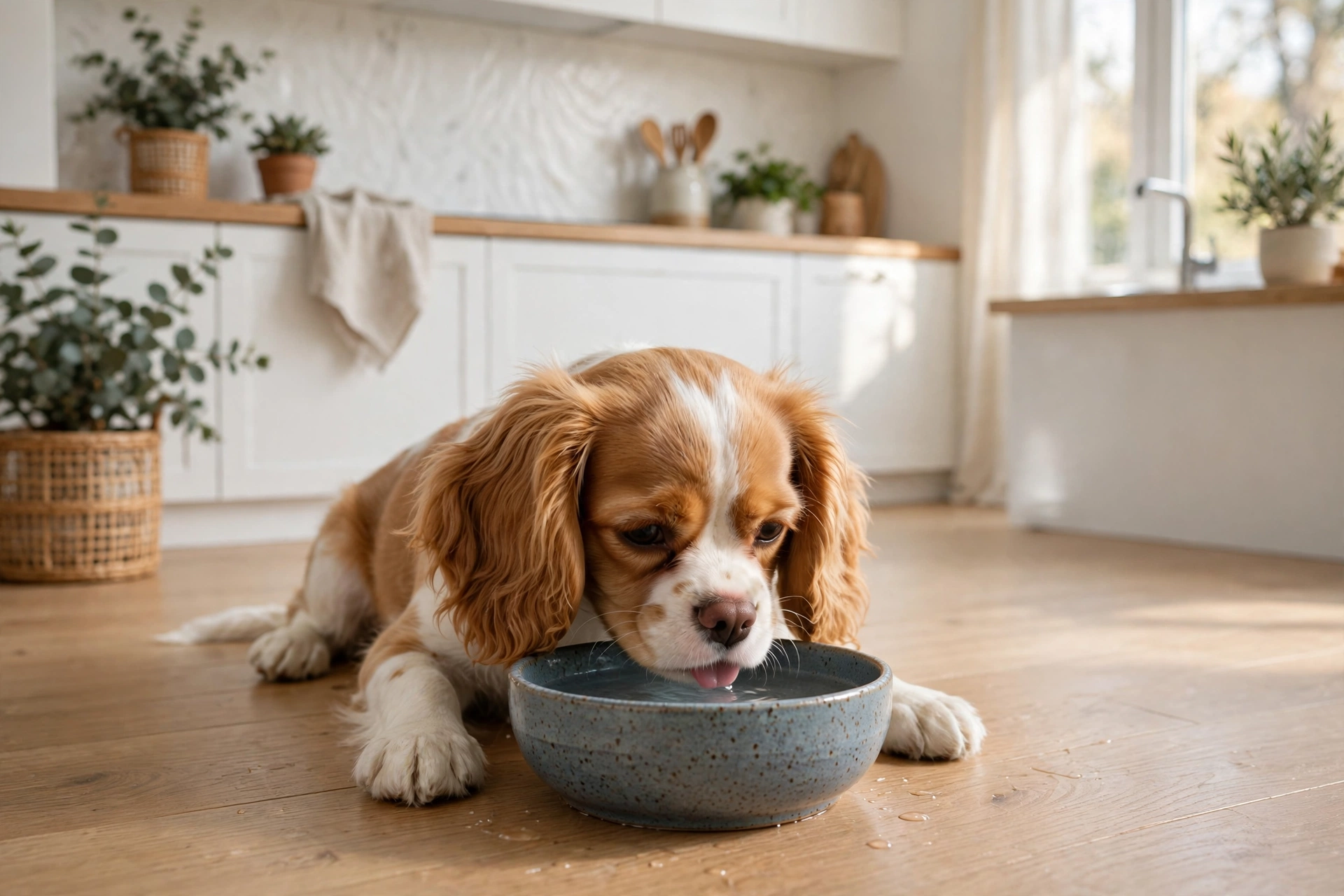
Image: Calm puppy drinking water slowly from a bowl to ease hiccups
What NOT to Do When Your Puppy Has Hiccups
- Do not scare your puppy. It will not stop the hiccups it only adds stress.
- Do not pull your puppy’s tongue or hold its muzzle shut.
- Do not try to hold your puppy’s breath or press on its chest.
- Do not give human medicine or sugar-free gum and treats many contain xylitol, which is toxic to dogs.
How to Prevent Puppy Hiccups
- Use a slow-feeder bowl, puzzle feeder, or snuffle mat making your puppy work a little for its food slows the gulping.
- Feed smaller meals more often little and often beats one giant bowl.
- Keep mealtimes calm no wild play right before or after eating.
- Soak dry kibble for a few minutes. Softened kibble is harder to inhale and easier to chew slowly.
- Keep a few small treats handy and reward the calm moments around food, one at a time.
Feeding Schedule by Age
Meal frequency changes as your puppy grows. Follow your vet’s advice and the instructions on your puppy’s food packaging.
| Puppy age | Meals per day |
| 8–12 weeks | 4 |
| 3–6 months | 3 |
| 6–12 months | 2 |
| 12 months+ | 1–2 |
How Long Do Puppy Hiccups Last?
Most bouts last a few minutes and then stop as suddenly as they started.
If hiccups last more than an hour, or happen more than a few times a day, call your vet. The American Kennel Club draws the line a little later, at more than a few hours. To stay on the safe side, use the one-hour rule.
No exact number exists for “too many hiccups a day.” If bouts are short and your puppy is otherwise happy and healthy, daily hiccups are normal. If the pattern changes to longer or more frequent bouts, write it down.
When to Worry: Red Flags
Hiccups alone are almost never an emergency. Hiccups plus something else can be.
| Situation | What to do |
| Trouble breathing, wheezing, blue-tinged gums | Emergency vet NOW |
| Vomiting, retching, swollen belly, pacing | Emergency vet NOW (possible bloat) |
| Hiccups lasting more than 1 hour | Call the vet the same day |
| Hiccups several times a day, every day | Book a routine vet visit |
| Coughing, drooling, low appetite, lethargy | Book a vet visit soon |
| Short bouts, puppy happy and eating normally | Monitor at home |
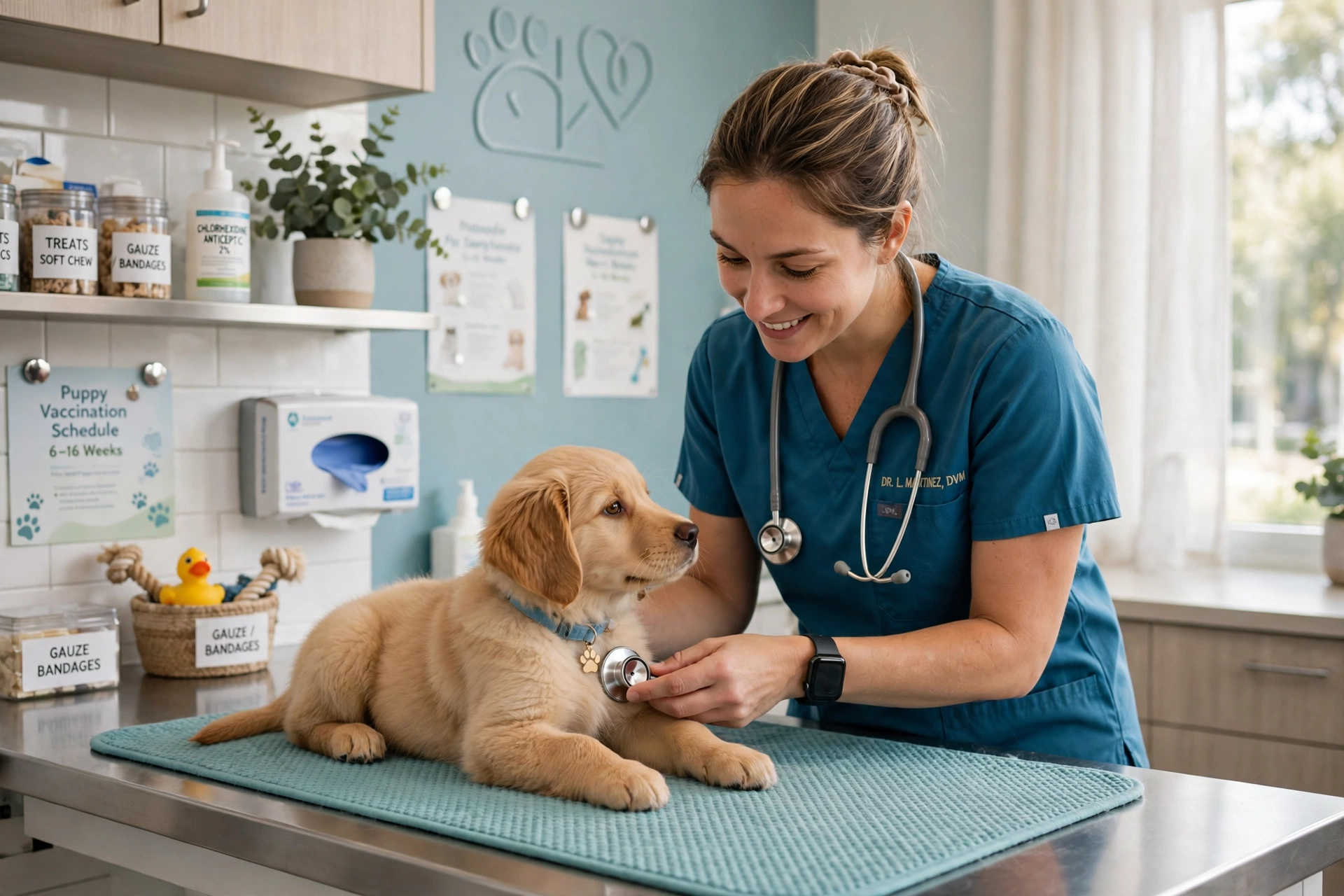
Image: Veterinarian gently examining a puppy on an exam table
Rare causes include asthma, pneumonia, heart disease, heatstroke, and nausea. These almost always come with other symptoms which is why the company hiccups keep matters more than the hiccups themselves.
Keep a Hiccup Diary
If your puppy hiccups a lot, note five things: the date and time, how long it lasted, what happened just before, what helped, and any other symptoms. After a week, the pattern usually jumps out and if you do need the vet, you walk in with facts instead of worries.
Do Puppies Outgrow Hiccups?
Yes, almost all of them do. As the diaphragm strengthens and the phrenic nerve matures, the misfires fade and stop. The Whole Dog Journal, citing the Veterinary Information Network, reports most puppies stop regular bouts after about 4 months, although some continue to 6 months. Older dogs rarely hiccup this often and new frequent hiccups in a senior are worth a vet check.
The Bottom Line
It is normal, usually caused by eating too fast or getting too excited, and it almost always passes within a few minutes.
Slow the meals down, keep playtimes calm around feeding, and remember the one-hour rule. Your puppy will outgrow them long before you stop finding them adorable.
Frequently Asked Questions
Are puppy hiccups normal?
Yes. Hiccups are very common in puppies and usually harmless. Daily hiccups in a healthy, playful puppy are normal.
Why does my puppy hiccup after eating?
Eating too fast is the most common trigger. Your puppy swallows air with its food, the air fills the stomach, and the diaphragm spasms. A slow-feeder bowl and smaller meals usually fix it.
Why does my puppy hiccup while sleeping?
Sleep hiccups are common and harmless breathing patterns change during sleep, and a relaxed diaphragm can misfire. Let them sleep.
How long do puppy hiccups usually last?
Most bouts last a few minutes. If one lasts more than an hour, or hiccups happen several times a day, call your vet.
Can I give my puppy water during hiccups?
Yes. Offer small, calm sips and let your puppy drink at its own pace. Never force it.
Should I take my puppy to the vet for hiccups?
Only if there are red flags: hiccups over an hour, several times a day, or with vomiting, coughing, lethargy, or breathing trouble. Otherwise, monitor at home.
