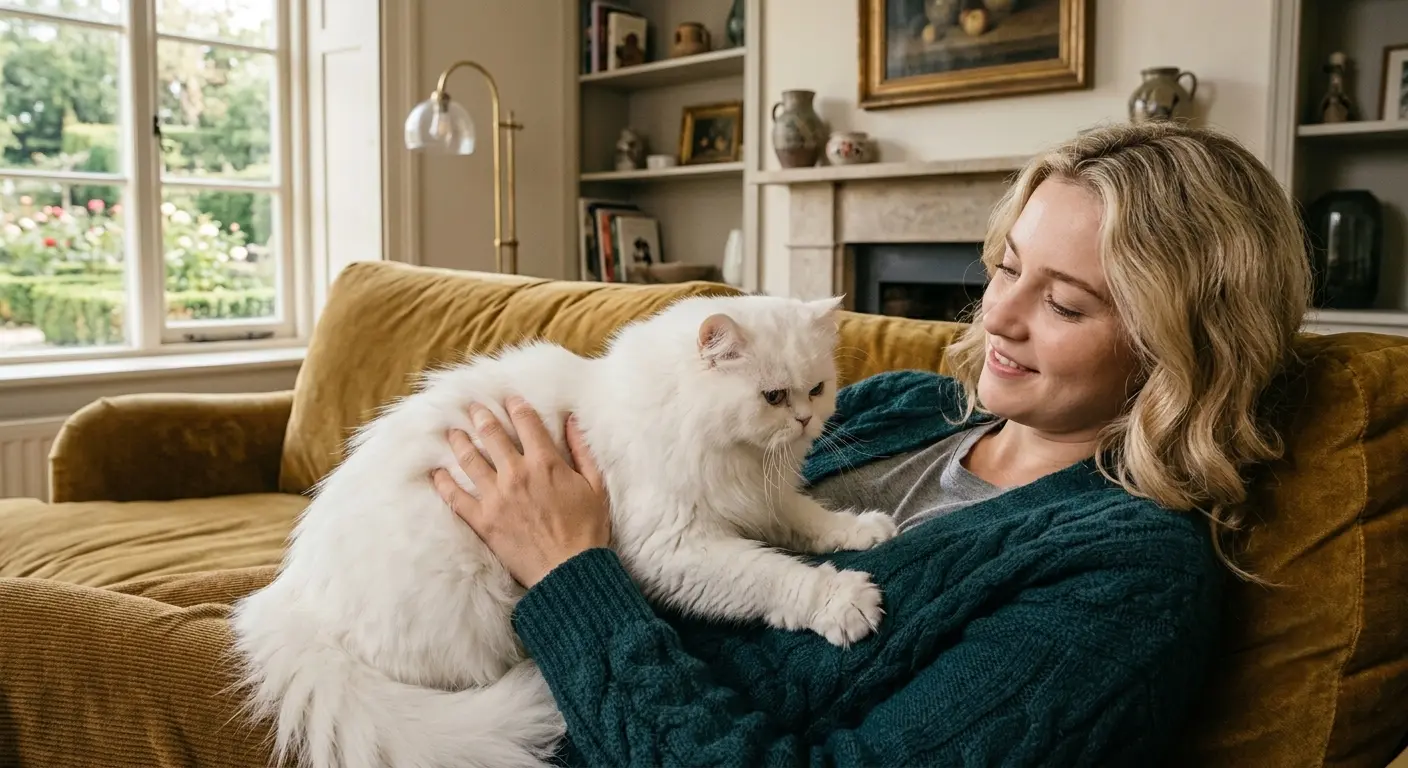
If your cat kneads you so much, it usually means your cat feels safe, relaxed, and emotionally attached to you. Kneading is one of the clearest comfort behaviours in cats, and it often appears when a cat is content, sleepy, or deeply bonded to a person. In most cases, it is not a problem behaviour at all. It is a natural action that started early in life and stayed because it still feels good.
Cats knead with their front paws in a rhythmic push and release motion. People often call it “making biscuits” because the paws move like dough being pressed into a soft surface. A cat may knead your lap, blanket, chest, stomach, or arm. Even though it can feel intense or scratchy, the meaning behind it is usually positive.
What kneading is
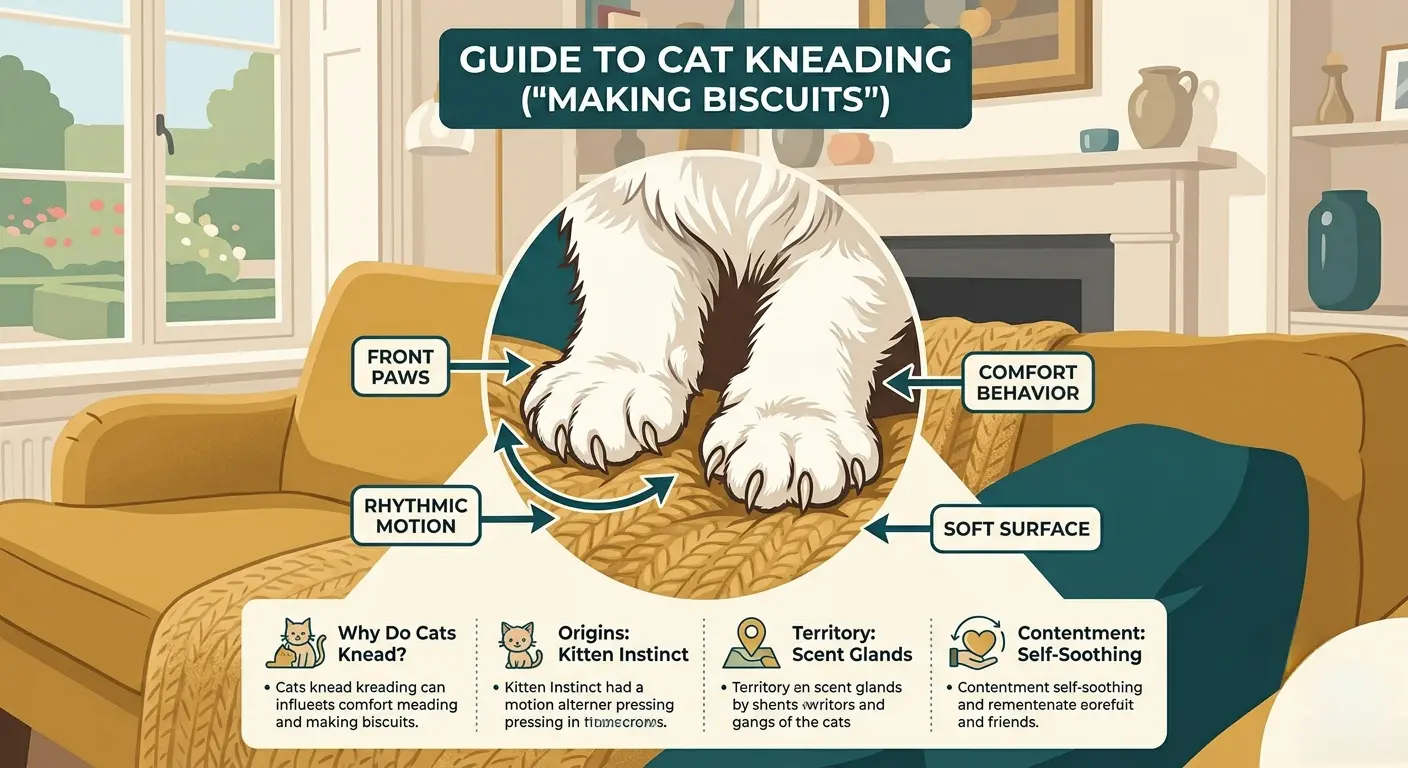
Kneading is when a cat alternates its front paws against a soft surface in a repeated motion. The pace may be slow and gentle, or firm and persistent. Some cats knead while purring, others knead while settling down to sleep, and some do it whenever they sit on their favourite person.
This behaviour begins in kittenhood and is considered normal cat behaviour throughout adulthood. Kittens knead their mother while nursing, which helps stimulate milk flow. Because the motion is linked to warmth, comfort, and nourishment, many cats keep doing it as adults. It becomes a comfort habit that can also express trust, affection, and self-soothing. In some cats, this comfort behaviour may also include gentle nibbling during relaxed moments.
Why cats knead people
The most common reason a cat kneads you is that it feels emotionally safe with you. Cats do not usually knead when they are tense or unsure. They choose soft, secure places and trusted people. That makes kneading a very personal behaviour.
Cats may knead you because:
- They feel relaxed and content.
- They are repeating a kittenhood comfort behaviour.
- They are showing affection.
- They are preparing to rest.
- They are scent marking.
- They are releasing tension.
- They are emotionally bonded to you.
When I come home at night, my cat is usually sitting at the front door. As soon as I walk inside, she jumps up and starts licking me. Then, when I sit down to watch TV, she comes over and kneads my hand, as if she is trying to ask me for something.
Why some cats knead more than others
Not every cat kneads with the same intensity. Some cats do it constantly, while others rarely show it. That difference is usually about personality, early experiences, and how strongly the cat associates kneading with comfort.
Some cats knead more because they are naturally affectionate. A cat that was especially soothed by nursing or cuddling may continue kneading more often than a cat.
A cat may also knead more if:
- It is naturally clingy or affectionate.
- It feels very bonded to one person.
- It uses kneading as a self-soothing habit.
- It is especially sleepy or relaxed.
- It was strongly comforted by early routines.
Why kneading starts in kittenhood
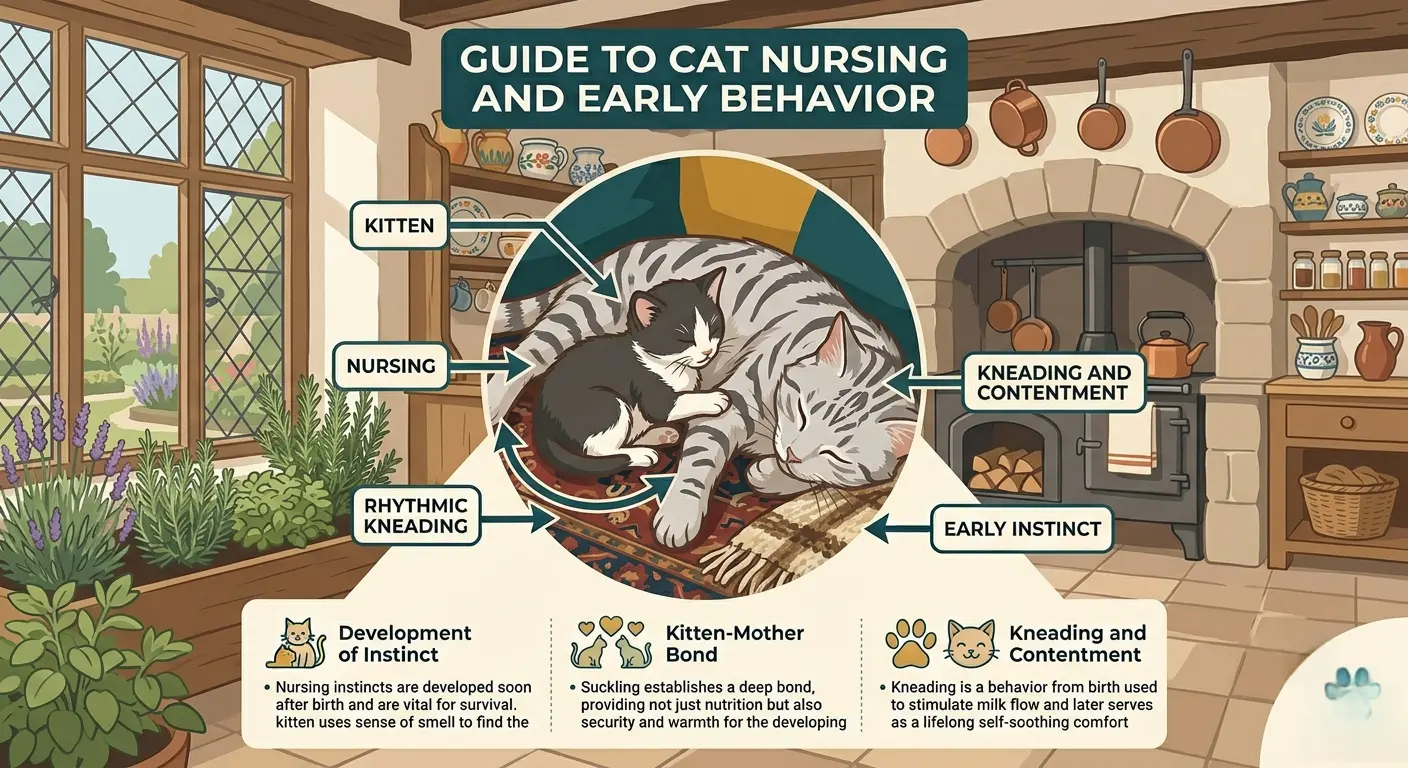
Kneading starts very early in a cat’s life. Kittens knead their mother’s belly while nursing, and the motion helps them get milk. Because of that early association, the behaviour becomes tied to comfort, safety, and closeness. The Cornell Feline Health Center explains that many adult cat behaviours are rooted in early kitten development.
When an adult cat kneads, it may be recreating that same feeling of warmth and security. The movement is not just physical. It carries a comfort memory from kittenhood. That is why the behaviour often shows up when a cat is sleepy or cuddled up with a trusted person.
Why cats knead before sleeping
Many cats knead right before they fall asleep. In that moment, the behaviour often works like a relaxation routine. The cat may be making the surface feel better, soothing itself, or shifting into rest mode.
Cats may knead before sleeping because:
- They want a soft, secure resting spot.
- They are relaxing their muscles.
- They are preparing mentally for sleep.
Kneading on people versus blankets
The surface matters. When a cat kneads you, the behaviour often feels more personal. It usually suggests trust, attachment, and closeness. When a cat kneads a blanket or pillow, the behaviour may reflect comfort, nesting, or sleep preparation.
That does not mean one is better or more important than the other. It just means the context changes the meaning slightly. A human body can represent emotional bonding, while a blanket can act like a soft nesting surface.
Why cats knead and purr together
Kneading and purring often show up together because both behaviours are linked to comfort. When a cat purrs while kneading, it is usually in a positive emotional state. The combination often suggests pleasure, calm, and attachment.
A purring cat that is kneading is usually:
- relaxed,
- content,
- emotionally settled,
- and comfortable enough to stay close.
That does not mean every purring cat is kneading for the same reason. But when the two behaviours happen together, it usually points to a peaceful, low-stress moment.
Why cats knead and drool sometimes
Some cats knead while softly mouthing fabric or drooling a little. This can happen because the behaviour is still tied to the early nursing experience. The cat may be slipping into a deeper comfort state that resembles kittenhood.
A cat may knead and drool because:
- It feels extremely relaxed.
- It is strongly comforted.
- It is showing an old suckling-related habit.
- It is emotionally attached to the person or object.
This may look unusual, but in many cats it is simply a more intense comfort response. If the cat seems happy, soft, and calm, the drooling is often just part of the relaxation pattern.
Why cats knead you specifically
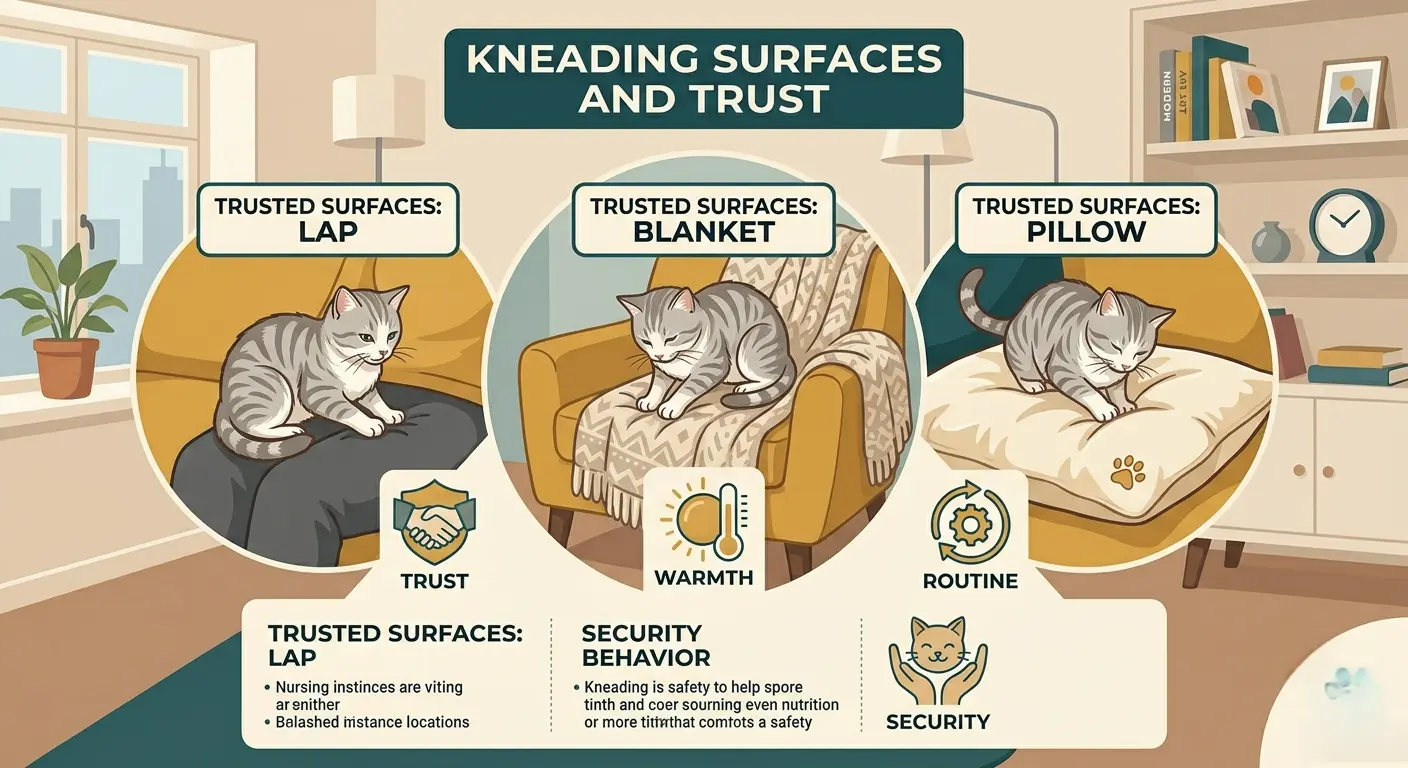
Cats often knead people they trust the most. A lap, blanket, or chest may feel like the safest place in the room, especially for cats that like to sleep directly on their owner. If your cat kneads you often, that usually means you are part of its comfort zone.
Cats also knead certain people because they link them with:
- warmth,
- routine,
- feeding,
- calm energy,
- and emotional security.
That is why kneading often happens when you sit down on the sofa, lie in bed, or relax after a long day. The cat sees that moment as an opportunity to settle into closeness.
What kneading means emotionally
Kneading can express several emotions at once. The cat may be comfortable, affectionate, soothed, and secure all at the same time. That is what makes the behaviour so meaningful.
Emotionally, kneading may mean:
- I feel safe here.
- You are my comfort place.
- I trust you.
- I am happy.
- I want to stay close.
- I can relax with you.
It is one of the clearest ways a cat can communicate emotional security without using words. Similar trust signals can appear through slow blinking and relaxed eye contact.
Scent marking and territory
Another important reason cats knead is scent marking. Cats have scent glands in their paws, and kneading can transfer scent onto a person, blanket, or resting spot. This is a subtle way of making the area feel familiar and claimed.
That does not mean the cat is being possessive in a dramatic way. It simply means the cat is blending comfort with territorial familiarity. In a cat’s mind, “this feels safe” and “this is mine” often overlap.
This is why a cat may knead the same blanket, pillow, or person over and over. The behaviour reinforces both emotional comfort and scent familiarity.
Normal kneading versus concerning kneading
Most kneading is completely normal. In fact, it is usually a good sign. A cat that kneads regularly often feels emotionally settled and secure.
Kneading is usually normal when:
- The cat looks relaxed.
- The cat purrs or seems sleepy.
- The behaviour happens during rest.
- The cat chooses soft surfaces.
- The cat is kneading a trusted person.
- The cat does not seem upset.
Kneading may deserve attention if:
- It suddenly becomes excessive.
- It happens along with restlessness.
- It seems linked to anxiety.
- The cat appears distressed.
- The behaviour changes out of nowhere.
If the pattern changes sharply, a vet check can help rule out stress or discomfort.
Comparison table
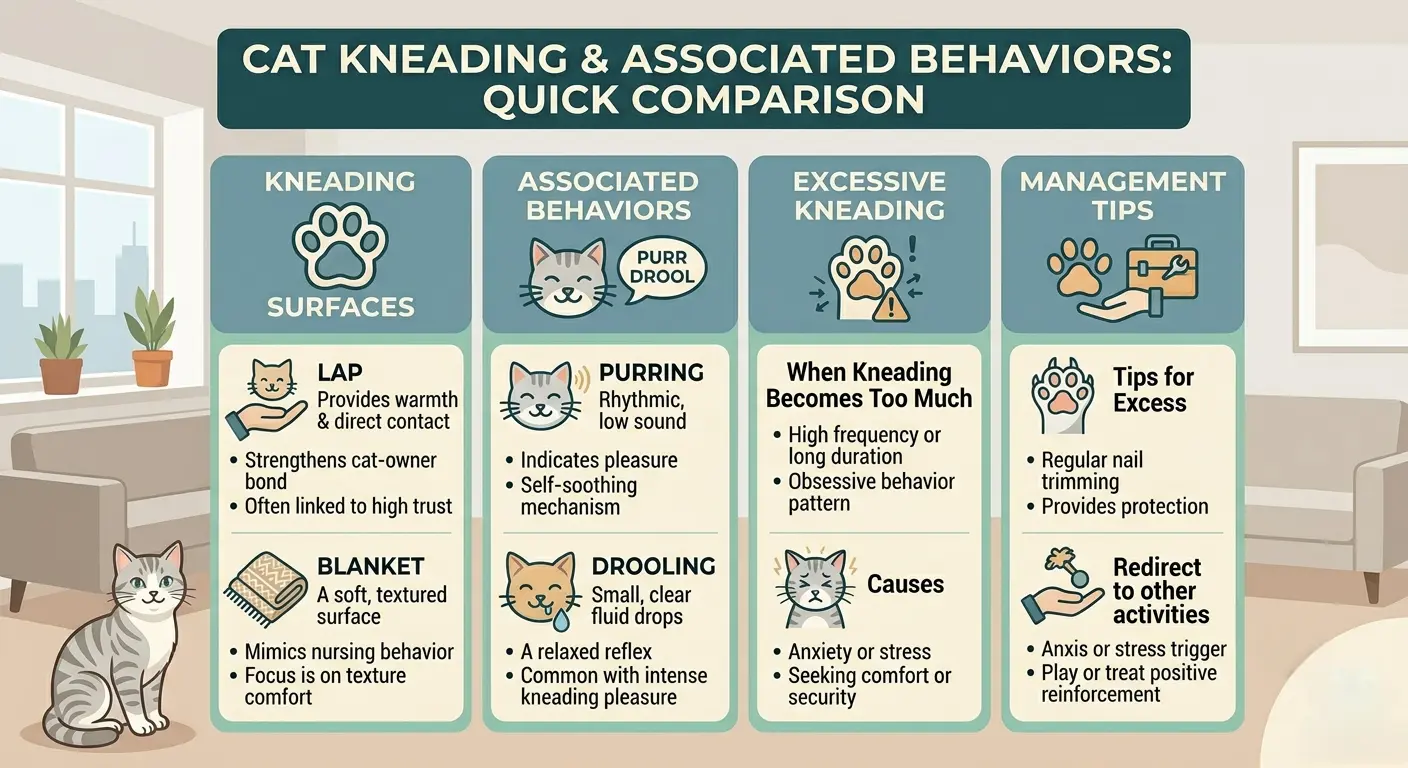
| Behavior | Most likely meaning | What to look for |
| Kneading on your lap | Affection, trust, comfort | Relaxed body, purring, soft eyes |
| Kneading on a blanket | Nesting, sleep preparation, self-soothing | Settling down, rhythmic paws, calm mood |
| Kneading with purring | Deep relaxation and contentment | Loose posture, slow breathing, calm face |
| Kneading with drooling | Strong comfort memory from kittenhood | Very relaxed state, soft mouth, gentle rhythm |
| Sudden excessive kneading | Possible stress or anxiety | Behavioural change, clinginess, restlessness |
What you should do when your cat kneads you
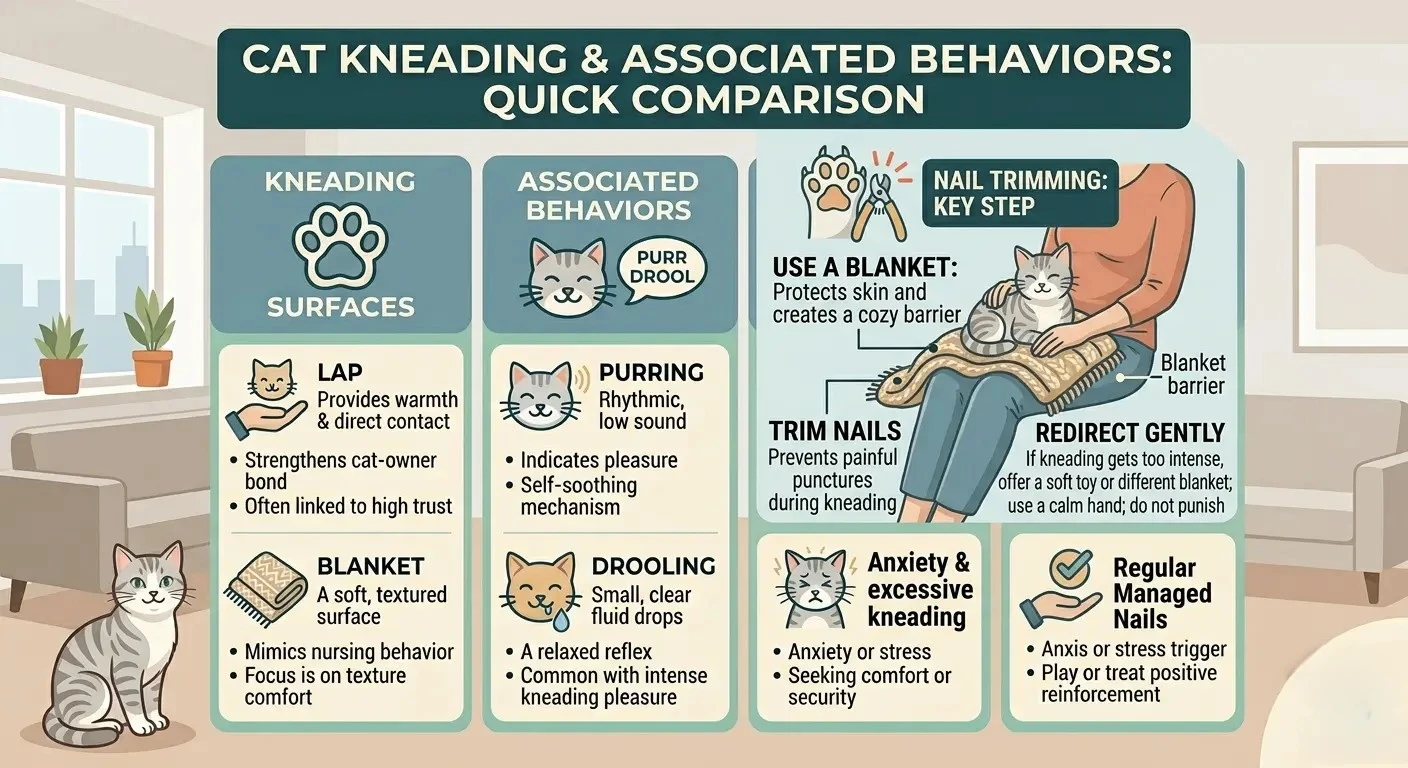
The best response is usually to let the cat continue if you are comfortable. If the claws are sharp, place a blanket between you and the cat. You can also gently redirect the cat to a soft surface without breaking the calm mood.
Helpful responses include:
- Using a folded blanket on your lap.
- Keeping nails trimmed.
- Letting the cat settle naturally.
- Avoiding sudden movement.
- Rewarding calm behaviour.
You do not need to stop kneading completely. For many cats, it is a healthy comfort behaviour. The goal is to keep it pleasant for both of you.
What not to do
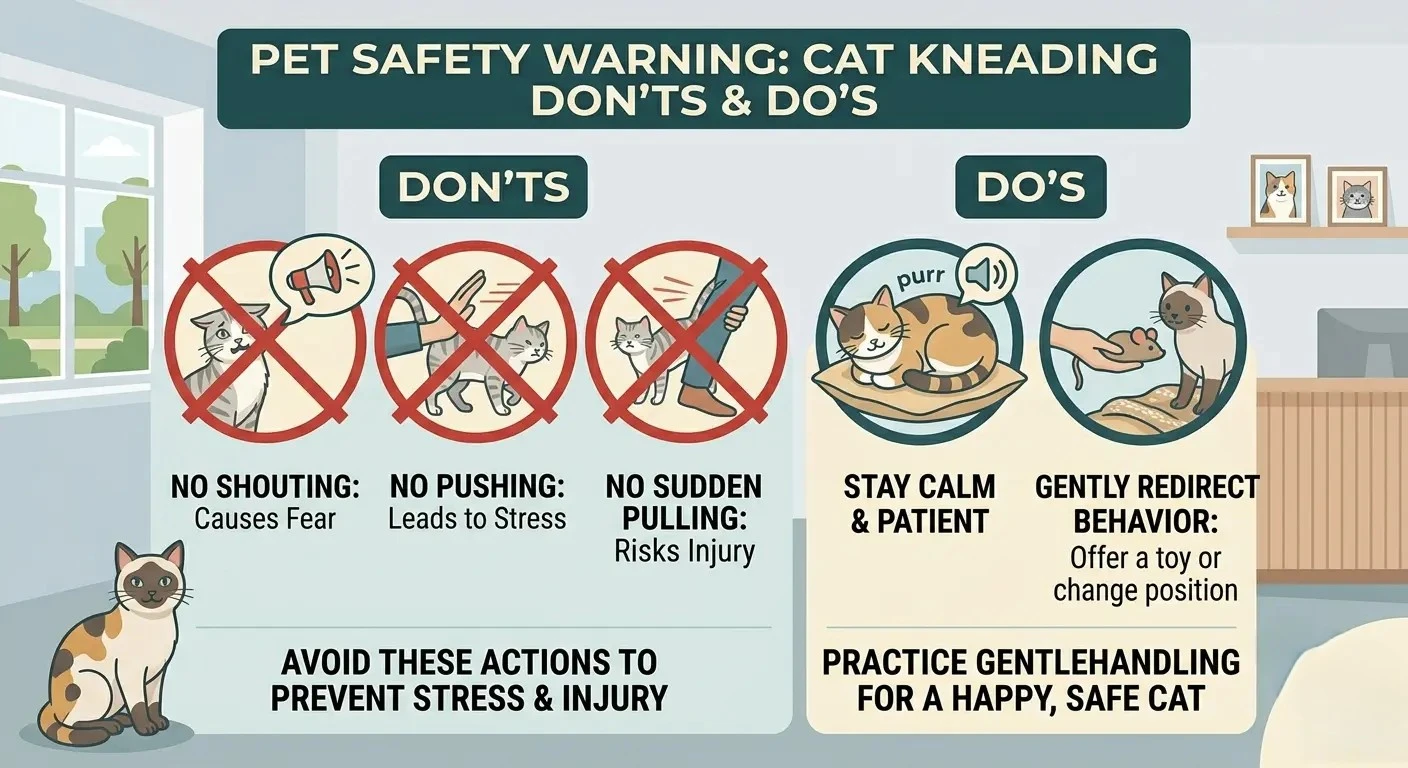
Do not punish the cat, shout, or push it away harshly. Kneading is not a bad habit in most cases. If you react strongly, the cat may become confused or lose trust in the moment.
Avoid:
- Hitting or startling the cat.
- Pulling your body away suddenly.
- Scolding the cat for settling on you.
- Forcing it off in a rough way.
A calm redirection works much better than punishment.
Conclusion
Cats knead people so much because the behaviour is deeply tied to comfort, trust, and emotional security. It starts in kittenhood, continues into adulthood, and often appears when a cat feels safe enough to relax fully. In many cases, kneading is your cat’s way of saying that you are part of its comfort zone.
When your cat kneads you, it is usually not being strange or demanding. It is following an instinct that has become a sign of affection, soothing, and closeness.
Frequently Asked Questions
Why does my cat knead me so much?
Cats knead people so much because they feel safe, relaxed, and attached. It is usually a comfort behaviour that comes from kittenhood.
Why does my cat knead me and purr?
Kneading and purring together usually mean the cat is content, calm, and emotionally settled.
Why does my cat knead me before sleeping?
Cats often knead before sleeping because they are preparing to rest and settling into a secure, comfortable state.
Why does my cat knead me with claws?
Claws come out because kneading is a natural rhythmic motion. It does not always mean the cat is being rough.
Should I stop my cat from kneading me?
Not necessarily. If it hurts, use a blanket or redirect the cat to a soft surface instead of stopping the behaviour completely.
