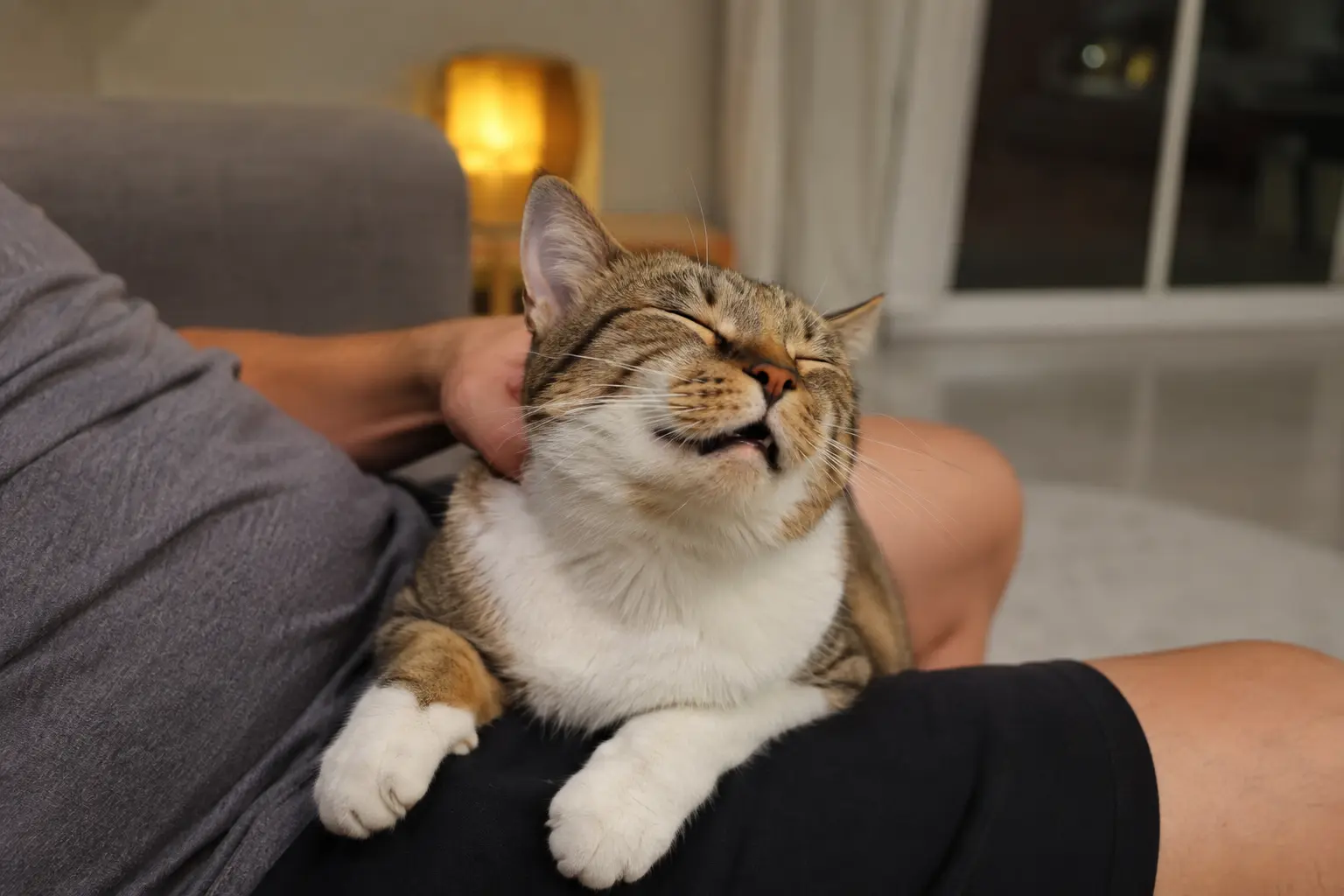
If your cat purrs so loudly, it may simply be feeling happy, relaxed, and deeply comfortable. Some cats naturally have louder purrs because of their individual anatomy, age, breed, or personality. However, loud purring does not always mean your cat is content. Cats may also purr loudly when they are hungry, stressed, frightened, overstimulated, or trying to comfort themselves during pain or illness.
The best way to understand a loud purr is to look at the whole situation. Notice your cat’s body language, appetite, energy, posture, facial expression, and the moment when the purring begins. A loud purr from a relaxed cat on your lap means something very different from a loud purr coming from a cat that is hiding or struggling to breathe.
What does a loud purr mean?
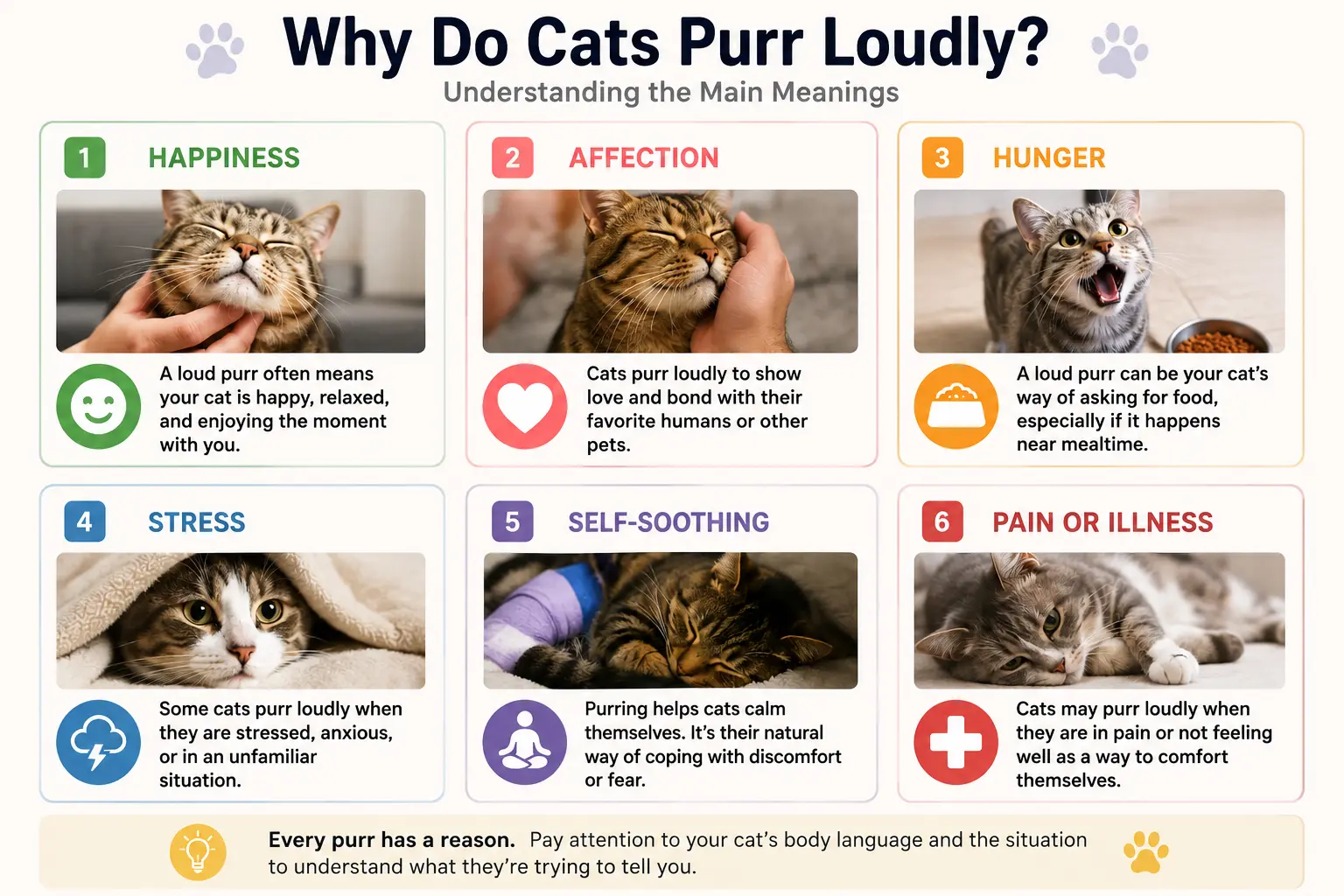
A loud purr is usually a stronger or more noticeable version of a normal purr. Some cats naturally produce a deep, engine-like vibration, while others have a soft purr that you can feel more easily than hear.
Your cat may purr loudly because:
- It feels safe and content.
- It enjoys being petted or cuddled.
- It wants food, play, or attention.
- It is excited or overstimulated.
- It is trying to calm itself.
- It feels stressed or frightened.
- It is experiencing pain or discomfort.
A loud purr cannot be interpreted by sound alone. The same volume may occur during happiness and stress, which is why body language and context are essential. Competitor articles repeatedly emphasize this distinction, but a clear comparison between each situation is often missing.
Why some cats purr louder than others
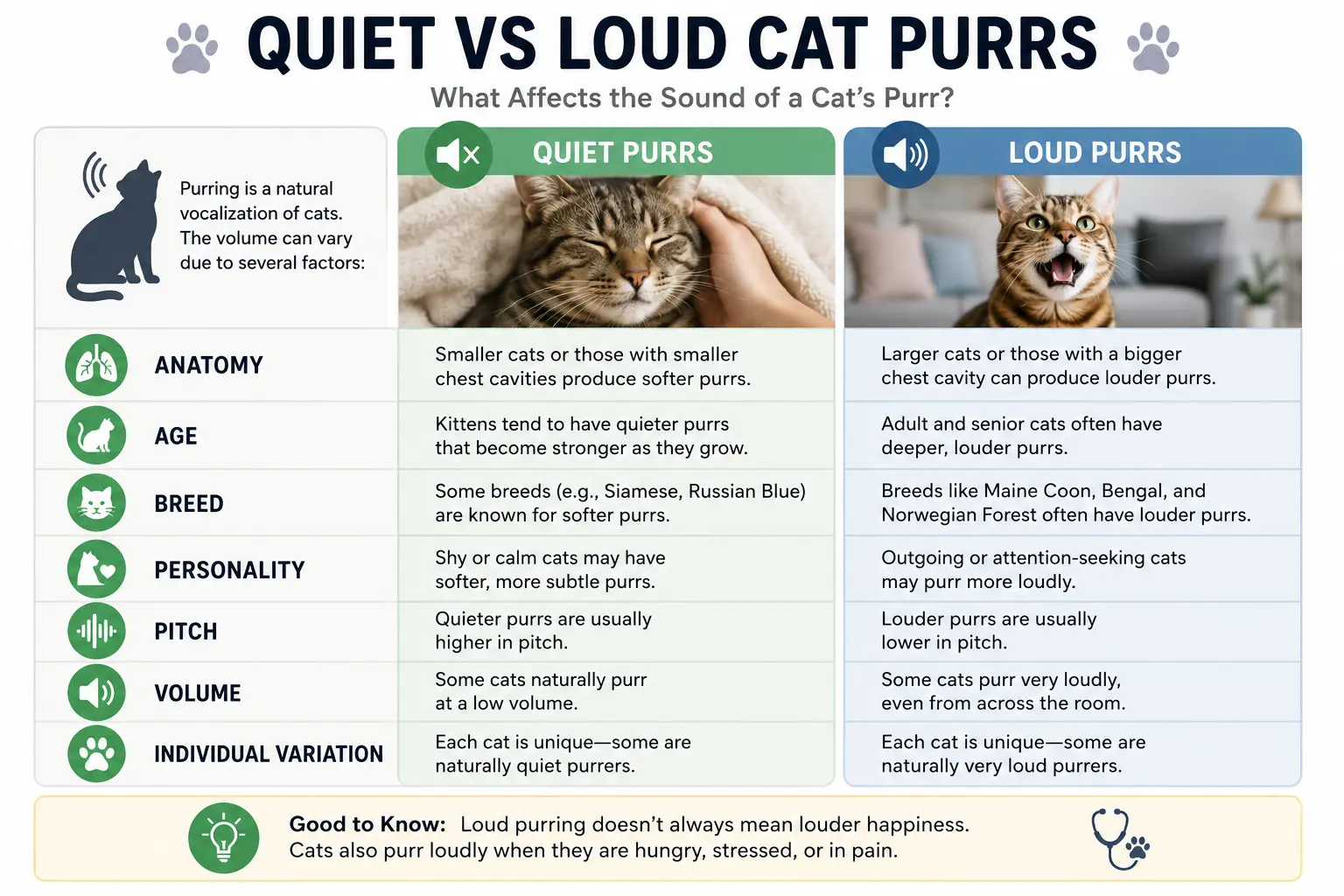
Cats do not all purr in the same way. One cat may sound like a quiet motor, while another may sound like a small engine across the room. Differences in volume, pitch, rhythm, and vibration are normal.
A louder purr may be related to:
- Individual anatomy.
- Stronger throat or laryngeal muscle contractions.
- Age-related changes.
- Breed characteristics.
- A higher level of excitement.
- A learned way of getting attention.
Some cats naturally have louder voices and purrs. Breeds such as Maine Coons and Oriental Shorthairs are often described as more vocal, although individual personality matters more than breed alone.
A cat’s purr may also become louder as they grow older because the muscles involved in vocalization become stronger. This does not automatically mean that an older cat is sick. The important warning sign is a sudden change from your cat’s usual purr.
How does a cat purr?
A cat purr begins with signals from the brain that activate muscles around the larynx, or voice box. As the cat breathes in and out, air moves through the vibrating area and creates the familiar low rumbling sound.
The purr continues during both inhalation and exhalation, which is why it can sound almost continuous. The diaphragm and muscles around the vocal folds also contribute to the vibration.
A purr is different from a meow because it is generally produced with the mouth closed and continues through the breathing cycle. Some cats also create a higher-pitched purr mixed with a meow when they want food or attention.
When loud purring means happiness
The most common reason a cat purrs loudly is contentment. Your cat may produce a powerful purr while sitting on your lap, receiving gentle strokes, kneading a blanket, or resting in a warm place.
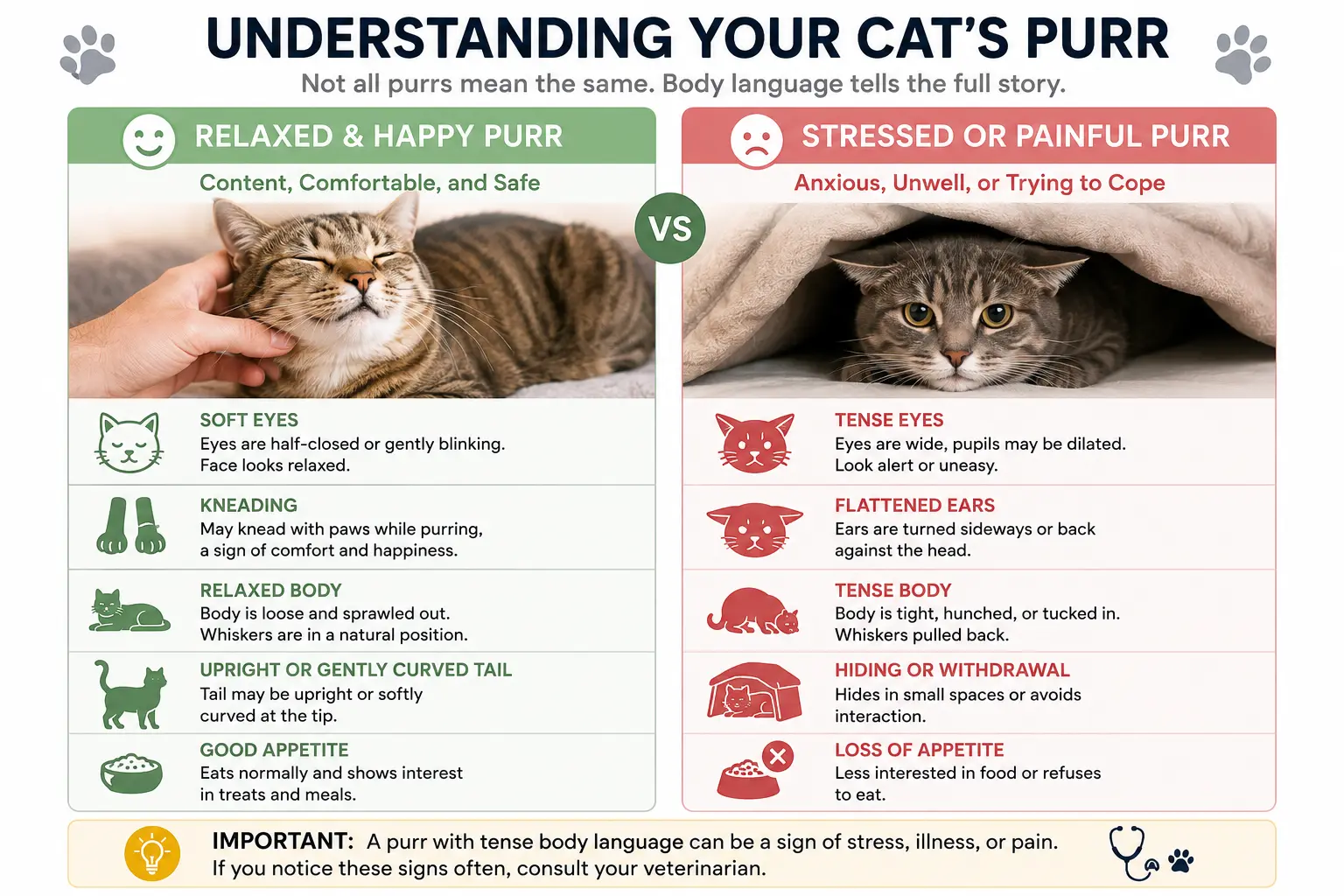
Signs that loud purring probably means your cat is happy include:
- Relaxed body posture.
- Soft eyes or slow blinking
- Ears in a natural position.
- Kneading with the front paws.
- Rubbing against you.
- Normal appetite.
- A relaxed tail.
- Choosing to stay close to you.
If your cat purrs loudly while cuddling, stretching, or falling asleep, the sound is usually a positive sign. Some cats purr more intensely when you touch their favorite areas, such as the cheeks, chin, neck, or shoulders.
(meri bili jab meri lap par aa kar loudly purr karti hai to woh usually apni eyes half close kar leti hai aur paws se blanket knead karti hai. Is combination se mujhe samajh aa jata hai ke woh relaxed aur comfortable hai, sirf loud purring ki wajah se nahi.)
When loud purring means affection
A loud purr can also be a social signal. Cats may purr while sitting close to a trusted person or another cat. They may combine purring with headbutting, rubbing, licking, or kneading.
Your cat may be expressing affection if they:
- Follow you around.
- Rub their face against you.
- Sit or sleep beside you.
- Slow blink at you.
- Knead your lap.
- Purr when you speak softly.
- Relax when you touch them.
Cats can use purring to maintain social contact. Kittens purr around their mother, and adult cats may purr around familiar humans or feline companions. The sound can communicate comfort, friendliness, or a desire to remain close.
When loud purring means your cat wants something
Some loud purrs are requests. Your cat may be asking for food, a treat, playtime, access to a room, or physical attention.
A request purr may be:
- Higher-pitched than your cat’s usual purr.
- Mixed with a meow or chirp.
- More urgent or repetitive.
- Combined with rubbing against your legs.
- Directed toward the food bowl.
- Followed by walking toward a toy or treat cupboard.
For example, your cat may purr loudly while circling your legs and looking at the kitchen. That pattern is more likely to mean “feed me” than “I am completely relaxed.”
Watch what happens next. If your cat leads you toward food, toys, or a closed door, the loud purring is probably part of a communication pattern.
When loud purring means stress or fear
Cats may purr loudly to calm themselves during stressful situations. This can happen at the veterinarian, during travel, after a loud noise, or when the cat is in an unfamiliar environment.
Stress-related purring may appear with:
- Flattened or sideways ears.
- Wide pupils.
- A tense or crouched body.
- Tail flicking or lashing.
- Hiding.
- Increased vocalization.
- Avoiding touch.
- Hissing or growling.
- Loss of appetite.
A cat that purrs loudly at the vet is not necessarily happy to be there. The purring may be helping the cat cope with fear or uncertainty. Give the cat space, reduce noise where possible, and avoid forcing physical contact.
Can loud purring indicate pain?
Yes, loud purring can sometimes occur when a cat is in pain or feels unwell. Purring may act as a self-soothing behavior, but it should never be used as proof that a cat is comfortable.
Be more concerned if loud purring happens with:
- Hiding.
- Loss of appetite.
- Lethargy.
- Limping.
- Reluctance to jump.
- Vomiting or diarrhea.
- Changes in grooming.
- Sensitivity to touch.
- Unusual breathing.
- A tense or hunched posture.
Cats often hide signs of illness, so a change in purring may be one of the first things an owner notices. If a normally quiet cat suddenly begins purring constantly, or if your cat’s purr changes dramatically, contact a veterinarian for advice.
Loud purring: happy or worried?
| Situation | More likely meaning | Other signs |
| Purring on your lap | Contentment and affection | Kneading, slow blinking, relaxed body |
| Purring while being petted | Enjoyment or social bonding | Rubbing, soft eyes, calm posture |
| Purring near the food bowl | Hunger or a request | Meowing, circling, staring at food |
| Purring during play | Excitement and stimulation | Chasing, pouncing, active tail |
| Purring at the vet | Fear or self-soothing | Hiding, tense body, wide pupils |
| Purring while hiding | Possible stress or pain | Poor appetite, reduced movement |
| Purring with hissing | Defensive tension | Flattened ears, raised fur, swishing tail |
| Sudden constant purring | Possible discomfort or illness | Lethargy, behavior or appetite changes |
This table gives you a better answer than simply saying that loud purring means happiness. The surrounding signals determine the likely meaning.
Why cats purr while kneading
Loud purring and kneading often appear together during deep relaxation. Kneading begins in kittenhood when kittens press their paws against their mother while nursing. In adulthood, the behavior may remain connected with comfort and emotional security.
A cat may purr loudly while kneading:
- Your lap.
- A blanket.
- A pillow.
- Their bed.
- Your chest or stomach.
If the cat’s body is relaxed and they are not showing signs of pain, this combination is usually positive. Drooling may also appear in some cats during an intense comfort response.
Why cats purr while sleeping
Some cats purr quietly or loudly while falling asleep or resting. This may help them relax and settle into a comfortable state. If the purring is normal for your cat and there are no other symptoms, it is usually not concerning.
However, pay attention if sleeping and purring are accompanied by:
- Sleeping much more than usual.
- Difficulty waking.
- Reduced appetite.
- Abnormal breathing.
- Weakness.
- A sudden behavior change.
A change in sleep, appetite, or activity matters more than purring alone.
Is purring healing?
Some research and veterinary explanations suggest that the low-frequency vibrations associated with purring may support relaxation and may have connections with bone, tissue, or pain management. However, the evidence should not be overstated.
A cat’s purr should not be treated as a cure or replacement for veterinary care. If your cat is injured, limping, not eating, or showing signs of illness, they need an appropriate examination even if they are purring.
Listening to a cat purr may feel calming for humans, and gentle interaction with a relaxed pet can support emotional wellbeing. But purring is not a medical treatment for people or animals.
What should you do when your cat purrs loudly?
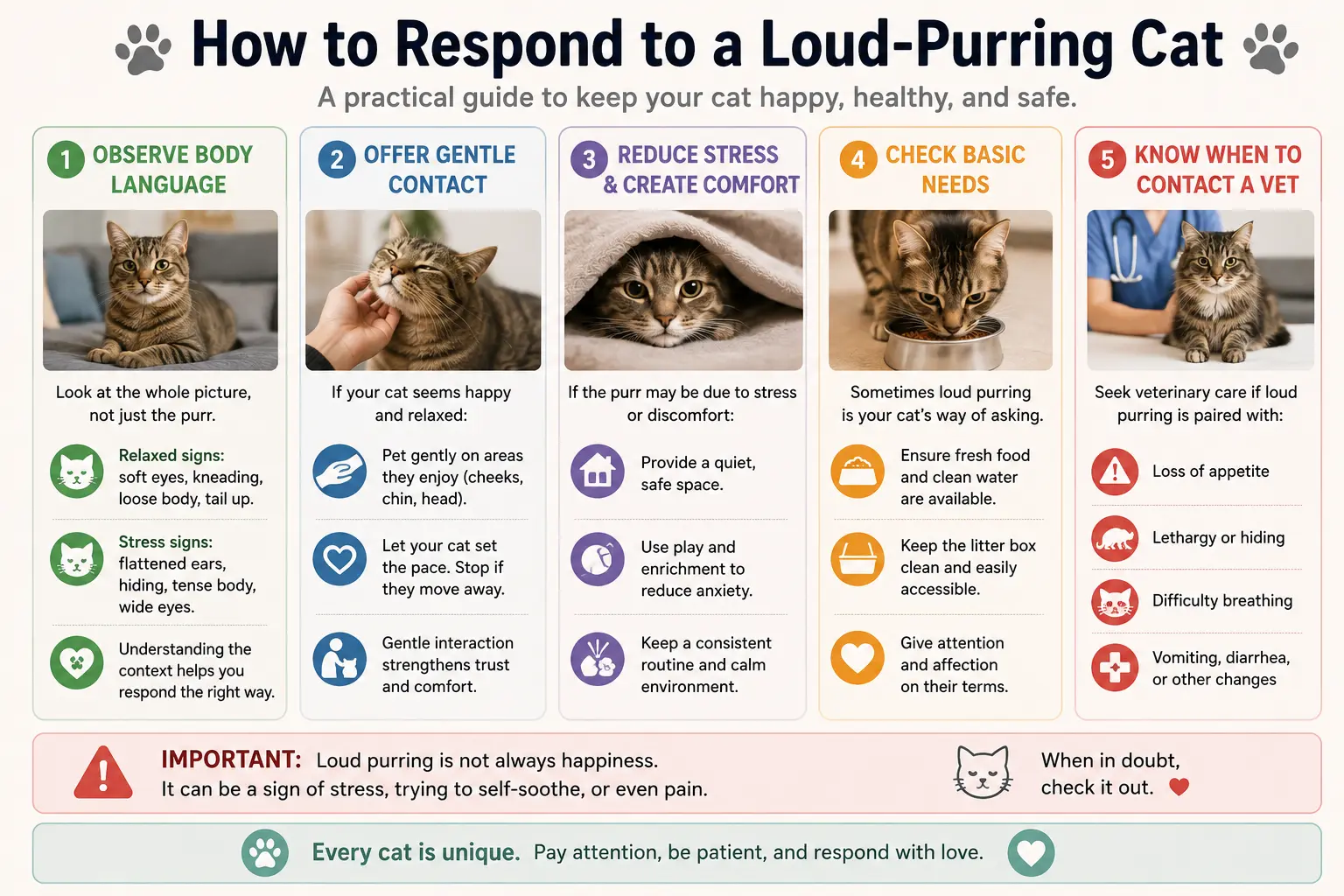
Start by observing the situation instead of reacting to the volume.
If your cat appears relaxed:
- Speak softly.
- Offer gentle petting.
- Let your cat choose the level of contact.
- Allow kneading if it is comfortable.
- Stop if the cat shows overstimulation signs.
If your cat appears hungry:
- Check the feeding schedule.
- Look at the food bowl.
- Avoid adding excessive treats.
- Keep meals consistent.
If your cat appears stressed:
- Reduce noise.
- Give them a quiet hiding space.
- Avoid picking them up forcefully.
- Keep other pets or children at a comfortable distance.
- Allow the cat to approach when ready.
If the purring is unusual or occurs with illness signs, contact your veterinarian.
When should you call a vet?
Arrange a veterinary appointment if your cat’s loud purring is new, persistent, or accompanied by physical or behavioral changes.
Contact a vet if your cat:
- Stops eating or eats much less.
- Hides more than usual.
- Seems weak or lethargic.
- Vomits repeatedly.
- Has diarrhea.
- Breathes noisily or with difficulty.
- Shows pain when touched.
- Limps or avoids movement.
- Develops a sudden change in vocal behavior.
Seek urgent veterinary help if your cat has breathing difficulty, collapses, cannot walk normally, or appears to be in severe pain.
Why does my cat suddenly purr loudly?
A sudden increase in loud purring may be caused by stronger excitement, a new attention-seeking habit, stress, or discomfort. Look for changes in appetite, movement, sleep, grooming, and body language.
If everything else is normal and your cat is relaxed, the purr may simply be a temporary increase in expression. If other changes are present, a veterinary examination is the safer choice.
Why does my cat purr loudly when I pet her?
Your cat may purr loudly when you pet her because she enjoys the contact and feels safe. Check for relaxed eyes, kneading, rubbing, and a loose body. If the cat becomes tense, bites, swishes the tail, or turns the ears back, stop petting and give her space because she may be overstimulated.
Do all cats purr?
No. Some cats purr very quietly, and others rarely purr. You may feel a vibration in the throat or chest without hearing much sound. Individual personality also affects how expressive a cat is.
A cat that has never purred loudly may be completely normal. A sudden change from that cat’s usual behavior deserves more attention.
Conclusion
Your cat may purr so loudly because they are happy, affectionate, excited, hungry, stressed, or trying to soothe themselves. Some cats simply have naturally powerful purrs, while others become louder as they mature or learn that purring gets attention.
The sound alone cannot tell you exactly what your cat feels. Look at the full picture: body posture, eyes, ears, tail, appetite, energy, grooming, movement, and the situation in which the purring occurs.
A relaxed cat with soft eyes and a loose body is probably enjoying the moment. A cat that purrs loudly while hiding, refusing food, acting weak, or breathing abnormally needs veterinary attention.
Frequently asked questions ( FAQ)
Is a loud purr always a good sign?
No. A loud purr can mean happiness, affection, hunger, stress, self-soothing, pain, or illness. Always consider body language and context.
Why does my cat purr so loud when we cuddle?
Your cat is probably feeling comfortable and affectionate, especially if they have soft eyes, relaxed muscles, and a calm tail.
Do cats purr loudly when stressed?
Yes. Some cats purr to calm themselves during fear, anxiety, travel, veterinary visits, or unfamiliar situations.
Can loud purring mean my cat is in pain?
It can. Purring with hiding, appetite loss, lethargy, limping, or unusual posture should be discussed with a veterinarian.
Why does my cat purr loudly before eating?
Your cat may be using the purr to ask for food. A higher-pitched or urgent purr combined with meowing and bowl-focused behavior often suggests a request.
Why does my cat purr and knead at the same time?
Purring and kneading together usually indicate deep comfort and a kittenhood-related soothing behavior, especially when your cat looks relaxed.
Should I stop my cat from purring loudly?
No. Loud purring itself is not a behavior that needs to be stopped. Instead, check whether your cat is relaxed, stressed, hungry, or unwell.
