

A toy dropped beside your pillow at 3 a.m. is usually not random. Your cat may be finishing a hunting routine, asking you to play, carrying a favorite object to a safe place, or repeating a behavior that has reliably earned your attention.
The nighttime timing makes sense once you understand how cats are wired. Cats are generally most active around dawn and dusk, although many indoor cats adjust their activity around the household routine. When the home becomes quiet and you are settled in bed, your cat may see the bedroom as the safest and easiest place to deliver a toy.
What your cat may be telling you
Your cat may bring you toys at night because:
- She wants interactive play.
- She is expressing trust or affection.
- She is satisfying a hunting instinct.
- She wants you to notice or praise her.
- She is bored or has unused energy.
- She considers your bed a safe home base.
- The toy has changed, broken, or needs your help.
- She has learned that toy delivery brings a reward.
These explanations can overlap. A cat may carry a toy as prey, drop it on your bed, meow, and then wait for you to throw it. In that case, the strongest message is probably “play with me,” even though hunting behavior is part of the reason she chose the toy.
Why nighttime makes the behavior more likely
Cats are not strictly nocturnal. They are often described as crepuscular, meaning their natural activity tends to increase around dawn and dusk. Individual cats may also become active during the night, especially when they sleep through much of the day.
The household environment matters too. During the evening, people are moving around, television is playing, and other activities compete for your cat’s attention. At night, the house is still. Your bed is warm, familiar, and easy to find. If your cat has discovered that dropping a toy beside you makes you talk, sit up, or start a game, the behavior can become part of a nighttime routine.
The sound may provide an additional clue. Some cats make a muffled, unusual meow while carrying a toy because the object partly blocks the mouth. The result can sound like a low yowl or nasal call. It may simply be the vocal part of carrying an object, not a sign that your cat is distressed.
The hunting routine behind the toy delivery

A toy mouse, feather, crinkle ball, or plush animal can act like prey. Carrying it after a chase or pounce may be the final part of a natural sequence: stalk, chase, catch, bite, carry, and settle.
In the wild, mother cats may bring prey to kittens for food or to help them develop hunting skills. This does not prove that every cat bringing a toy is trying to teach its owner, but it gives us a plausible explanation for why some cats deliver toys to people they trust.
Your cat may also be showing you the result of her work. If she drops the toy, looks at you, and waits, she may be seeking praise or inviting you to make the “prey” move again. A short interactive play session lets her complete the behavior in a safe and satisfying way.
Is your cat offering a gift or asking you to play?
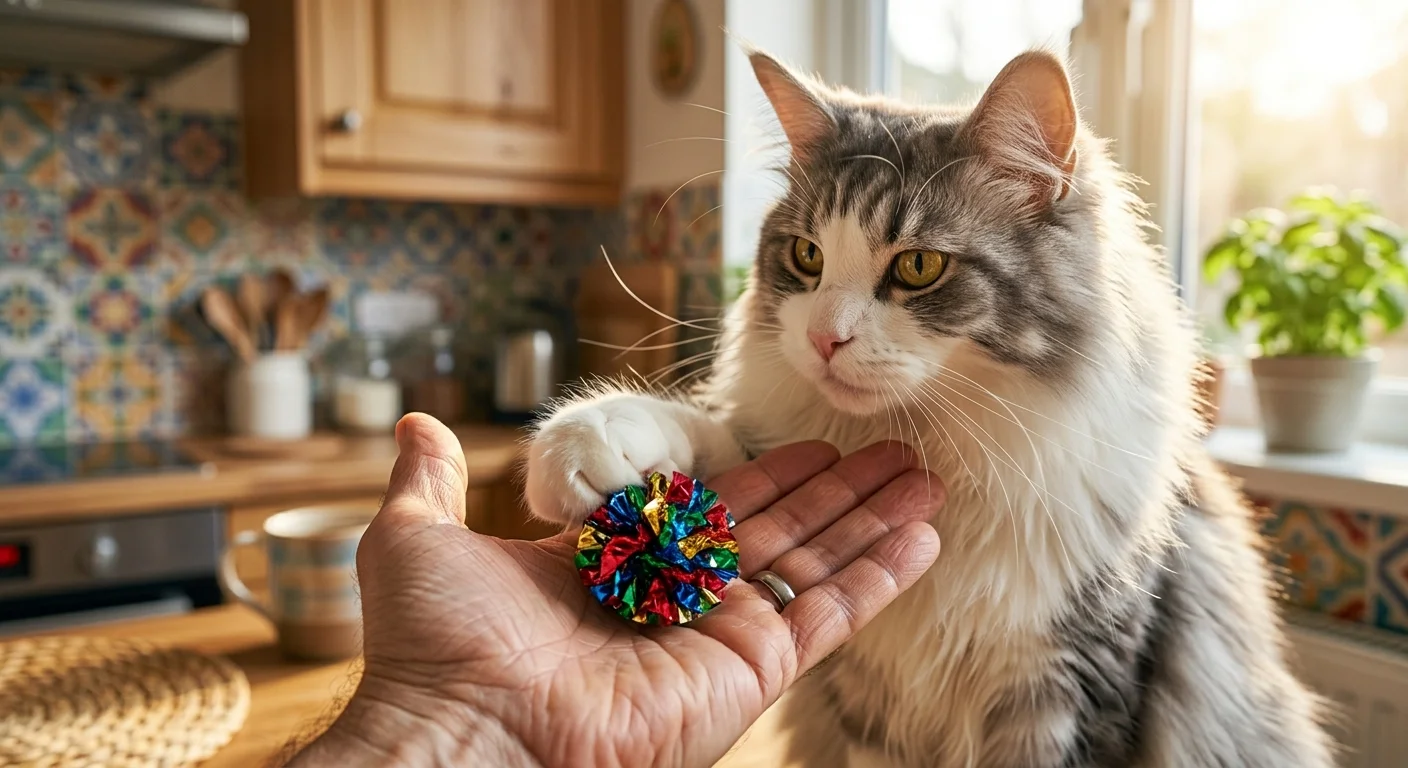
People often describe toy carrying as gift-giving. It can certainly be connected with affection and trust, particularly when a cat brings a favorite toy and calmly leaves it near you. Cats that feel this bonded often also follow their owners from room to room during the day. But it is better not to assume that every delivery has the same meaning.
Look at what happens next. If your cat meows, stares at you, paws the toy, or runs away and looks back, she is probably asking you to play. If she places the toy beside your pillow and curls up, she may be using your bed as a safe storage or resting place. If she brings the same toy at exactly the same time every night, the behavior may have become a learned routine.
Your response helps shape the meaning. If you get up, turn on the lights, throw the toy, and offer food, your cat learns that the delivery is an effective way to summon you.
4 Reasons cats carry toys to bed
1)Your bed feels like a safe home base

Cats may move toys to locations that smell familiar and feel protected. Your bed is warm, elevated, and associated with you. Other pets or children may be less likely to disturb the toy there.
This can explain why a cat carries toys to the bedroom even when she does not immediately want to play. The toy may simply be stored where she feels secure.
2) The toy may be a comfort object

Some cats carry, groom, cuddle, or sleep with one particular toy. A favorite object may provide familiar texture and smell, especially during a quiet or stressful time.
This is usually harmless. Let your cat keep the toy, but check it regularly for loose threads, torn seams, stuffing, or small parts.
3)Your cat may be repeating a rewarded routine
Cats learn from consequences. If bringing a toy has previously resulted in petting, praise, play, food, or even an annoyed conversation, your cat may still view your response as attention.
That does not mean you should ignore your cat’s needs. It means you can choose when the reward happens. Provide attention and play during the day and before bed, rather than teaching your cat that a toy on your pillow is the only way to start interaction.
4)The toy could need replacing
A cat may bring a toy to you because its smell or function has changed. It may be torn, missing feathers, leaking catnip, or no longer lighting up. Some cats also react when a favorite toy has been washed and no longer smells familiar.
Inspect the toy before returning it. If it has loose string, yarn, ribbon, exposed stuffing, batteries, or small pieces, replace it instead of repairing it with materials your cat could swallow.
How to read the clues in your cat’s behavior
| What your cat does | Most likely message |
| Drops the toy and looks at you | Wants attention or play |
| Meows repeatedly while carrying it | Seeking interaction or responding to a hunting routine |
| Leaves it on the pillow and walks away | Safe storage, comfort, or territory |
| Brings the same toy at the same time | Learned routine or predictable play request |
| Carries and hides it from other pets | Protecting a valued possession |
| Suddenly starts carrying toys and vocalizing | Possible stress, boredom, or health-related behavior change |
These are clues, not fixed translations. Your cat’s age, personality, daily routine, and other behavior all matter.
What to do when your cat brings a toy at 3 a.m.
If you are awake and the cat appears relaxed, a brief, calm response is fine. You can quietly acknowledge her and move the toy to a safe place. If you want to encourage play, use a toy that keeps your hands away from teeth and claws.
If the behavior is waking you repeatedly, avoid turning the delivery into a midnight event. Do not shout or punish your cat; that can create fear without addressing the reason for the behavior. Try to keep your response quiet and uninteresting.
Then move the satisfying play session earlier. About 30–60 minutes before bedtime, use a wand toy or another interactive toy to encourage stalking, chasing, pouncing, and catching. Let your cat catch the toy at the end, then offer a small meal or normal bedtime food if appropriate. This hunt-catch-eat pattern may help her settle afterward.
How to reduce repeated nighttime wake-ups

Start with the daytime routine. Add short play sessions, puzzle feeders, scratching areas, window perches, and safe climbing opportunities. Rotate toys so the same objects do not become boring.
Keep portable toys with strings, feathers, or small parts out of reach when you are asleep. Leave only safe toys designed for unsupervised use, and inspect them frequently.
If hunger seems to trigger the wake-up, ask your veterinarian whether a timed feeder or adjusted feeding schedule would be appropriate. Do not automatically increase food, because excess calories can contribute to obesity.
Behavior change takes time. If the delivery has been rewarded for months, several quiet nights may not undo the pattern immediately. Consistency matters more than a dramatic reaction.
Toy safety every cat owner should know
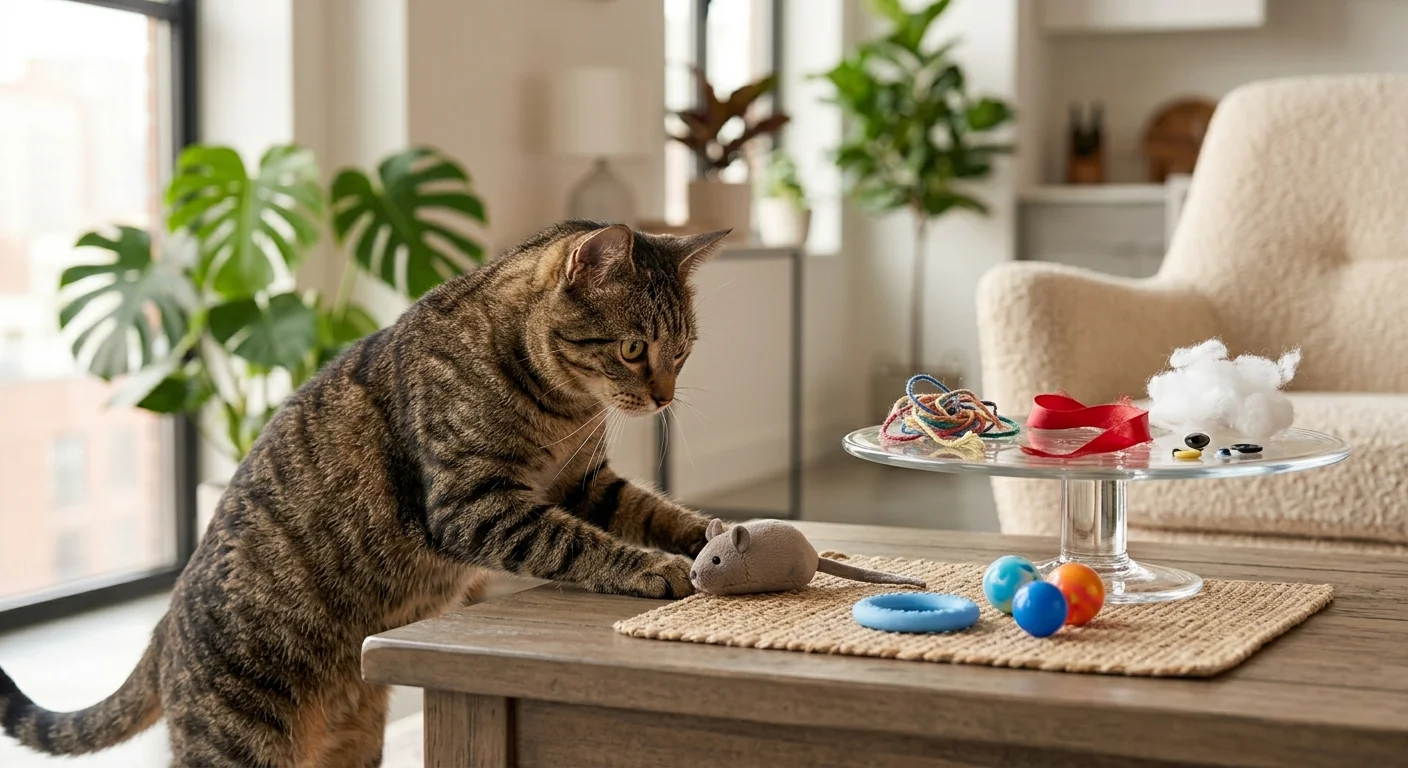
Inspect toys regularly and remove anything with:
- Loose string, yarn, ribbon, or thread.
- Torn seams or exposed stuffing.
- Small detachable bells or plastic pieces.
- Damaged batteries.
- Feathers that can be swallowed.
- Sharp edges or broken components.
String and thread can become especially dangerous if swallowed because they may tangle inside the intestines. Wand toys should be used with supervision and stored safely afterward. Laser toys can provide movement, but finish with a physical toy or treat so your cat gets a chance to catch something.
What if your cat brings real prey?

A cat that brings a mouse, bird, lizard, or insect is following the same predatory instincts that can motivate toy carrying. Do not punish or frighten her. Punishment will not teach her that hunting is wrong, and it may damage your relationship.
If possible, keep cats indoors or provide supervised access through a catio, enclosed garden, or harness training. Indoor play that includes chasing and catching can satisfy some of the same instincts. Ask your veterinarian about parasite prevention and what to do if your cat has eaten or been bitten by wildlife.
When a sudden change deserves a veterinary check

Toy carrying is usually normal. However, contact your veterinarian if an older cat suddenly begins wandering and vocalizing at night, or if toy carrying appears alongside confusion, weight loss, increased thirst, appetite changes, hiding, restlessness, or poor grooming.
Nighttime behavior can sometimes change with pain, anxiety, hyperthyroidism, vision problems, or cognitive dysfunction. The toy itself is not usually the problem; the sudden change in the overall pattern is what matters.
The bottom line
When your cat brings you a toy at night, she is probably combining instinct with communication. She may be completing a hunt, inviting you to play, storing her favorite possession somewhere safe, or repeating a behavior that has previously earned your attention.
Treat the delivery as useful information rather than a nuisance. Give your cat appropriate play and enrichment during waking hours, complete the hunt-catch-eat routine before bed, inspect toys for hazards, and avoid punishment.
Most importantly, watch for sudden changes. A toy on your pillow is usually a quirky expression of normal cat behavior. A new nighttime pattern accompanied by confusion, excessive vocalization, changes in appetite, or discomfort is worth discussing with a veterinarian.
Frequently Asked Questions
Does my cat bring me toys because she loves me?
Possibly. Bringing a valued toy can reflect trust, affection, or social bonding, but it can also be a play request or a learned way to get attention.
Why does my cat bring toys to my bed?
Your bed is warm, familiar, and usually quiet. Your cat may consider it a safe place to store a favorite toy or a reliable place to find you.
Are cats nocturnal?
Not exactly. Cats are generally crepuscular, with natural activity peaks around dawn and dusk, although indoor cats may also become active at night.
Should I play with my cat at night?
If you are awake, a short play session can be appropriate. To protect your sleep, schedule the main interactive play session before bedtime and avoid rewarding repeated midnight wake-ups.
How do I stop my cat from waking me with toys?
Increase daytime enrichment, provide a satisfying evening hunt-and-catch game, offer food at an appropriate time, keep unsafe toys away overnight, and respond calmly and consistently when the cat delivers a toy.
Why does my cat meow while carrying a toy?
The sound may be an attention or play request. It may also sound unusual because the toy partly blocks the mouth. If vocalization is new, intense, or paired with other symptoms, ask your veterinarian.
Is it normal for a cat to carry the same toy everywhere?
Yes. A favorite toy can be a prey object, comfort item, or valued possession. Replace it if it becomes damaged or unsafe.
