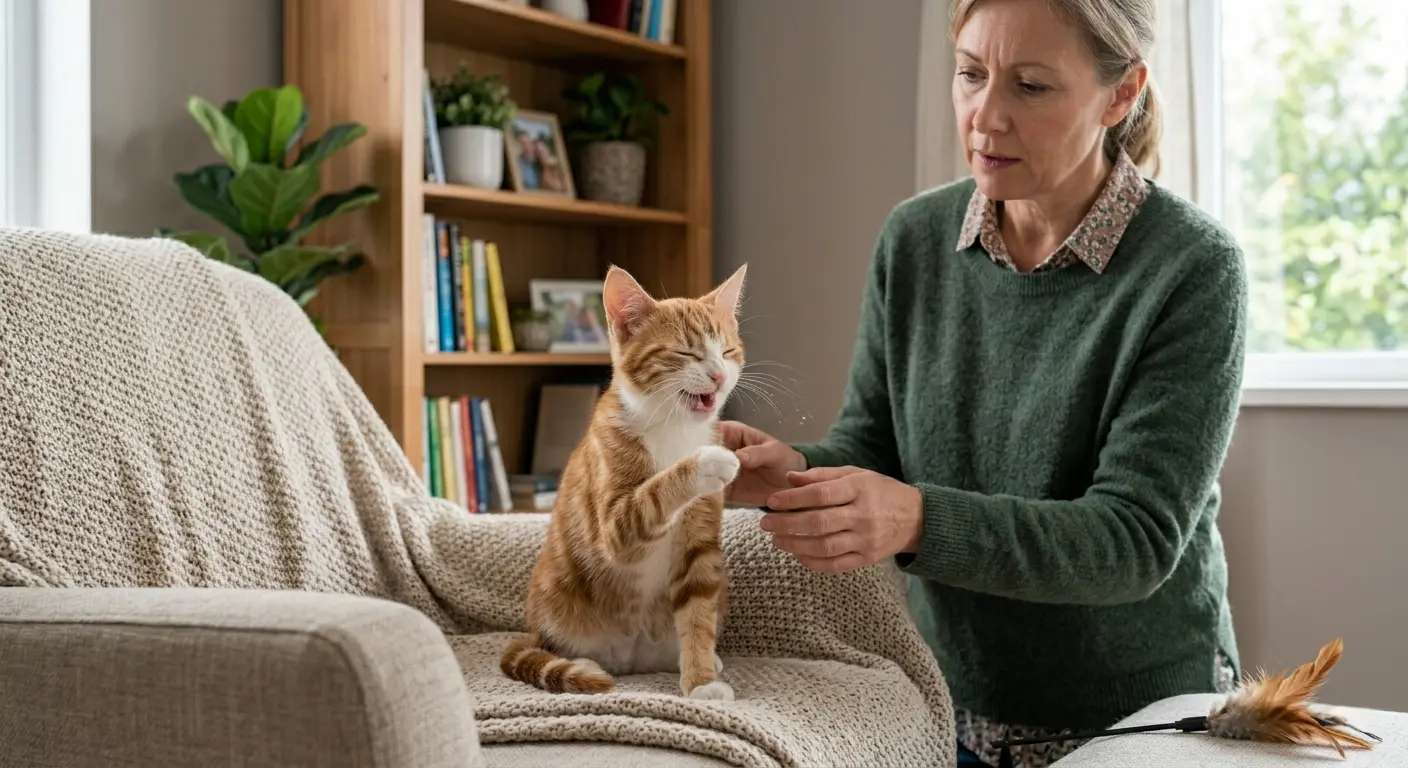
If your indoor cat is constantly sneezing, the most common cause is something in its environment, not an illness. But “most common” doesn’t mean “always,” and some sneezing patterns warrant a visit to the vet.
The difference is in the details. How often is the sneezing, what color is the discharge, and are there any other symptoms? Here’s everything you need to know when your indoor cat is constantly sneezing.
Why Indoor Cats Sneeze Differently Than Outdoor Cats
Outdoor cats sneeze more often because of pollen, plant debris, and respiratory infections from other cats. Indoor cats have different triggers.
The biggest cause that no one talks about is litter dust. Clay litter, in particular, releases fine particles into the air as the cat digs and covers itself. A cat with sensitive airways may sneeze repeatedly after each litter box use. If you recently changed the litter box and the sneezing started around the same time, it’s worth taking this connection seriously.
Other indoor specific triggers:
New cleaning products, air fresheners, or scented candles — Cats have 45 to 80 million olfactory receptors, compared to just 5 million in humans. What may seem mild to you may be too much for them.
Heating and cooling systems blow dust into the air from vents. Seasonal sneezing that starts when the heater is turned on in the fall . It’s often dust, not allergies.
Renovation or construction work — Paint fumes, sawdust, and adhesives can irritate cats’ airways.
A new cat or person in the home — Stress can trigger the feline herpesvirus, which causes sneezing. More on this below.
The Most Common Causes, In Realistic Order
1. Environmental Irritants
This is the most common cause and the easiest to fix. Your cat sneezes, then immediately returns to normal. No substance, no lethargy, no change in appetite. Just a sneeze that came from something in the air.
When your indoor cat is constantly sneezing due to a simple stimulus, a quick home inspection will usually provide the answer. Did you clean the bathroom? Burn a candle? Open the windows when the pollen count was high? Changed something in the laundry? These details quickly get to the point.
2. Feline Herpesvirus (FHV-1)
According to the Cornell Feline Health Center, an estimated 80 to 90 percent of domestic cats carry the feline herpes virus. Most cats contract the virus in childhood and carry it throughout their lives.
The virus remains dormant most of the time. Stress reactivates You may also notice your cat becoming unusually clingy during these flare ups. it which is why a previously healthy indoor cat sneezes constantly after moving house or getting a new pet. Moving house, a new pet, a change in routine, illness, even boarding any stressor can trigger the virus. The cat sneezes, may have watery or clear discharge from the eyes, and usually recovers within a week or two.
Cats with frequent herpes virus outbreaks may benefit from stress reduction at home, and in some cases an L-lysine supplement may be helpful although the evidence on L-lysine is mixed and it’s best to consult a vet before starting it.
3. Upper Respiratory Infection
Viral and bacterial respiratory infections cause sneezing along with the substance. Feline calicivirus and herpesvirus cause the majority of viral cases. Often a secondary bacterial infection sets in and that’s when the discharge turns yellow or green.
Indoor cats can also get respiratory infections. These can come from getting on your clothes, from a new cat in the house, or from a recent vet or boarding visit.
4. Dental Disease
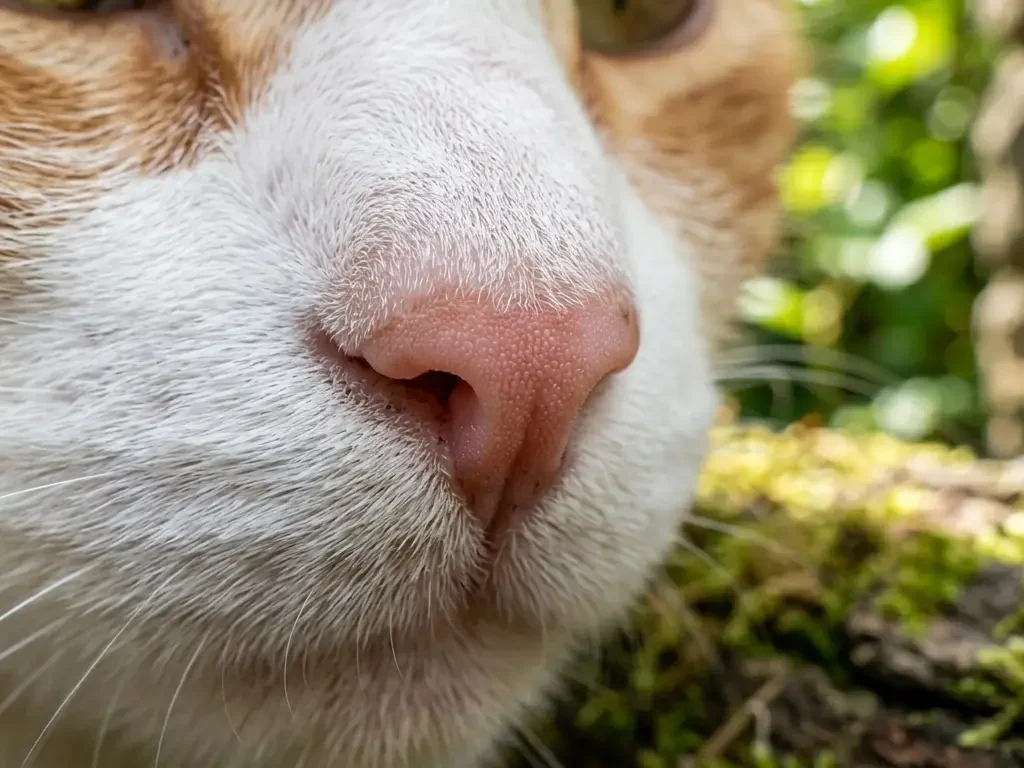
A cat’s upper teeth have their roots just below the nasal passages. A deep abscess in the root of a tooth can erode the tissue between them, allowing bacteria and debris to enter the sinus cavity. The result is a runny nose and sneezing usually on one side only.
Dental related sneezing is easy to ignore because owners don’t associate dental problems with nasal symptoms. If the discharge is on one side and thick, and your cat hasn’t had a recent dental checkup that’s a logical place to look.
5. Allergies
Cats can have environmental allergies, although less commonly than dogs. Dust mites, mold spores, and certain pollens are the most common triggers. Allergic sneezing usually produces a clear, watery discharge and recurs seasonally.
It’s unusual to have a food allergy just because of sneezing. If your cat also sneezes and has skin problems, vomiting, or ringworm — it’s worth considering an allergy test from the vet.
6. Nasal Polyps and Growths
Polyps are harmless soft tissue lumps that form behind the nasal passages or soft palate. They are more common in small cats and cause round discharge, sneezing, noisy breathing, and sometimes difficulty swallowing.
Nasal tumors are uncommon but occur more often in older cats and should be ruled out when symptoms persiste.
What Discharge Color Tells You When Your Indoor Cat Keeps Sneezing
Clear and watery: usually caused by a virus, allergy, or irritation. Often resolves on its own.
Thick and white: Beginning of secondary bacterial infection or progression of viral infection.
Yellow or green: Bacterial infection is likely. A doctor is needed.
Bloody or brown: A foreign object, dental disease, a polyp, or a lump in older cats. Need a doctor urgently.
Discharge from one side , of any color: This is the most important pattern. A bilateral discharge is usually a sign of a systemic infection or allergy. Unilateral discharge means that something is affecting only one nasal passage a foreign object, tooth abscess, polyp, or mass. A one-sided discharge requires a visit to the doctor regardless of color.
Is It Actually Sneezing?
Reverse sneezing sounds alarming rapid, gasping breaths but it’s actually harmless and extremely common. The cat stands still, and makes a loud snoring sound for 10 to 30 seconds. It stops automatically. It is caused by irritation of the soft palate and does not require treatment.
Coughing, wheezing, and retching can also be mistaken for sneezing, but they affect different parts of the airway and have different causes. If you’re not sure what you’re seeing, make a short video with your phone and show it to the doctor. This makes diagnosis much faster.
Practical Steps Before Calling the Vet
Switch to a low dust or dust-free litter . Silica crystal or paper-based litters produce far fewer airborne particles than clay litters.
Remove recently added items to the home. A new candle, cleaning spray, or plug-in air freshener that arrived around the time the sneezing started that’s a reasonable suspect.
Increase ventilation in rooms where the cat spends a lot of time. Stale indoor air concentrates allergens and dust.
Clean or replace HVAC filters. An old filter recirculates significantly more dust and particles than a clean filter.
If your indoor cat is constantly sneezing but has none of the warning signs below, watch for three to five days. If the sneezing is due to a mild irritation or minor viral episode, improvement should be seen within this period. A cat that’s sneezing but following you around and behaving normally. it’s almost always okay to monitor it briefly at home.
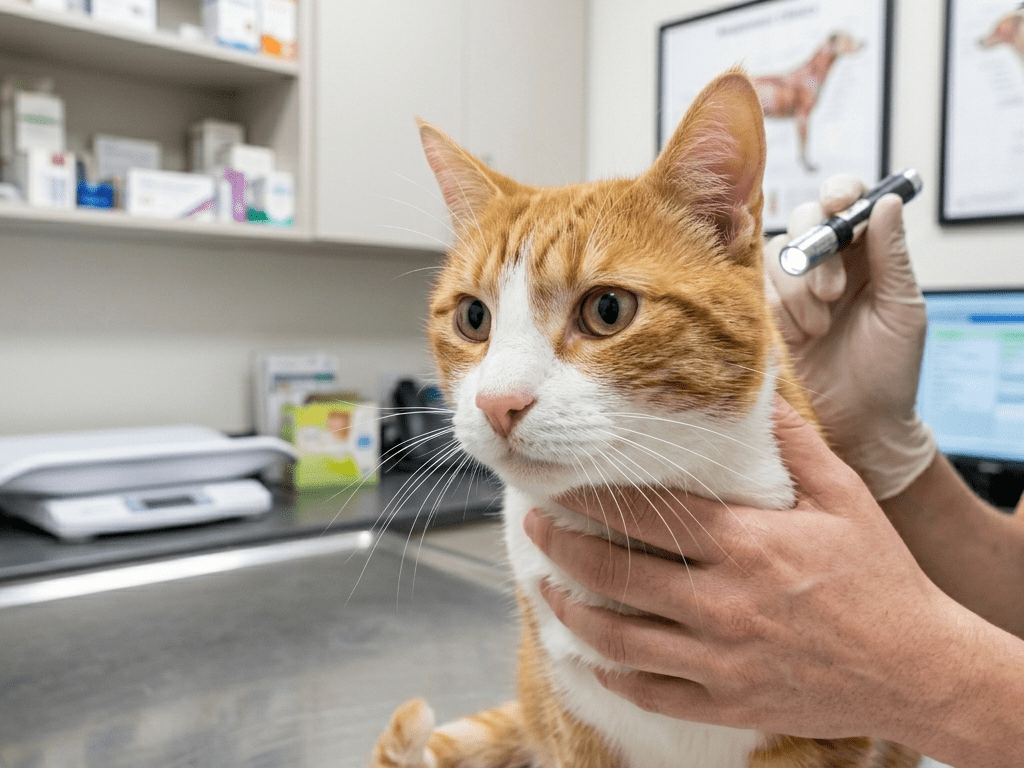
When My Indoor Cat Keeps Sneezing: Time to Call the Vet
Don’t wait when any of these symptoms are present:
- Discharge that is yellow, green, or bloody.
- Discharge from only one nostril.
- Sneezing that continues for more than five to seven days without improvement.
- End of hunger. Cats rely heavily on smell for their appetite. A cat with a blocked nose often stops eating, and a cat that doesn’t eat for more than 24 to 48 hours can quickly collapse. In some cases, appetite loss combined with restlessness or increased vocalization may also appear
- Lethargy or marked weakness.
- Open mouth breathing while resting.
- Swelling around the nose or under one eye.
- Any kitten under 12 weeks of age with respiratory symptoms should be evaluated promptly
- Sneezing with loss of appetite is a more reliable warning sign than sneezing alone. This indicates that the infection or irritation has become so severe that the sense of smell is affected and this is when the situation can quickly worsen.
Conclusion
When your indoor cat is constantly sneezing, start with the environment before admitting illness. Check litter, cleaning products, and air quality. Once the trigger is identified and removed, most cases resolve within a week.
Conditions that require a visit to the vet include a clear pattern: colored discharge, one-sided discharge, sneezing that doesn’t improve, or a cat that’s also stopping to eat. These combinations go beyond simple irritation and indicate something that needs evaluation.
Frequently Asked Questions (FAQ)
Why is my indoor only cat sneezing so much?
Indoor cats often sneeze from litter dust, household irritants such as cleaning products and candles, or stress induced herpes virus flare ups. Because they have no contact with the outside, persistent sneezing in an indoor cat without an obvious environmental trigger warrants a vet visit as soon as possible since the cause is more likely to be medical.
What do I do if my cat is constantly sneezing?
Take a quick look at the home new products, litter type, recent changes. Switch to a low-dust litter if you haven’t already. If sneezing lasts more than five to seven days or is accompanied by discharge, loss of appetite, or lethargy call your doctor. Do not give human antihistamines without a doctor’s advice. Most human cold medicines are toxic to cats.
How many sneezes in a row is normal for a cat?
One to three occasional sneezes throughout the day are normal. Repeated sneezing attacks several times a day, or five or more in a cluster should be monitored. Pattern is more important than numbers. Occasional sneezing is usually fine without any other symptoms. Frequent sneezing clusters that last for days not normal.
When should I worry about cat sneezing?
Be concerned when the discharge is colored instead of clear, when it comes from only one nostril, when your cat is eating less than usual, when the sneezing has not improved after five to seven days, or when you notice any difficulty breathing. A cat that sneezes a few times is normal. it’s almost never a cause for concern. A cat that sneezes every day and is quiet and eating less is telling you something.
