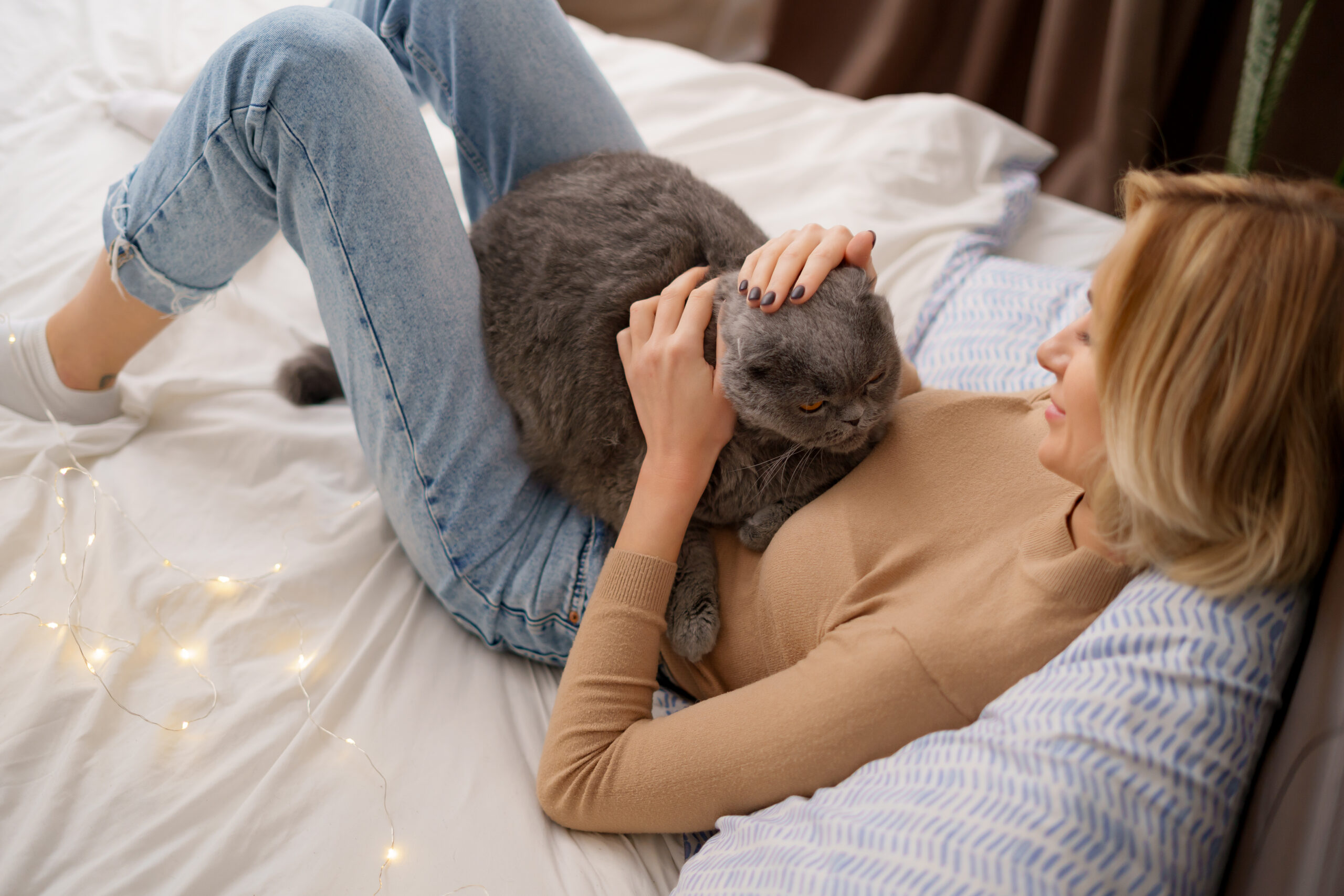
The short answer is, it trusts you and loves you very much.
My cat does this every night. She waits for my bus to leave, then jumps up, curls up on my chest like a loaf of bread, and purrs so loudly I can feel it in my breastbone. I’ve had cats my whole life, and this behaviour got me so curious that I started wondering: What could be the main reasons behind this?
5 Reasons at a Glance
| Reason | What It Means |
| Your body is the warmest spot | Simple heat-seeking behavior |
| Your heartbeat feels like kittenhood | Comfort memory from nursing |
| Complete trust | Chest is a vulnerable position to sleep in |
| Scent marking | Claiming you with facial scent glands |
| Attention-seeking | It’s learned that this gets a reaction from you |
Why does my cat lay on my chest? 5 real reasons
1) Your body is the warmest spot in the room
Cats are warm-blooded, and their normal body temperature ranges from 100.5°F to 102.5°F, noticeably higher than ours. That means they’re always looking for extra heat sources without having to burn their own energy to generate it.
Your chest is warm and steady, especially during colder months, so your cat is drawn to it the same way it’s drawn to a sunny windowsill or a heater vent.
2) Your heartbeat reminds them of being a kitten
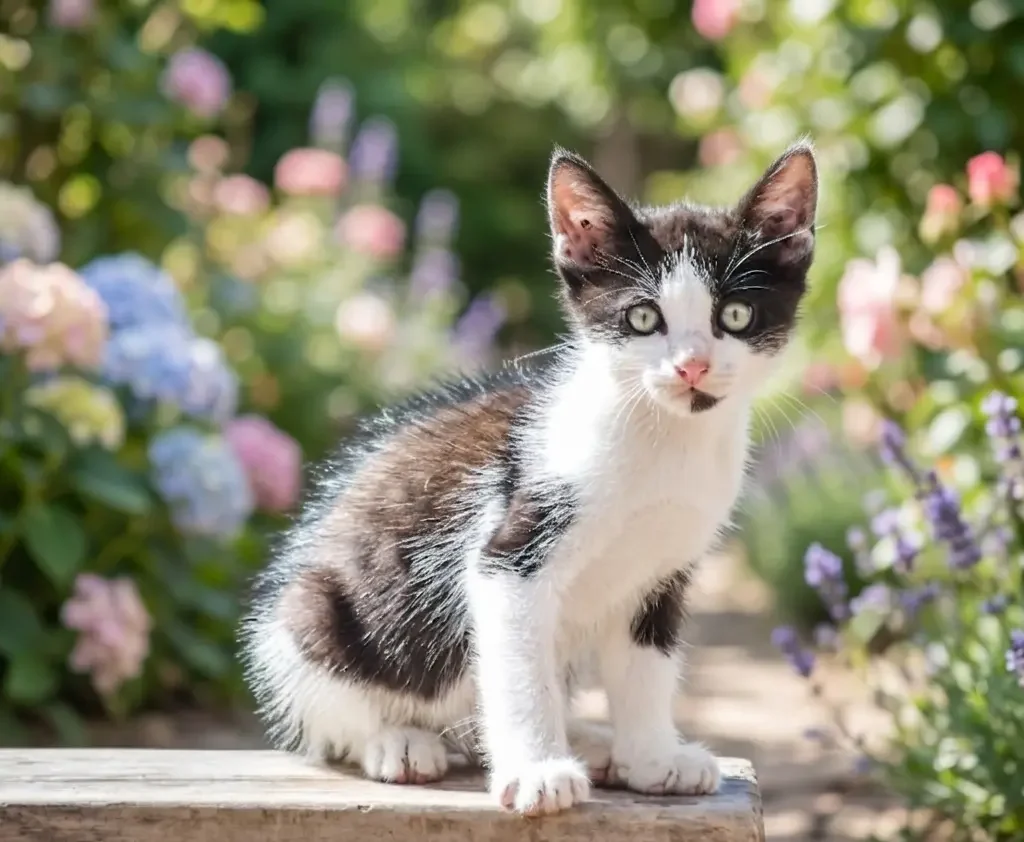
When kittens nurse, they cling to their mother’s body and feel two things: her warmth and the steady beat of her heart.
Your heartbeat recreates this sensation, as does the rise and fall of your breath. When your cat sits on your chest, she’s not just seeking warmth. She’s recreating a sensory experience that’s been inside her since birth.
3) They trust you completely
Sleeping on your chest puts your cat in one of its most vulnerable positions. It’s not a spot a cat would choose around someone it didn’t fully trust.
Cats generally show affection through proximity and touch rather than more obvious displays. Choosing your chest specifically is one of the clearer signs of that trust. It’s the same instinct behind a cat following you from room to room, or headbutting you as a greeting, different behaviour, same underlying bond.
4) They’re marking you as theirs
Cats have scent glands on their faces, chins, cheeks, and tops of their heads. When she rubs against you or sits on your chest, she’s leaving her scent on you. This is territorial behaviour, but not aggressive. It’s a sign of dominance,
This behaviour often escalates in multi-cat households. Each cat wants to keep her scent on you so that the other cats know the boundaries.
5) They want your attention and they know it works
Cats are sharp observers of what actually gets a reaction from you. If your cat lying on your chest reliably earns petting, talking, or eye contact, it learns that lesson fast, and your chest becomes the most reliable place to get your full attention.
Some cats layer on other attention-seeking habits alongside this, like meowing more at night, especially once you’re lying down and less able to walk away.
My own cat does this most when I’m reading or on my phone. I usually let it happen and give her a little attention rather than fight it.
Why does my cat purr while laying on my chest?
Cats purr at a frequency of 25 to 150 hertz. Sound researcher Dr Elisabeth von Mogenthaler found that this frequency is identical to that used in bone strengthening, wound-healing, and pain-relief treatments. Her research suggests that purring may be a cat’s way of healing itself.
There’s a difference between a normal purr and a high-pitched growl. A cat makes this particular sound when it needs something from you. Then it comes onto the chest and starts making a lot of noise.
Feeling the vibrations in your chest isn’t just love. It’s your cat speaking to you in a language. It is trying to tell you what it actually wants.
Why does my cat knead on my chest?
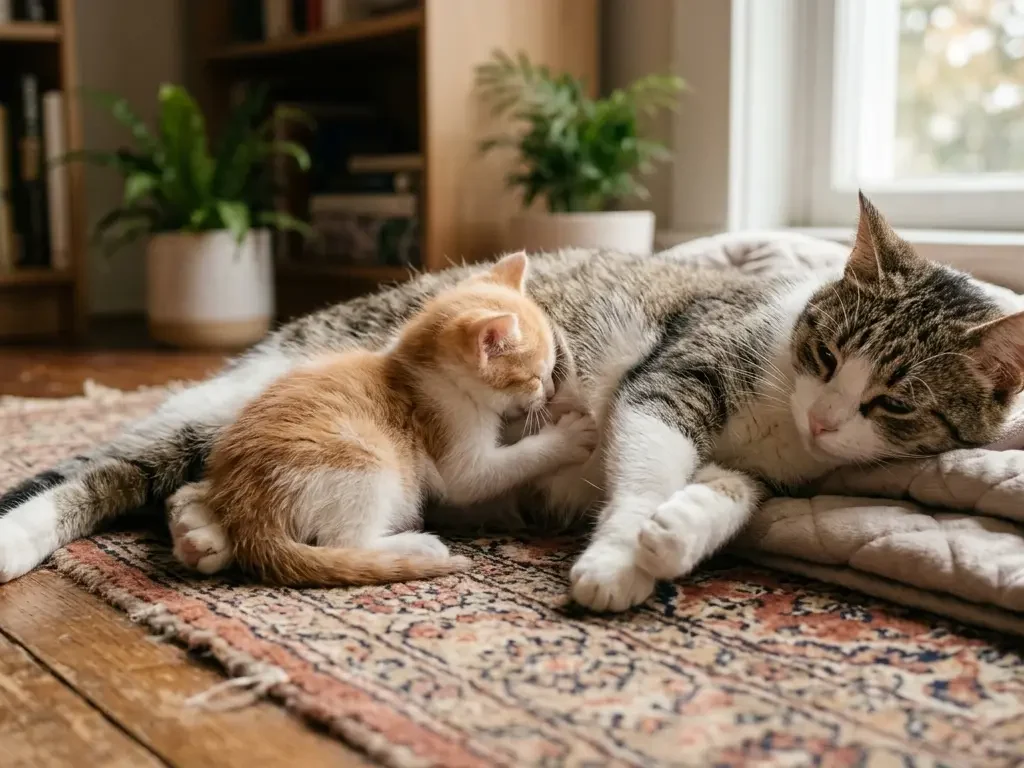
Kittens nuzzle their mother’s belly to stimulate milk flow while nursing. Early socialisation and proper care during kittenhood play a big role in these lifelong behaviours. This action creates a deep connection to warmth, security, and food, a habit that continues into adulthood.
When your cat nuzzles your chest, she’s in a deep state of comfort. You’ve given her the same feeling she got when she nursed as a baby. It’s one of the most natural signs of attachment.
Does my cat know when I’m sick?
Probably yes, Cats have a very keen sense of smell. When you’re sick, your temperature rises, your cortisol levels change, and your breath changes. Your cat notices all of this before you do.
Many cat owners report that when they’re sick, their cats start to pay more attention, press their chests more, purr more, and come closer.
Is it okay to let your cat sleep on your chest?
For most people, yes. There are real benefits on both sides.
The benefits for you
Spending time with a cat can lower cortisol levels and blood pressure in humans, according to a study published in the journal Anthrozoös. The warmth, the rhythm of the purr, and the physical contact all combine to create a measurable sense of comfort.
Having a cat sleep on your chest is actually physically calming. Your cat’s purr, which ranges from 25 to 150 Hz, may also have a mild therapeutic effect on your own body, although research on this is still ongoing.
When it becomes a problem
- A large or heavy cat can make it harder to breathe comfortably while it’s on your chest.
- If you have allergies, close contact with dander can trigger symptoms.
- A cat that moves around a lot at night can disrupt your sleep quality.
- A cat startled awake can scratch involuntarily, so it’s worth being cautious about if you’re a very deep sleeper.
How to gently redirect your cat
Keep a warm blanket or a warm cat bed right next to where you sleep. Place a piece of clothing you’re wearing in it so it smells like you. When your cat climbs onto your chest at an inopportune time, gently pick him up and place him in that spot. Cats adapt to routines. If you’re consistent
Conclusion
My cat has slept on my chest so many times that I’ve lost count. when I was tired, when I was upset, and many times when I was really sick. Whether she knows it or not
The sound of a cat purring against your chest, its warmth, its vibration, and the confidence of this heavy being who trusts you completely, it’s all hard to describe, but so easy to feel.
Frequently asked questions (FAQ)
What does it mean when a cat lies on your chest?
It means that the cat trusts you completely. Your chest gives off warmth, heartbeat, and breathing rhythm, all of which evoke a deep sense of comfort in the cat. It’s one of the clearest signs of attachment.
Do cats lay on your chest and purr to heal you?
There’s science behind it. Cats purr at 25 to 150 Hz, a frequency that’s been linked to healing bones, wounds, and pain. Whether this is intentional is debatable, but it has been shown to have a calming effect on humans, with cortisol decreasing and blood pressure dropping. So yes, in a real sense, it helps.
Do cats have a favourite person?
Yes. A cat’s strongest bond is with the person who feeds it regularly, spends a lot of time with it, and listens to it. If your cat especially sleeps on your chest, follows you around, and grooms you, you’re probably its favourite person.
How do you say “I love you” in cat language?
Slow winks. Make eye contact with your cat and blink slowly, then look away. This is the signal cats give to people and animals they feel safe with. Most cats will do the same in return. Try it, see for yourself tonight.
Why does my kitten sleep on my chest?
Kittens are drawn to chest sleeping even more strongly than adult cats, since it combines warmth, a heartbeat, and closeness, all things tied directly to the nursing experience they only recently left behind. It’s one of the most natural bonding behaviours a young kitten can show toward a trusted person.
