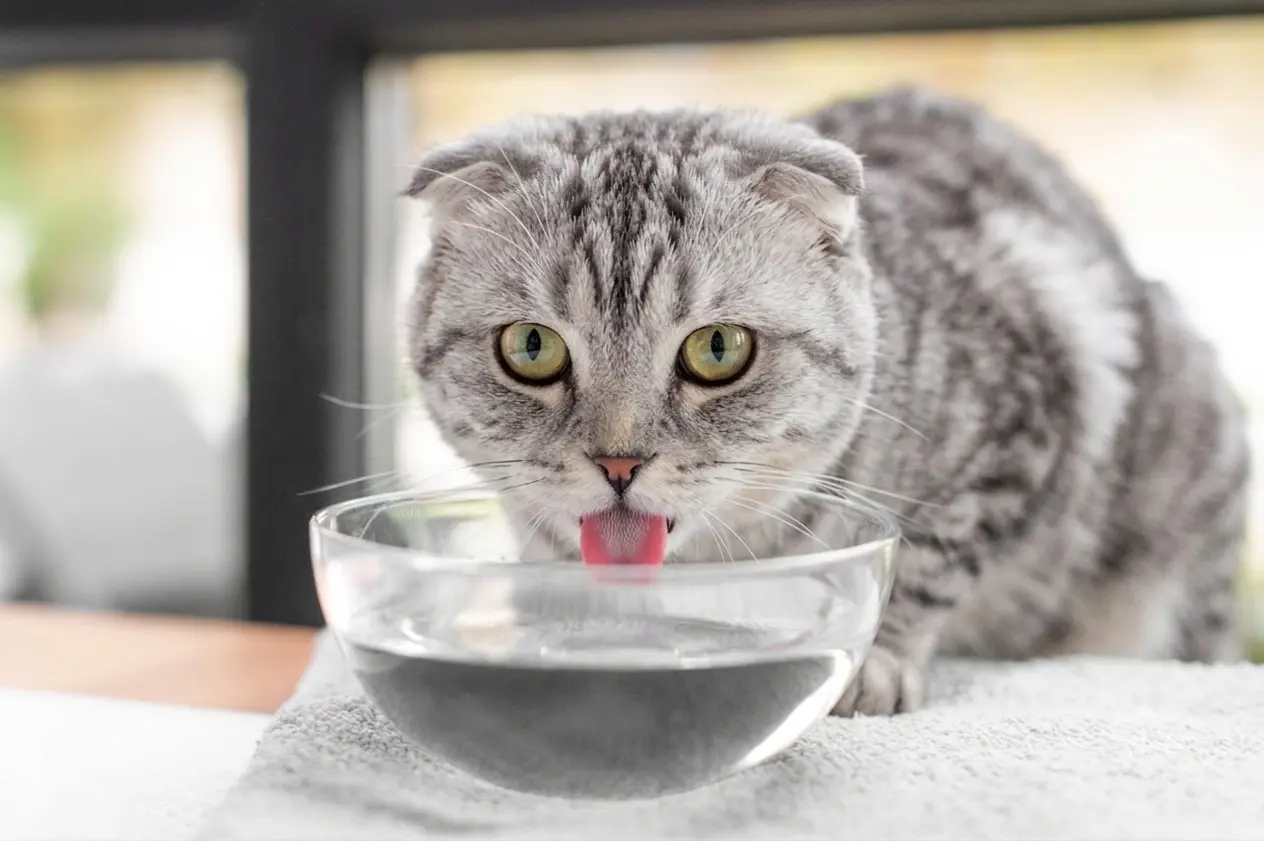
If your cat is drinking so much water, it can be harmless in some situations and serious in others. The important thing is to look at the full pattern: how much the cat is drinking, whether urination has changed, and whether any other symptoms are happening at the same time.
Cats are naturally low drinkers, so a sudden increase often stands out. Sometimes the reason is simple, like dry food or hot weather. Other times, it can be an early sign of kidney disease, diabetes, hyperthyroidism, or another health problem that should be checked by a vet.
How much water is normal?
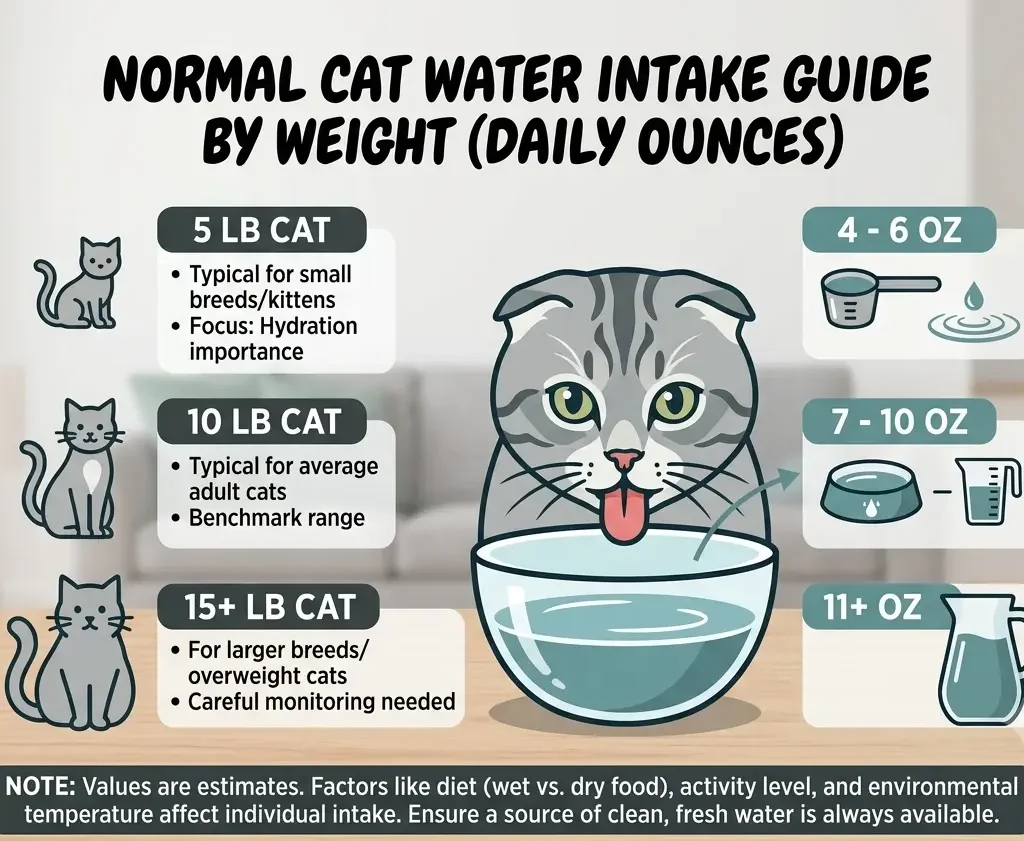
A healthy cat usually drinks about 3.5 to 4.5 ounces of water per 5 pounds of body weight each day. A 10-pound cat typically drinks around 8 ounces daily. The exact amount can shift based on diet, age, body size, weather, activity level, and medications.
Cats on wet food often drink less from the bowl because their meals already contain a lot of moisture. Cats on dry food usually drink more because kibble has much less water. What matters most is not one fixed number, but whether your cat is drinking more than its normal baseline.
How to know if it is too much
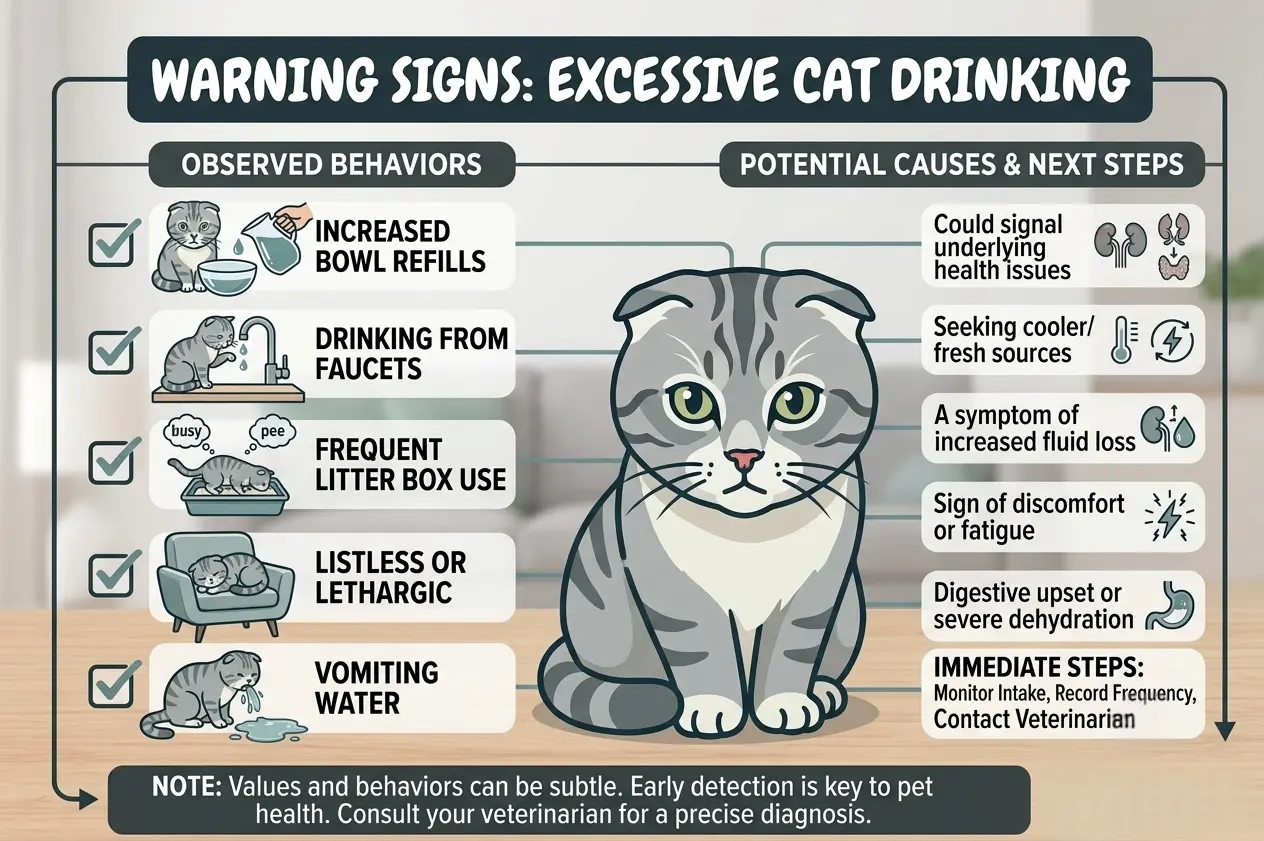
To tell whether the thirst is really excessive, you need to compare it with what is normal for your cat. Many cats drink from multiple spots, so tracking the whole pattern helps more than just looking at one bowl.
Watch for these clues:
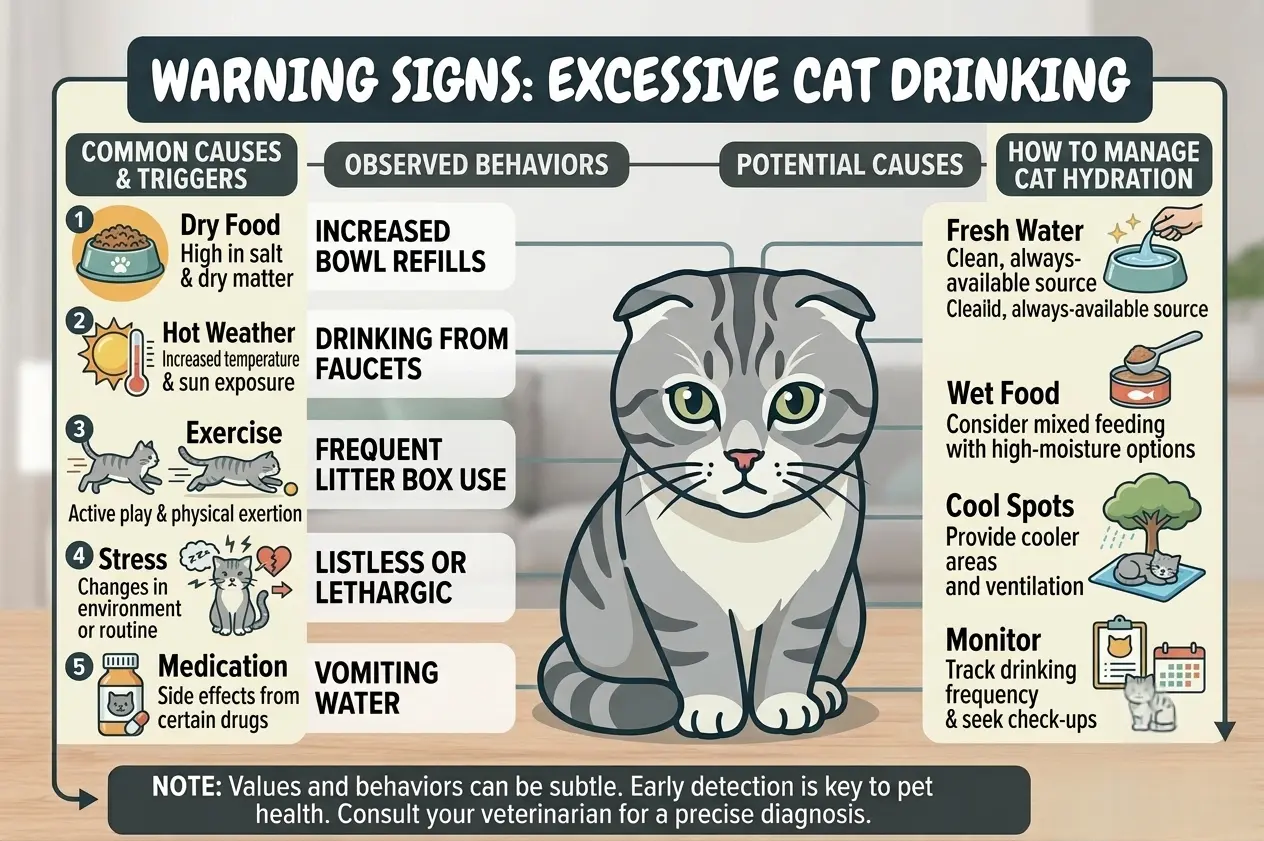
- Refilling the bowl more often than usual.
- Drinking from faucets, sinks, glasses, or fountains more often.
- Visiting the water bowl repeatedly.
- Larger or more frequent litter box clumps.
- Urinating more often.
- Drinking more and acting different at the same time.
If the cat is drinking more and also peeing more, that matters. It often suggests the body is losing or flushing more fluid than usual.
Harmless reasons cats drink more
Not every increase in thirst means disease. Some reasons are temporary and easy to explain.
Common harmless causes include:
- Dry food or a recent switch from wet food to dry food.
- Hot weather.
- Dry indoor air or heating.
- More activity or play.
- Stress or routine changes.
- New treats or salty foods.
- Medication side effects.
If the cat recently changed from wet food to dry food, more drinking is expected because dry food has much less moisture. In warm weather, cats may also drink more just to stay hydrated.
Medical reasons cats drink a lot of water
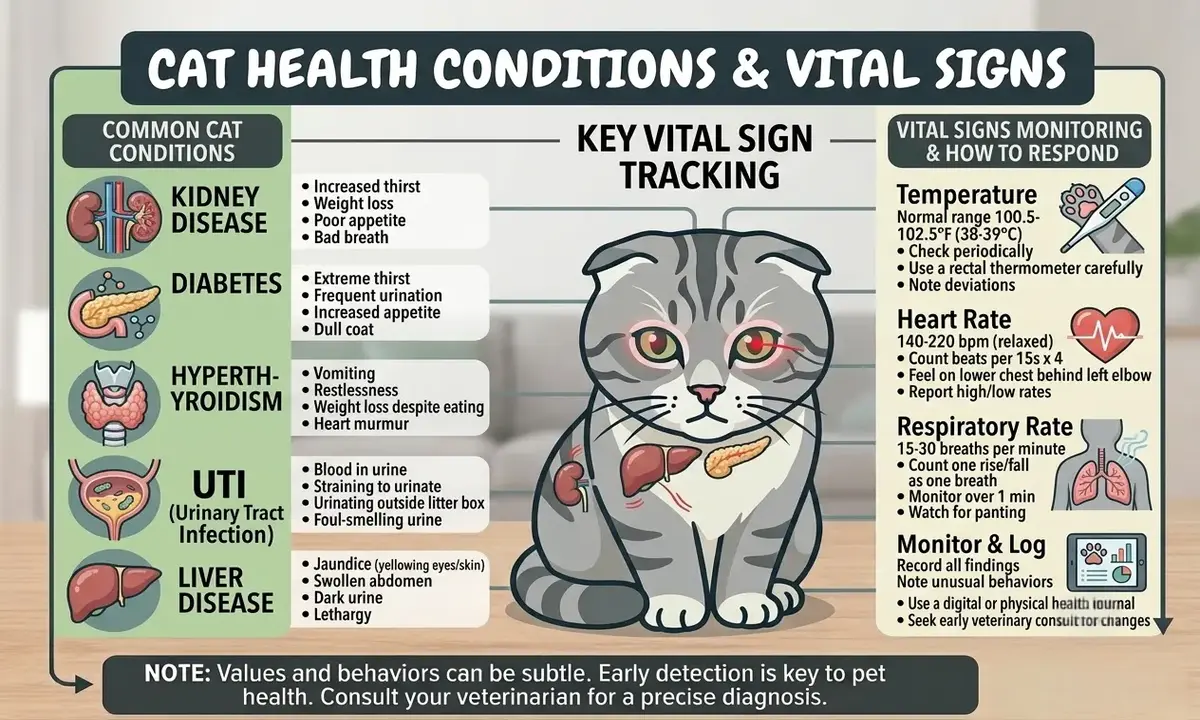
If the thirst keeps going and there is no obvious environmental reason, a medical issue becomes more likely. The most common concerns are kidney disease, diabetes, hyperthyroidism, urinary tract infections, and liver disease.
Kidney disease
Kidney disease is one of the most common causes of excessive thirst, especially in older cats. When the kidneys lose their ability to concentrate urine properly, the cat pees more and then drinks more to compensate.
Signs that may appear with kidney disease:
- Weight loss.
- Vomiting.
- Poor appetite.
- Lethargy.
- Bad breath.
- Dull coat.
- Increased urination.
Diabetes
Diabetes in cats happens when the body cannot regulate blood sugar properly. In cats, this often causes increased thirst and increased urination, and the cat may lose weight even if appetite stays normal or increases.
Other signs can include:
- Increased appetite.
- Weight loss.
- Lethargy.
- Weakness.
- Unkempt coat.
Hyperthyroidism
Hyperthyroidism speeds up the cat’s metabolism and often causes extra thirst, extra hunger, and weight loss. Some cats also seem more energetic, vocal, or restless than usual, especially at night.
Other signs can include:
- Weight loss despite a strong appetite.
- Hyperactivity.
- Vomiting or diarrhea.
- Poor grooming.
- Matted or messy coat.
UTI and bladder issues
Urinary Tract Disease can also make a cat drink more and urinate more often. Some cats strain in the litter box, pass only small amounts, or have blood in the urine.
Liver disease
Liver disease can also cause thirst and urination changes. Yellowing of the eyes, gums, or skin is a strong warning sign that needs attention.
Normal versus concerning
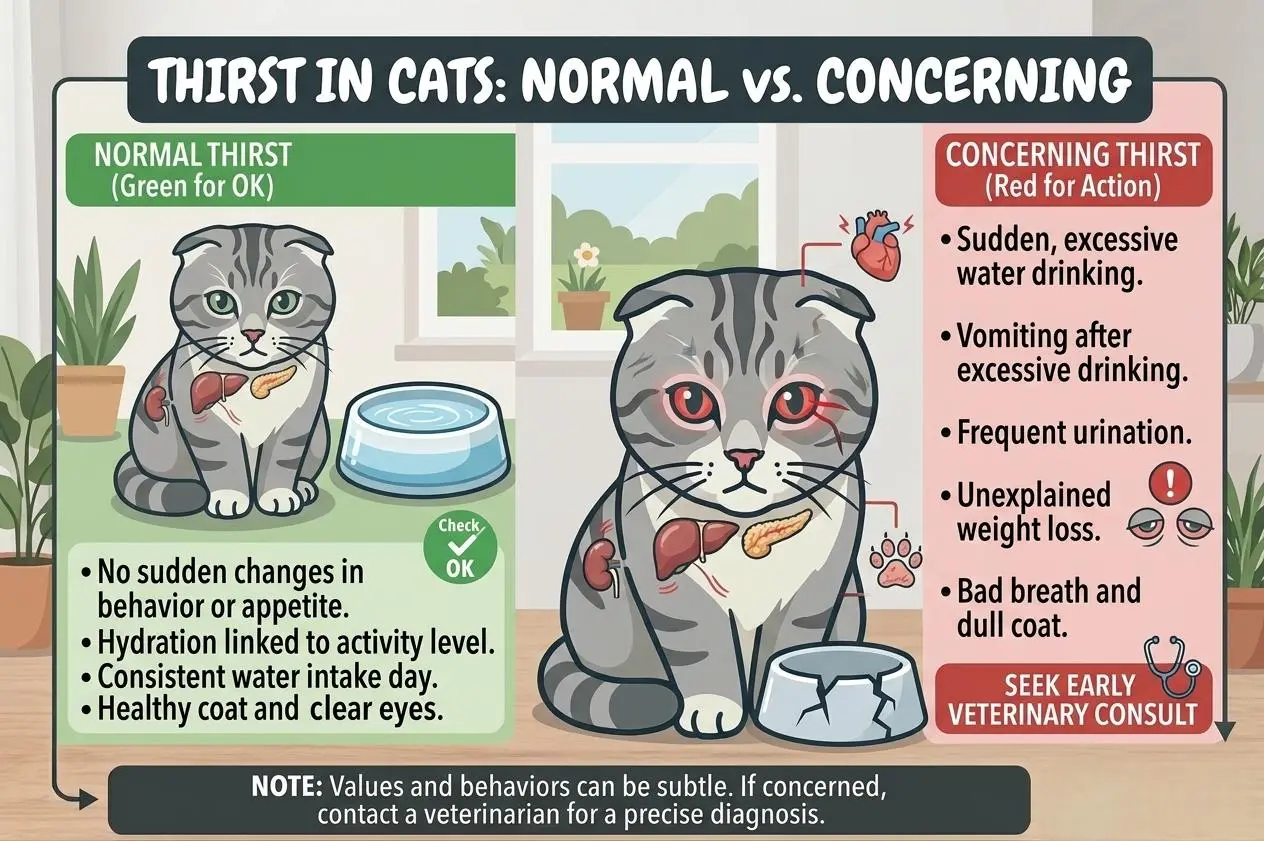
| Situation | Likely meaning | What to do |
| More water after switching to dry food | Usually normal | Monitor for a few days |
| More water in hot weather | Usually temporary | Keep fresh water available |
| More water after more activity | Usually normal | Watch if it returns to baseline |
| More water plus more urination | Possible medical issue | Call the vet |
| More water plus weight loss or vomiting | Red flag | Book a vet visit soon |
This is the main decision point. If there is a clear temporary reason, it may be fine. If the pattern continues, or if other symptoms appear, it should be checked.
How to track at home
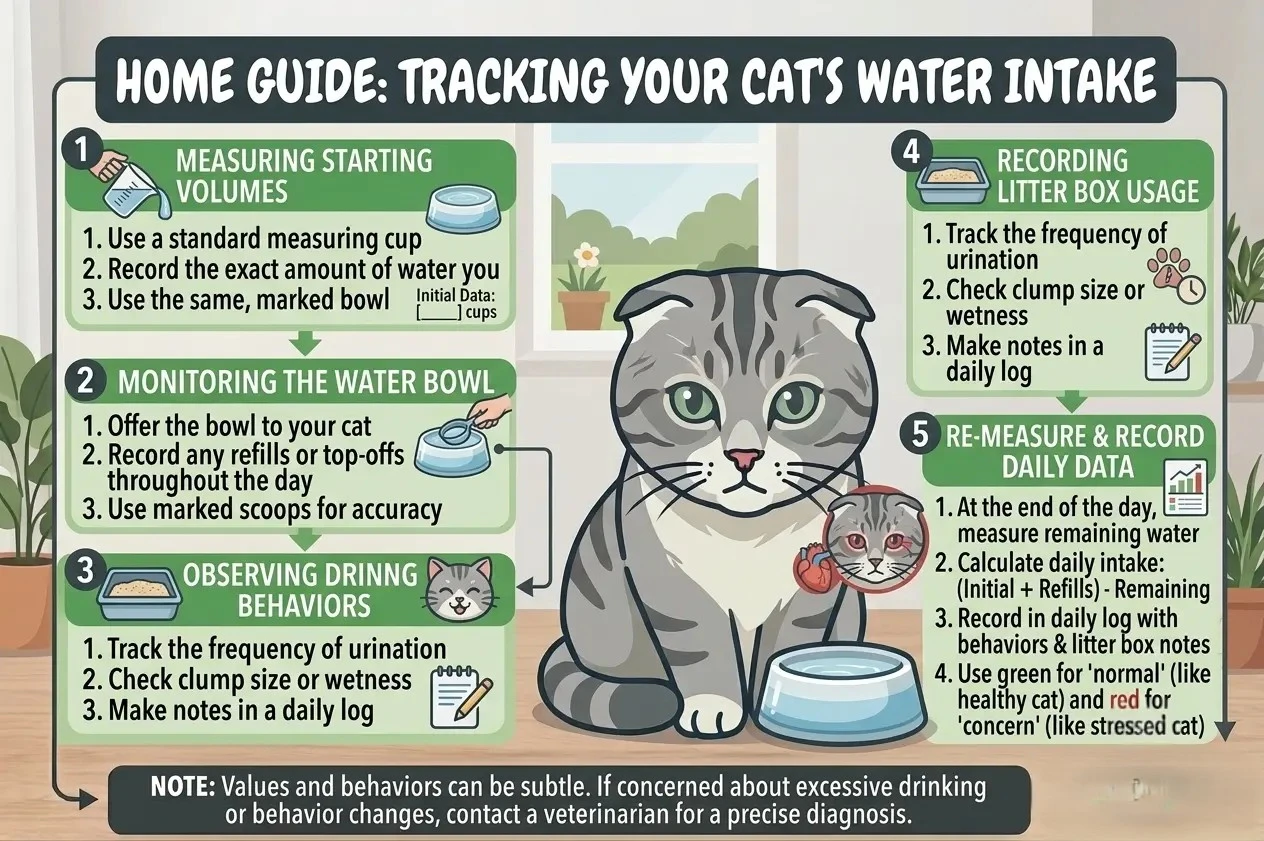
The easiest way to track water intake is to measure how much water goes into the bowl and how much is left the next day. If you have more than one bowl or more than one pet, tracking gets harder, so behavior clues become more important.
A simple method:
- Fill the bowl with a measured amount in the morning.
- Check how much is left the next day.
- Note how often the cat visits the bowl.
- Watch litter box clumps.
- Record appetite, energy, and weight changes.
If your cat prefers faucets, sinks, or fountains, include those in your observation. Some cats like moving water, and that can make intake harder to judge.
When to call the vet
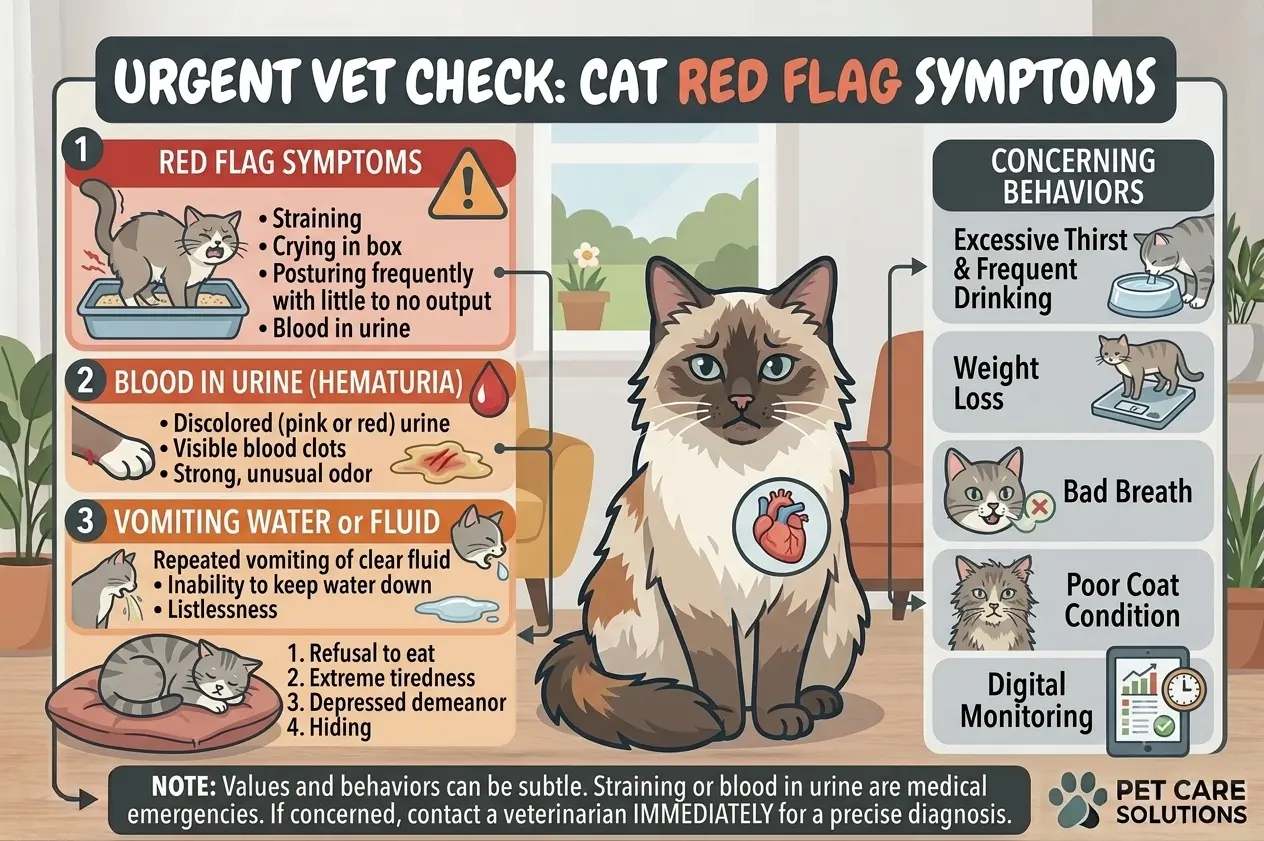
Call the vet if the drinking increase lasts more than a few days without an obvious reason. You should also call sooner if your cat has weight loss, vomiting, lethargy, appetite changes, or more frequent urination.
Get urgent help if:
- Your cat is straining to urinate.
- There is blood in the urine.
- Your male cat seems unable to urinate normally.
- Your cat looks weak or very unwell.
- Dehydration seems possible.
Cats hide illness very well, so a small change in thirst can be the first visible clue. Subtle health changes, like persistent sneezing or appetite shifts, can sometimes appear before more obvious symptoms.
What the vet will do
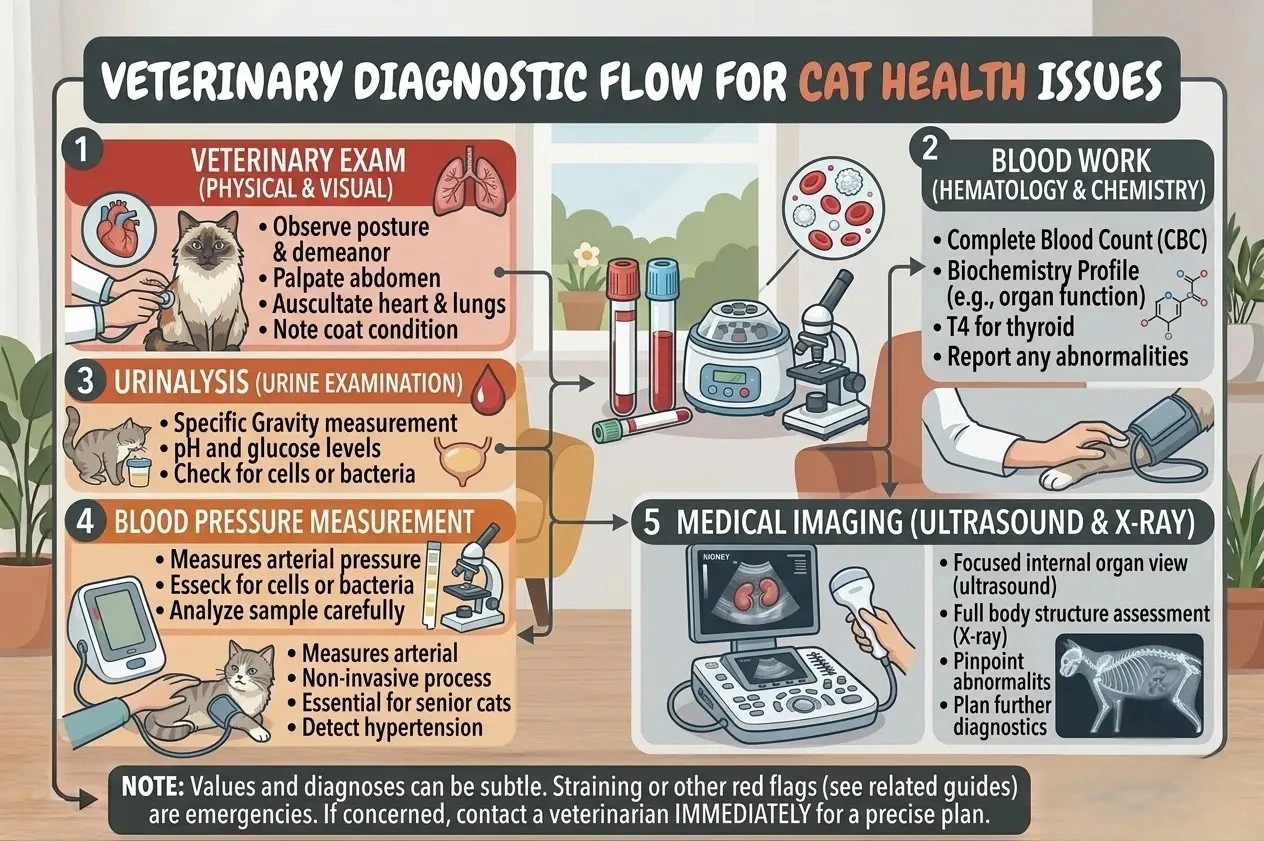
A vet usually starts with a physical exam and questions about food, water, urine habits, and behavior. Then they may do blood work, urinalysis, blood pressure measurement, and imaging such as X-rays or ultrasound if needed.
These tests matter because kidney disease, diabetes, hyperthyroidism, and UTIs can look similar from the outside. Treatment depends on the cause, and some conditions need long-term management.
What you can do now
Until you know the cause, keep fresh water available and do not restrict drinking. Track the pattern for a few days, watch the litter box, and note any appetite or energy changes. If the pattern continues, make a vet appointment.
Helpful steps:
- Offer fresh water daily.
- Try a water fountain if your cat likes running water.
- Watch for weight loss.
- Monitor urine clumps.
- Note medication changes.
- Keep the routine calm and steady.
Conclusion
If your cat is drinking so much water, start by checking whether there is a simple explanation like food, heat, or activity. If the change lasts, or if it comes with weight loss, vomiting, more urination, or low energy, it is time to call the vet. Early action matters because many serious causes can be managed better when caught sooner
Frequently Asked Questions
Why does my cat drink so much water all of a sudden?
It may be due to dry food, hot weather, stress, activity, medication, or a medical issue like kidney disease or diabetes
Is it normal for cats to drink a lot of water?
Sometimes yes, especially with dry food or warm weather. But a clear change from your cat’s normal pattern should be watched closely.
Can stress make a cat drink more water?
Yes, stress can affect drinking habits, but ongoing thirst should still be taken seriously.
What is polydipsia?
Polydipsia means excessive thirst. In cats, it often appears together with increased urination.
What is the difference between diabetes and kidney disease?
Both can cause thirst and urination. Diabetes often comes with more appetite and weight loss, while kidney disease often comes with poor appetite, vomiting, and lethargy. Testing is the only reliable way to tell the difference.
