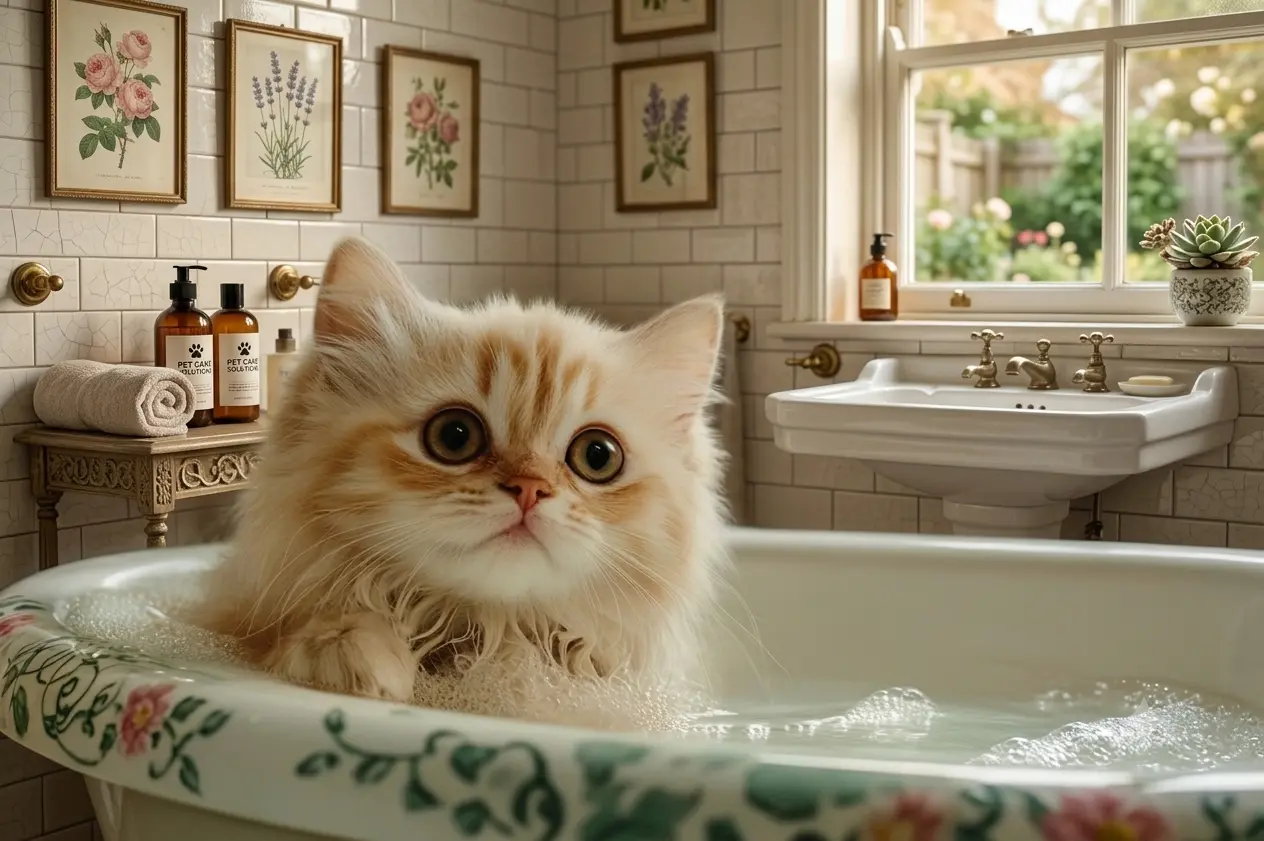

If your cat follows you to the bathroom, it is usually because they want to stay close to you, follow a familiar routine, investigate the room, or get your undivided attention. In most cases, this behavior is normal and harmless.
The bathroom may seem like an unusual place for companionship, but your cat sees it differently. It is a room with interesting smells, running water, cool tiles, warm surfaces, closed doors, and a familiar human who is likely to sit still for a few minutes. However, if your cat follows you everywhere with panic, excessive vocalization, destructive behavior, or inappropriate urination, the behavior may need closer attention.
Is it normal for my cat to follow me?
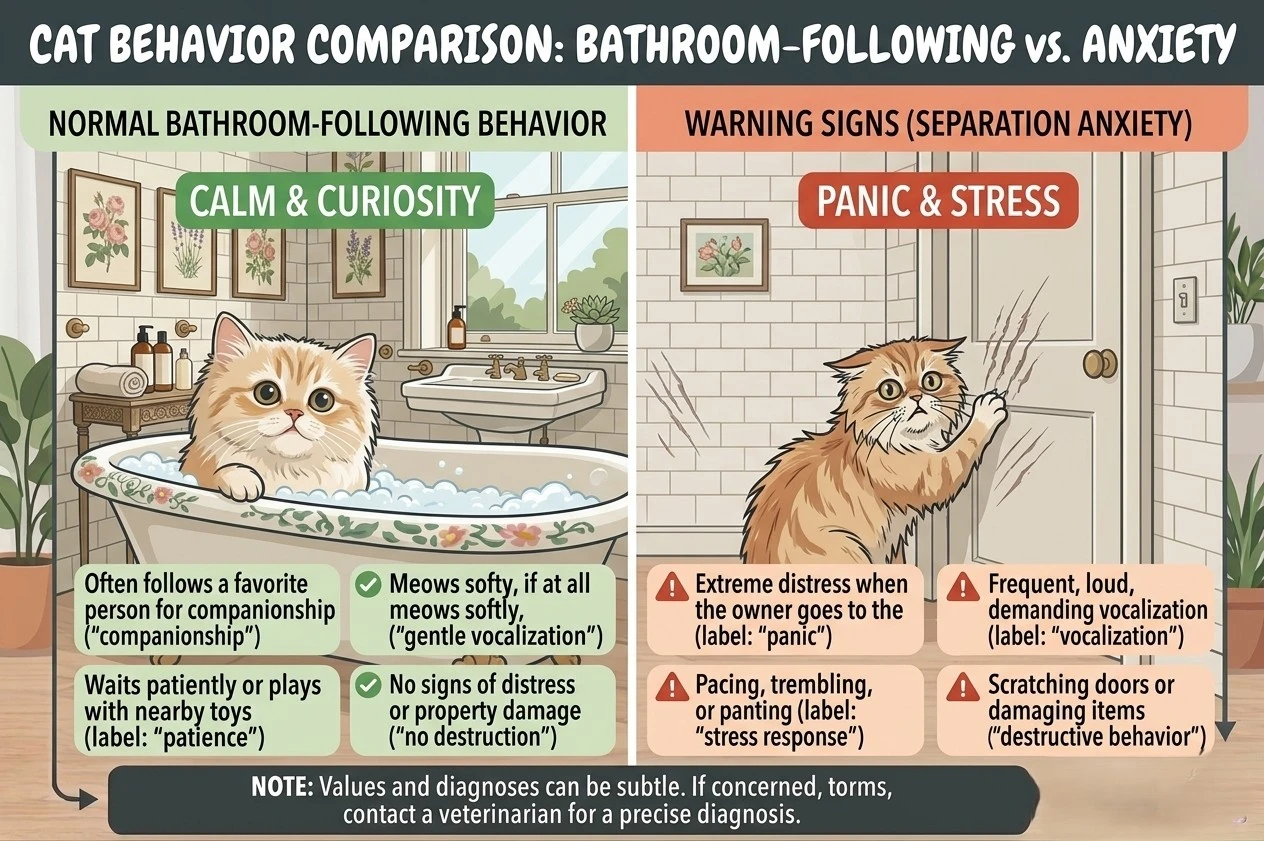
Yes, it is normal for many cats to follow their owners into the bathroom. A cat that quietly walks behind you, sits nearby, watches you, or leaves after a short time is usually showing curiosity, attachment, or routine-based behavior.
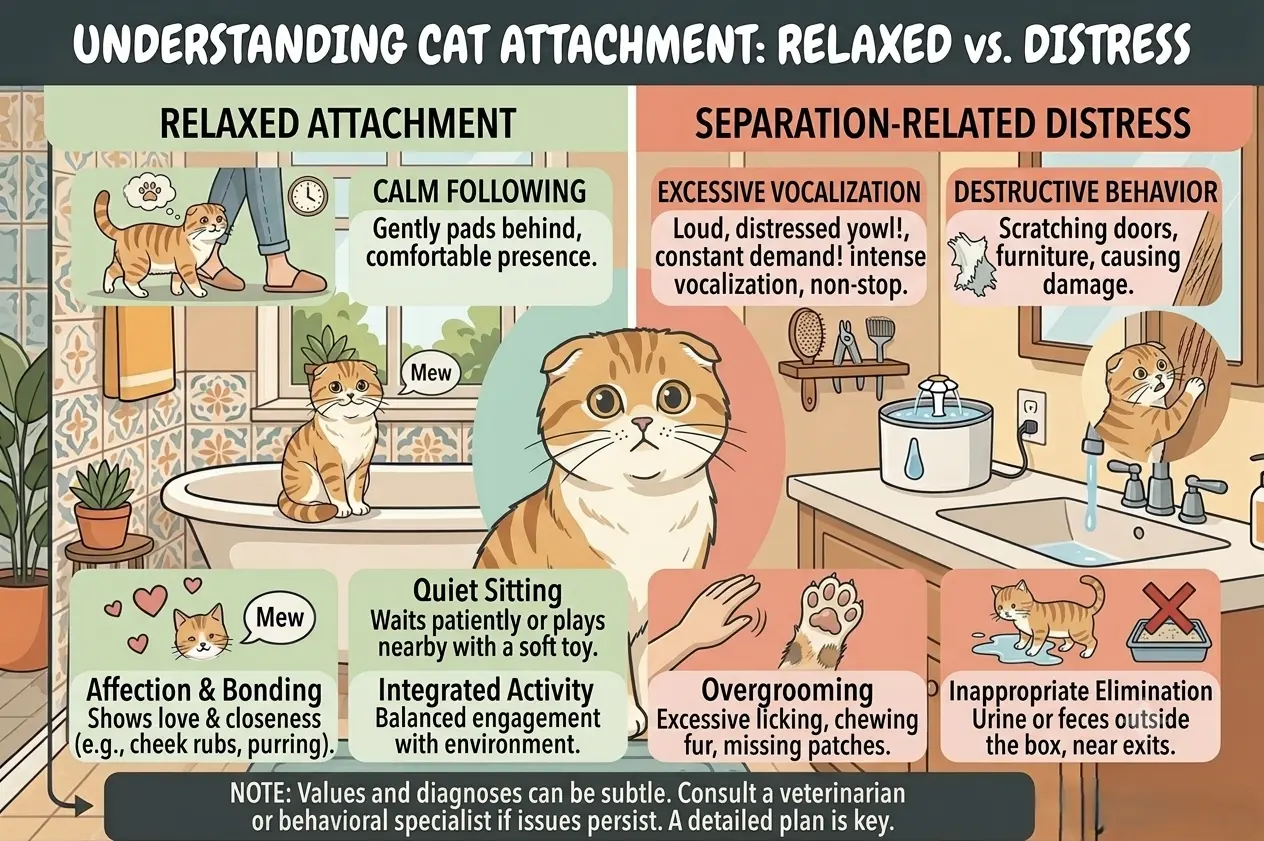
The behavior is less concerning when your cat:
- Looks relaxed.
- Has a normal appetite.
- Sleeps and plays normally.
- Can stay alone without panicking.
- Does not destroy things when you leave.
- Uses the litter box normally.
Following you to the bathroom by itself does not mean your cat has separation anxiety. The surrounding behavior matters more than the bathroom visit alone
Why does my cat follow me to the bathroom?
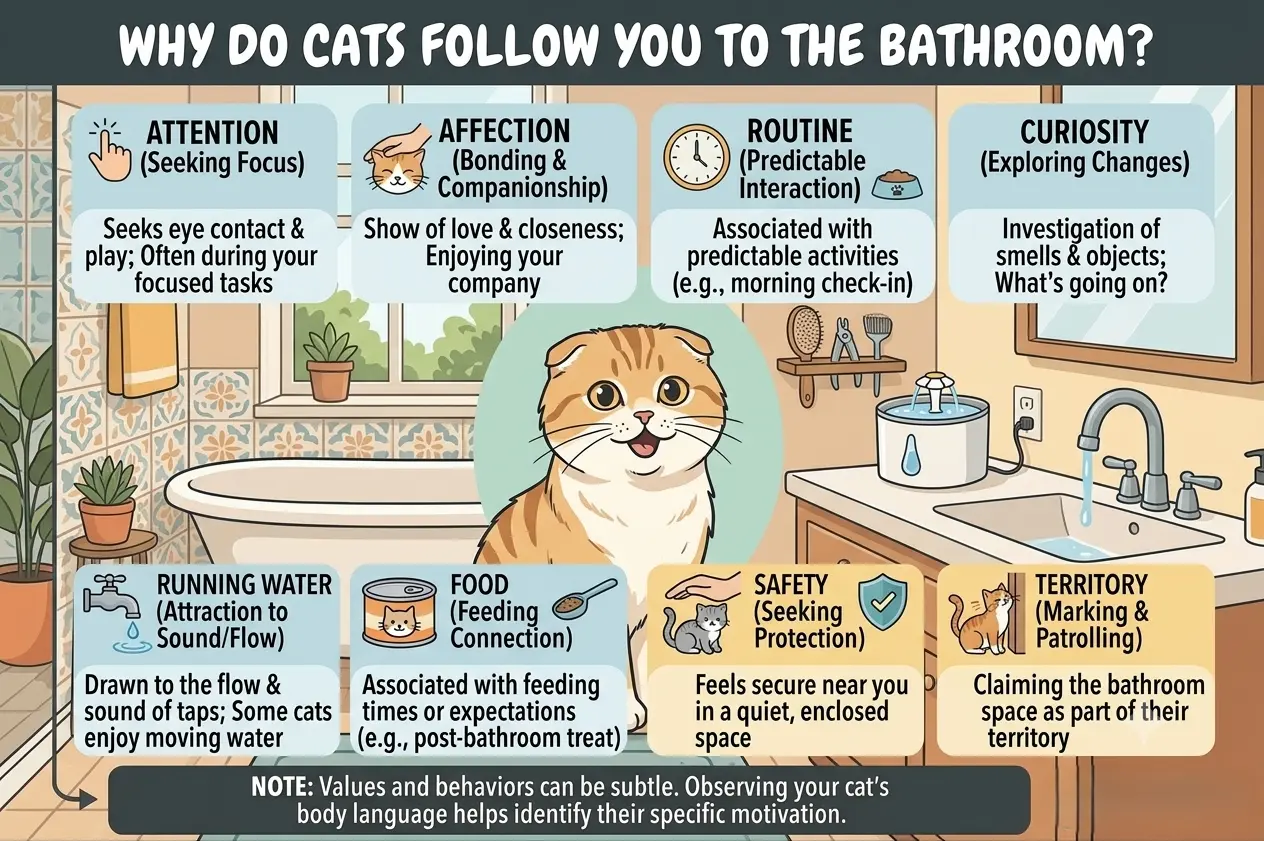
There is rarely one single explanation. Your cat may follow you for several reasons at the same time. The strongest clues come from the time of day, your cat’s body language, and what happens after you enter the bathroom.
Your cat wants your attention
One of the most common reasons is simple: your cat knows that you are available.
When you use the bathroom, you are usually sitting still instead of working, cooking, walking around, or looking at a computer. From your cat’s point of view, this may be the perfect opportunity to ask for attention.
Your cat may:
- Sit beside you.
- Rub against your legs.
- Purr.
- Meow softly.
- Ask to be petted.
- Jump onto your lap.
- Watch you closely.
Some cats learn that the bathroom is a reliable place to receive attention. If you regularly talk to your cat, stroke them, pick them up, or play with them after they follow you inside, the behavior may become stronger through positive reinforcement.
Your cat loves being near you
Cats can form close social bonds with their owners. Some show affection by sitting on a lap, while others show it by following their favorite person from room to room.
Your cat may follow you to the bathroom because:
- They enjoy your company.
- They feel emotionally connected to you.
- They want to stay near their preferred person.
- They feel comfortable when you are close.
- They associate you with safety and care.
A cat’s affection is often subtle. Following you into a small room may be your cat’s way of spending quality time with you, especially if they also sleep near you, greet you at the door, or remain relaxed in your presence.
That does not mean every bathroom visit is a definite “I love you” message. It is better to look at the whole relationship and body language before deciding what the behavior means.
The bathroom is part of your cat’s routine
Cats are creatures of habit. They often notice when you wake up, leave for work, return home, prepare food, brush your teeth, or get ready for bed.
If you use the bathroom at roughly the same time every morning or evening, your cat may have added that activity to their own daily schedule. The bathroom visit can become connected with other events, such as:
- Breakfast.
- Treats.
- Opening a door.
- Going outside.
- Cuddling.
- Bedtime.
- Playtime.
For example, if you shower every morning and feed your cat afterward, your cat may follow you because the bathroom routine predicts breakfast. If you brush your teeth before giving a bedtime treat, your cat may begin waiting for that sequence.
(meri bili bhi subah mere peechay bathroom tak aati thi. Pehle mujhe laga ke woh sirf attention chahti hai, lekin jab maine notice kiya ke shower ke baad main usko breakfast deta hoon, tab mujhe samajh aya ke usne meri routine yaad kar li thi.)
Your cat is curious about the closed door
Cats often dislike being excluded from a room. A closed bathroom door can make the space even more interesting, especially if the door is normally shut.
Your cat may scratch, meow, or push a paw under the door because they want to know:
- What is happening inside?
- Why are you in there without them?
- Whether they are missing something interesting.
- Whether the room has changed.
- When you are coming back out.
The bathroom may be especially tempting because it is a private room that contains unusual sounds, smells, water, and objects. If you usually close the door, your cat may try to enter before you have a chance to shut it.
Your cat likes the bathroom’s smells and textures
Bathrooms are sensory spaces for cats. The room may contain many smells and surfaces that are different from the rest of the home.
Your cat may be interested in:
- Towels.
- Bath mats.
- Toilet paper.
- Shower curtains.
- Soap scents.
- Your own familiar smell.
- Cool tile floors.
- Warm floors.
- The bathtub.
- Sink surfaces.
- Dripping water.
Cats use their sense of smell to gather information about their surroundings. The bathroom also contains your scent, which can make it feel familiar and safe.
A bathtub may provide a cool, smooth surface in warm weather. A heated bathroom floor may be attractive during winter. A towel or bath mat can become a comfortable place to sit or hide.
Your cat is fascinated by running water
Some cats are strongly attracted to running water. They may follow you to the bathroom because they expect to see a faucet, shower, or bathtub.
Your cat may:
- Watch water fall from the shower.
- Touch drops with a paw.
- Drink from the faucet.
- Sit beside the sink.
- Play near the bathtub.
- Follow water moving across a surface.
Moving water may be more interesting to some cats than water sitting in a bowl. It is also a form of environmental enrichment because the sound, movement, and reflection create something for the cat to investigate.
If your cat repeatedly tries to drink from the faucet, you can offer a clean water fountain or another safe water source. Keep toilet lids closed and prevent access to cleaning products.
Your cat wants food or treats
Sometimes your cat follows you to the bathroom because they want something. Food is one possibility, especially if your cat connects your morning routine with breakfast.
Look at what your cat does after following you. Does your cat:
- Meow near the food bowl?
- Walk from the bathroom toward the kitchen?
- Paw at an empty bowl?
- Sit near the treat cupboard?
- Lead you toward the litter box?
- Bring you a toy?
A cat may use the bathroom visit as an opportunity to get your attention before asking for food, play, or access to another area.
Do not assume that every following behavior means hunger. Check your cat’s feeding schedule and body condition before increasing food. Overfeeding can lead to weight-related health problems.
Your cat feels safe with you
A bathroom can be a quiet, enclosed room. If your home is noisy or busy, your cat may follow you there because your presence makes the area feel safer.
This may happen after:
- Moving to a new home.
- Introducing a new pet.
- Having visitors.
- Changing furniture.
- Hearing construction noise.
- Experiencing storms.
- Living with noisy children or other animals.
Your cat may stay close to you for reassurance. They may sit near your feet, hide behind the toilet, or remain close while watching the doorway.
This behavior can reflect comfort and security, but it does not automatically mean anxiety. A relaxed cat seeking your company is different from a panicked cat that cannot cope when you leave.
Your cat may be monitoring its territory
Cats are territorial animals. Your home is part of your cat’s familiar environment, and the bathroom is one of the spaces within that territory.
Following you may be a way for your cat to monitor what is happening in the home. It can look like guarding, but it is not always correct to say that your cat is deliberately protecting you.
Your cat may simply want to:
- Know where you are.
- Check a familiar room.
- Investigate a new smell.
- Stay connected to its social group.
- Make sure access to the room remains open.
The safest interpretation depends on body language. A relaxed cat is probably curious or social. A tense cat with flattened ears, hissing, or defensive behavior may be reacting to stress.
What if the litter box is in the bathroom?
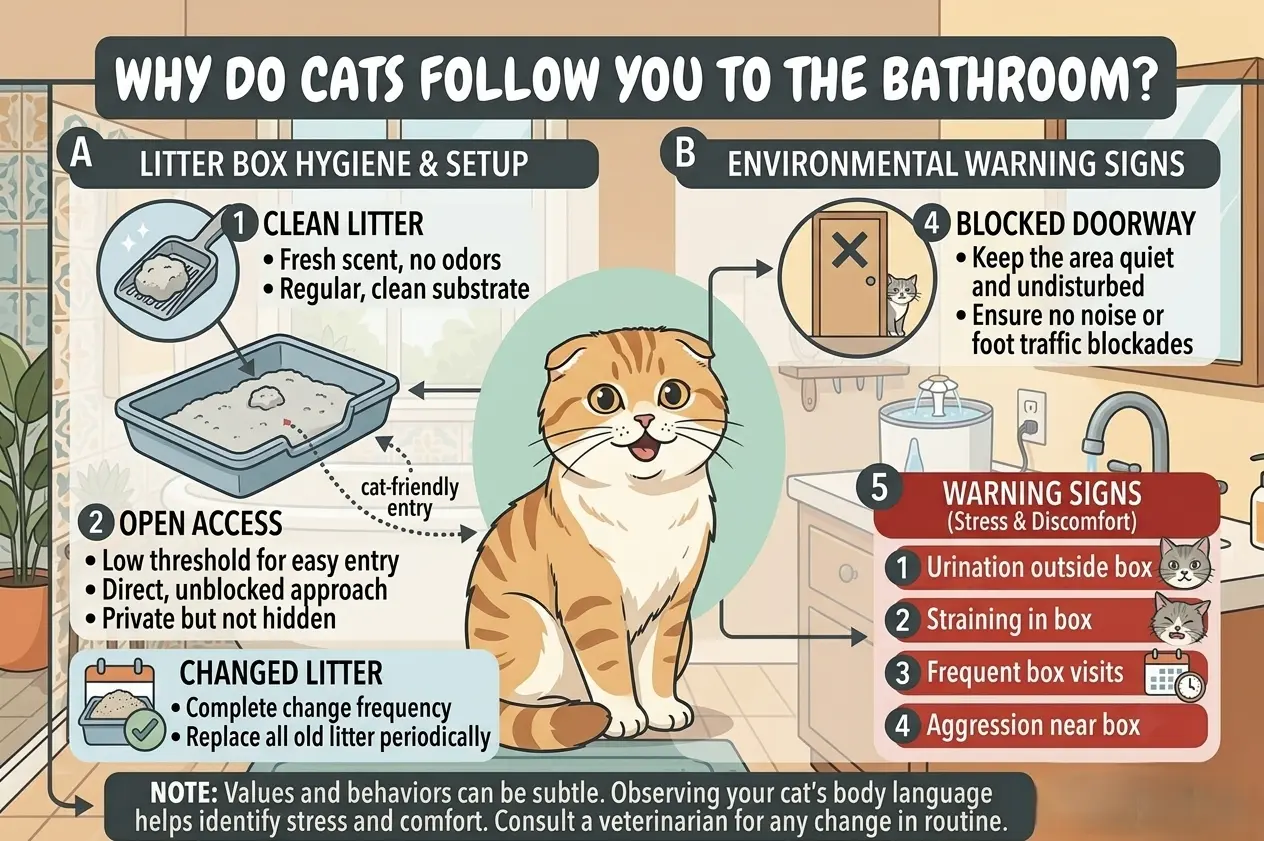
If your cat’s litter box is in the bathroom, they may follow you because that room is part of their own bathroom area.
Check whether:
- The litter box is clean.
- The door is always accessible.
- Another object is blocking the entrance.
- You recently changed the litter.
- The box has a strong smell.
- Your cat is crying or waiting near the box.
- Urination or defecation habits have changed.
A cat may also use the bathroom to show you that something is wrong with the litter box. If your cat starts urinating outside the box, strains, cries, or visits the box repeatedly, contact a veterinarian.
Does my cat understand what I am doing?
Your cat probably does not understand human bathroom behavior in the same way you do. However, they can notice the sounds, smells, movements, and repeated routine connected with your bathroom visits.
Cats are observant animals. They may learn that:
- You sit in one place.
- You stay in the room for a predictable time.
- A shower makes certain sounds.
- You often feed them afterward.
- The bathroom door may close.
- You usually come back out soon.
So your cat may not understand the human purpose of the bathroom, but they understand that something predictable and interesting happens there.
Normal behavior versus possible anxiety
| Behavior | More likely explanation | What to do |
| Quietly follows and sits nearby | Affection, routine, or curiosity | No action needed |
| Scratches at a closed door | Wants access or dislikes exclusion | Use consistent boundaries |
| Watches the shower or faucet | Water fascination | Provide safe enrichment |
| Meows and leads you to food | Hunger or learned request | Check feeding routine |
| Follows during stressful events | Seeking comfort | Offer a quiet safe space |
| Panics whenever you leave | Possible separation-related problem | Speak with a vet |
| Destroys items when alone | Possible anxiety or boredom | Add enrichment and seek advice |
| Toilets outside the box | Medical, litter-box, or stress issue | Contact a veterinarian |
Following you to the bathroom becomes more concerning when it is part of a wider pattern. Signs of separation-related distress can include excessive vocalization , especially at night, destructive behavior, overgrooming, inappropriate elimination, and an inability to settle when you are out of sight.
If these signs appear, do not punish your cat. A veterinarian can help rule out pain or illness, and a qualified feline behavior professional can advise on behavior modification.
How should you respond?
If you do not mind your cat joining you, you can allow the behavior as long as the bathroom is safe. Keep medicines, cleaners, razors, strings, and other dangerous items out of reach. Keep toilet lids closed and avoid leaving harmful liquids on the floor.
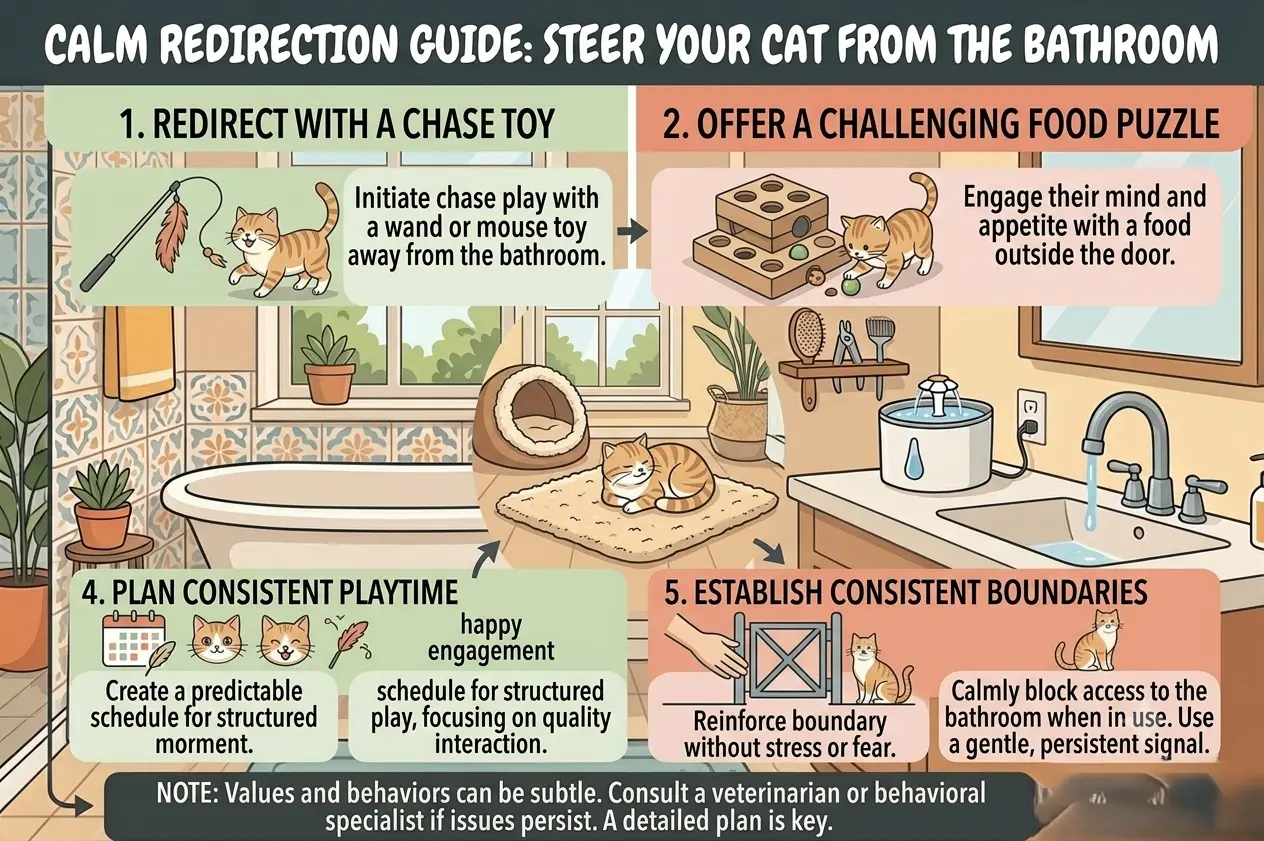
If you want privacy, use calm and consistent redirection.
Try these steps:
- Give your cat a toy before entering the bathroom.
- Use a food puzzle in another room.
- Offer a comfortable bed near the bathroom.
- Schedule daily play and cuddle time.
- Reward calm independent behavior.
- Keep the door policy consistent.
- Avoid shouting or spraying water.
- Do not give treats every time your cat demands entry.
A replacement behavior can work well. For example, teach your cat that sitting on a mat outside the bathroom earns attention after you finish. This gives the cat another predictable way to interact with you.
What not to do
Avoid punishing your cat for following you. Shouting, pushing, or spraying can create fear without explaining what behavior you want instead.
Do not:
- Slam the door suddenly.
- Use punishment to force independence.
- Ignore a sudden behavior change.
- Restrict access to a litter box.
- Leave medication or cleaners exposed.
- Reward nonstop crying every time.
- Assume clinginess is always affection.
If your cat suddenly starts following you everywhere, especially with vocalization, appetite changes, hiding, aggression, or litter-box accidents, arrange a veterinary check. Sudden changes in thirst or urination patterns should also be monitored closely.
Conclusion
Your cat follows you to the bathroom because the room offers several things your cat values: your attention, a familiar routine, interesting smells, running water, closed-door curiosity, and a sense of safety.
In most cases, a cat that calmly follows you, sits nearby, or watches you shower is simply being social and curious. If the behaviour is sudden or accompanied by panic, destructive behaviour, excessive vocalisation, overgrooming, changes in appetite, or litter-box problems, speak with a veterinarian.
Your cat may never give you complete bathroom privacy, but understanding the reason behind the behavior can make the situation easier to manage.
Frequently Asked Questions
Why does my cat follow me to the bathroom every morning?
Your cat may have learned that your morning bathroom routine is followed by breakfast, attention, outdoor access, or play. Cats enjoy predictable routines and may join you because they know what happens next.
Why does my cat follow me to the bathroom at night?
Nighttime bathroom visits may be connected with bedtime cuddles, treats, quiet attention, or your cat’s normal evening routine. If the behavior is calm, it is usually not concerning.
Why does my cat cry outside the bathroom door?
Your cat may dislike the closed door, want to enter, seek attention, or be asking for food or access to the litter box. Check what your cat does after you open the door.
Why does my cat follow me into the shower?
Your cat may be curious about running water, shower sounds, steam, warm surfaces, or the predictable time you spend in the bathroom. Keep the cat away from hot water, cleaning products, and slippery surfaces.
Why does my cat guard me while I use the bathroom?
Your cat may be monitoring the room, seeking attention, or staying close to a trusted person. “Guarding” does not always mean deliberate protection, so consider the cat’s body language and the wider situation.
Does my cat follow me because it loves me?
It may be one sign that your cat enjoys your company and feels bonded to you. Look for other signs such as relaxed body language, purring, sleeping nearby, and choosing to stay close without appearing distressed.
Is it normal for cats to follow you everywhere?
It can be normal if your cat remains relaxed and can also spend time alone. Constant following combined with panic, destruction, excessive vocalization, overgrooming, or inappropriate elimination may indicate a behavioral or medical concern.
Should I stop my cat from following me to the bathroom?
You do not need to stop it unless it creates a safety, hygiene, or privacy problem. If you want to reduce the behavior, use toys, food puzzles, planned attention, and consistent boundaries instead of punishment.
