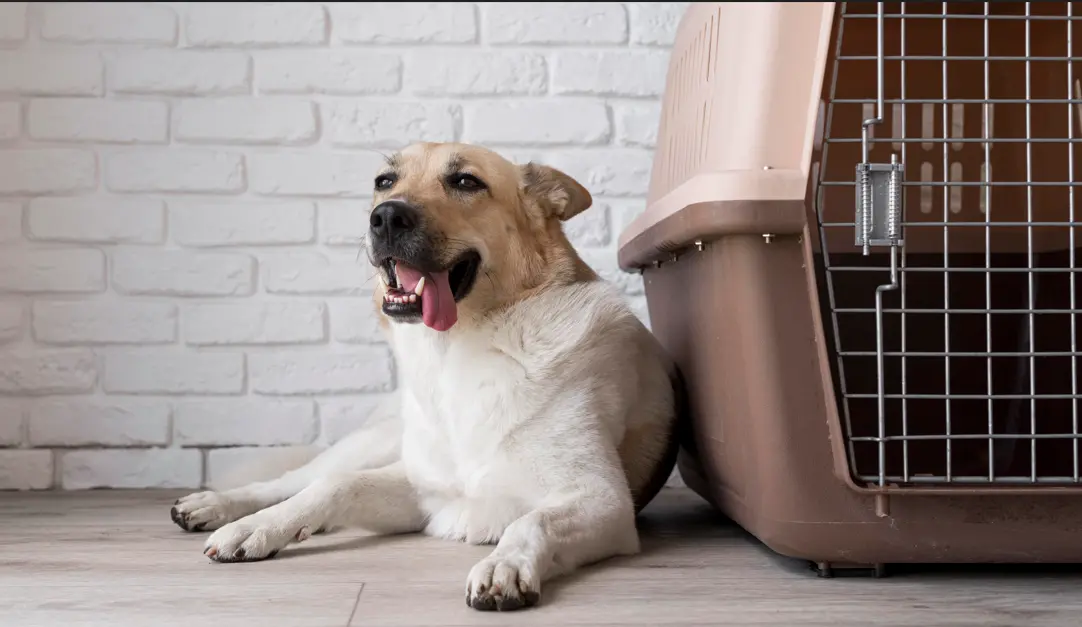
I also had a dog in 2022. How many owners have I seen buy the most sturdy crates for a dog that needed a completely different solution not confinement,
The real problem is often the crate, or the training, or both. And this distinction is important because the solution is completely different depending on what the problem is.
The Three Problems That Look Exactly the Same
When people search for dog separation anxiety crate training, they usually picture one issue: the dog misses them too much. Sometimes that is true. Sometimes it is only half true. And sometimes the dog is perfectly fine being alone… until the walls close in.
1. True Separation Anxiety
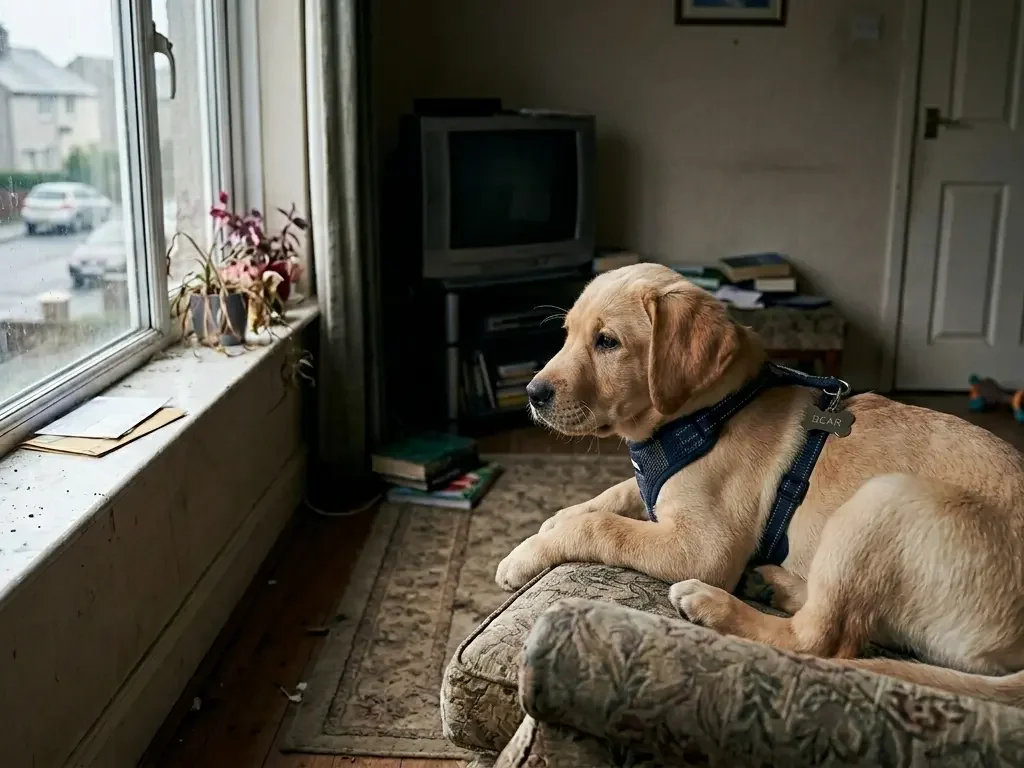
It’s a problem of being left alone, not a problem of being in a cage. The dog becomes anxious when you’re gone panting, drooling, barking and the anxiety starts with your absence,
Veterinary behaviorist Dr. Karen Overall calls separation anxiety a panic disorder, not a behavioral problem. This distinction is important. Scolding a nervous dog only makes matters worse.
The American Veterinary Society of Animal Behavior (AVSAB) is clear about this: Punishment based methods increase fear and aggression.
2. Confinement Anxiety
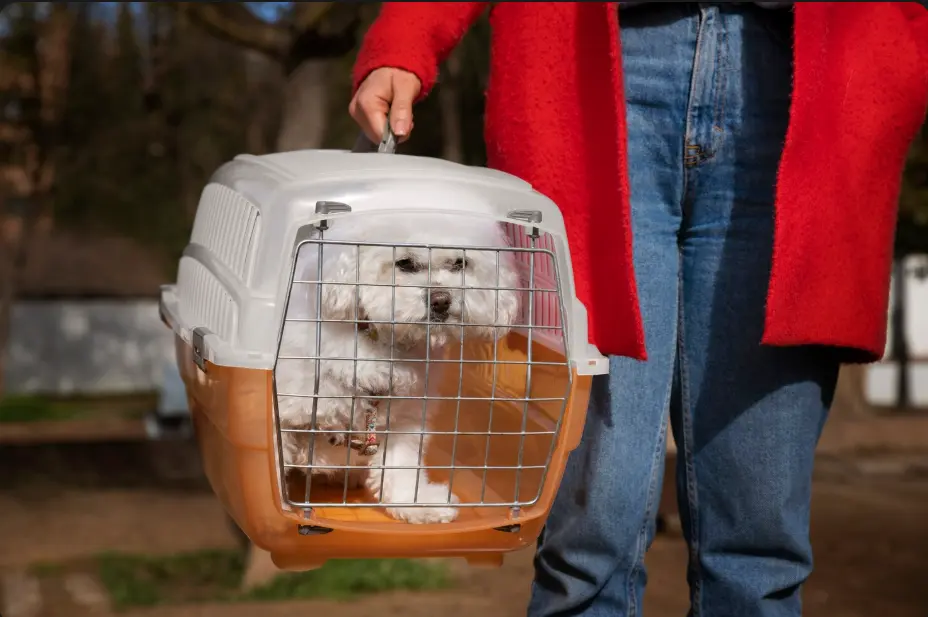
This dog is perfectly fine when you’re home. He’s fine in his crate when you’re nearby. But as soon as the door closes, his body says “Emergency.”
Signs: Biting bars, panting, drooling, losing control of his urine, twisting the cage wires, breaking teeth or nails.
I’ve seen it myself. A dog who was perfectly calm on the couch six feet away from his crate then the door closed and in seconds everything changed. Same room, same owner, same house there was only one variable: the closed door.
Key difference: If a dog is calm in the room but panics in the crate, the problem is the crate not the separation.
3. Incomplete Crate Training
The dog was never really taught that the cage was a good place. It just tolerated it. The dog that only went in when lured, and immediately ran out.
Why These Three Problems Get Confused
Stress looks the same no matter the cause. Panting, drooling, barking, destruction these happen in all three situations.
The right question is not “does my dog have separation anxiety?” The right question is: what exactly is my dog reacting to?
- Is it your absence?
- Is it the closed crate?
- Or is it the fact that the crate was never properly introduced in the first place?
Answer that first. Everything else becomes easier.
The Questions That Actually Tell You What Is Happening
Is your dog comfortable in the crate when you are home?
Yes, but gets nervous when you leave likely separation anxiety.
Is your dog hesitant to enter the crate only when you are leaving?
Reluctance only when you show signs of leaving (keys, shoes, bag) a sign of separation anxiety.
Does your dog ever choose the crate on their own?
A dog that goes to the crate to sleep on his own is giving the place meaning. A dog that only goes in to eat does not. Both can improve, but they start from different starting points.
How soon after the door closes does the stress begin?
Immediate panting, drooling, lip licking fear of confinement can set in. These early signs can be overlooked when you’re already going outside.
A Camera and a Very Short Experiment
This is the most useful thing you can do before spending money on training or supplements.
Certified Separation Anxiety Trainer Melina De Martini, who developed one of the most widely used SA protocols, calls camera observation the foundation of any honest assessment. You can’t treat something you haven’t seen.
Set up a phone or camera. Go about your normal routine of leaving the house but only for a minute or two. See what happens.
- When does the stress start before you leave, during your routine, or after you are gone?
- Is it worse in the crate or out of the crate?
- Does your dog settle at any point?
- Are they eating, drinking, or ignoring offered items?
- Is the behavior panic, protest, boredom, or frustration?
Important: If your dog is drooling excessively, is in danger of harming himself, or is trying to run away like crazy back off immediately. Don’t film while he’s panicking. Teach him to be calm for five seconds, anxious for five minutes.
What to Do Once You Know the Real Problem
If your dog struggles with being alone no matter the setup
A crate is not the cure. The real cure is gradual training to be left alone — through desensitization. Small absences, over and over again. Each time, stay below his tolerance level. You are building evidence, not hope.
If your dog has confinement anxiety
Remove the crate from the alone time plan for now. A safe room, ex pen, or gated area will work better. These same dogs often develop excessive barking when confined, a different expression of the same trapped feeling.
If your dog has incomplete crate training
go back to basics. Door open, no pressure. Offer food near the crate, then inside, then with the door closed for two seconds. Build value slowly. Never use the crate as a punishment. Never.
A Few Mistakes That Sound Smart But Aren’t
A sturdy crate — prevents escape, but does not prevent panic.
Cry it out — practices fear. The nervous system becomes more adept at panic, not less.
A crate only when you are gone — turns the crate into a go signal. Spend time with the crate at home when you are present. The same logic applies to leash training a device that is only seen in stressful moments, itself becomes a stress signal.
More exercise — helps for some dogs, but alone is not a cure for separation anxiety.
Calming chews — are an adjunct, but not a substitute for training.
When It Is Time to Call in Help
If your dog is self-harming, the problem is getting worse despite continued efforts, or can’t stay calm even in the smallest of absences seek professional help. Find someone who uses reward-based methods
In severe cases, your vet or veterinary behaviorist may discuss medication. Medication won’t teach a dog to be alone. But when the anxiety is so intense that learning isn’t possible, medication can reduce the intensity so that training can work. Research published in the Journal of Veterinary Behavior found that dogs treated with both behavior modification and medication improved faster than dogs treated with just one method.
Conclusion
Is my dog afraid of being alone? Afraid of being crated? Or has he never been taught how to feel safe in a crate? Once you know the answer, you stop applying the wrong solution to the wrong problem.
If you’re not sure, a Certified Separation Anxiety Trainer (CSAT) through the IAABC or a veterinary behaviorist through the American College of Veterinary Behaviorists can make a proper diagnosis. Self-diagnosis is a starting point. When something isn’t working, it’s worth seeking professional help.
Frequently Asked Questions
Is it better to crate a dog with separation anxiety?
Only if the dog already feels safe in the crate. If the crate causes the dog to try to escape, drool, or harm itself use a safe room and train it to be alone first.
What is the 3-3-3 rule for dog anxiety?
It’s a guideline for newly adopted dogs: 3 days to decompress, 3 weeks to learn a routine, 3 months to feel at home. It’s not a medical rule, but it’s helpful for setting realistic expectations for anxious dogs.
How to help a dog with separation anxiety at night?
Consistent sleep routine, gradual reduction in distance, and calm movement. If there’s sudden, severe anxiety at night see a vet first to rule out medical causes.
How to calm a dog with crate anxiety?
Keep the door open, let the dog choose to go in, give the food near the crate and then inside, close the door for a few seconds while the dog is within tolerance. If panic sets in stop. Switch to a larger area and rebuild from there.
