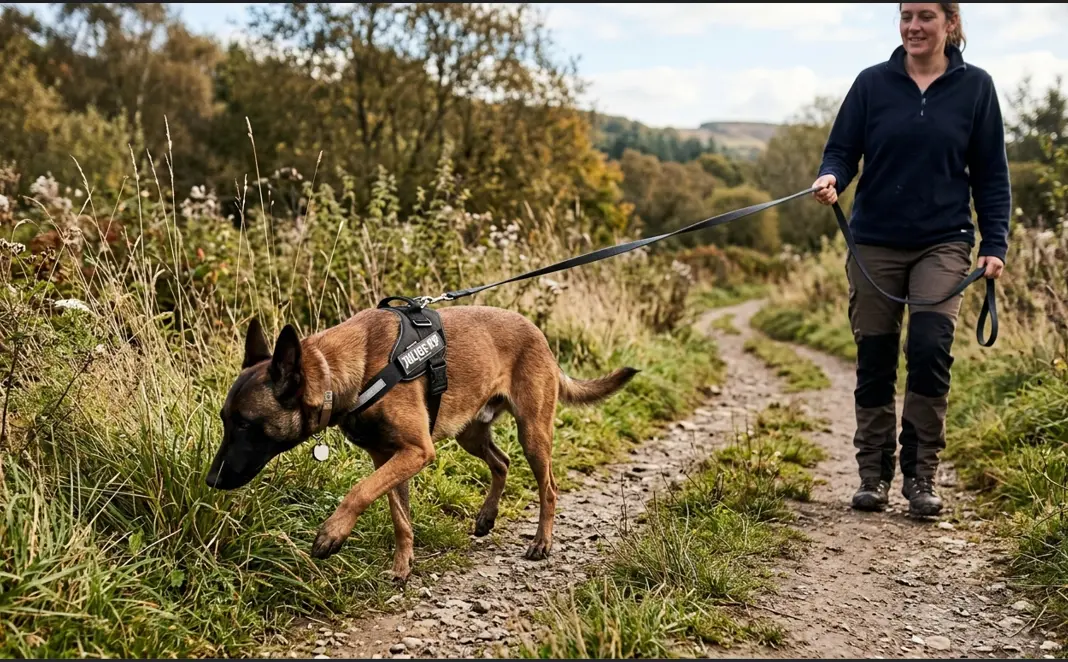
Training a Belgian Malinois is very different from training any other breed.
Most dogs have room for error you can be inconsistent, skip a session, ignore a rule, and your dog will still be a walker. But a Malinois exposes your every weakness that’s not a flaw. This is a breed that is working exactly as it was designed to.
The Belgian Malinois was bred for serious working roles like military, police, and security work. Their basic drive is excessive for other breeds, even on quiet days. There’s no dimmer switch to this drive either it has to be turned toward something useful, or it will automatically turn toward whatever is available: your furniture, your other pets, the leash, or yourself.
Why Dog Training for Belgian Malinois Requires a Different Approach
Most breeds have room for error. You can be inconsistent with a Labrador and still have a manageable dog. Skip a training session, drop the structure for a week, ignore a behavior once most dogs absorb it without disastrous consequences.
The Mailinois doesn’t work that way.
“With the Belgian Mailinois, training isn’t a session, it’s a lifestyle,” says Tasha Messina, a Belgian Mailinois breeder and handler at Element Belgians. “Every interaction with them is either reinforcing what you want, or allowing what you don’t want.”
She adds that the room for indecisiveness with this breed is essentially zero. The Mailinois will look for any ambiguity in the rules and take advantage of it, not out of stubbornness, but because their brains are constantly scanning for information about what goes with what.
This is the nature of a serious working breed. And that is what makes them exceptional when trained correctly.
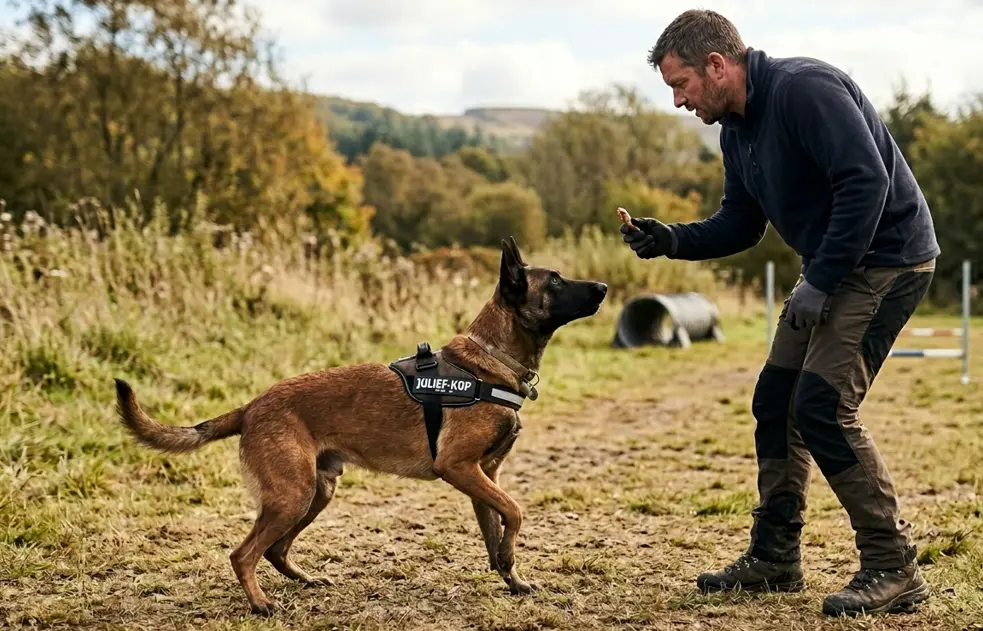
Working Lines vs. Pet Lines Which Dog Do You Actually Have
Most breeds have room for error. You can be inconsistent with a Labrador and still have a manageable dog. Skip a training session, drop structure for a week, ignore a behavior once in a while a Malinois doesn’t work that way.
“With a Belgian Malinois, training is not a session, it’s a lifestyle,” says Tasha Messina, a Belgian Malinois breeder and handler at Element Belgians. “Every interaction with them is either reinforcing what you want, or allowing what you don’t want.”
She adds that there is essentially zero room for indecision with this breed. A Malinois will look for and exploit any ambiguity in the rules not out of stubbornness, but because their brain is constantly scanning for information about what goes with what.
It’s the nature of a serious working breed. And that’s why they are exceptional when trained properly.
The Adolescence Problem
Between 6 and 18 months, the Belgian Malinois goes through adolescence. The brain is rewiring, hormones are changing — and everything you taught him as a puppy suddenly seems to disappear.
The dog who once took the command “sit” seriously now pretends he never heard the word.
This is normal. This is also the period when most Malinois owners give up, return the dog, or conclude that their training isn’t working.
What’s really happening: The teenage Malinois is testing whether the rules you’ve set are really real. He’s not being stubborn. He’s in a developmental phase that this breed exhibits more intensely than most breeds.
Here’s what you do during adolescence: Keep training sessions short, keep your standards consistent, and don’t get emotional over failures. The skills are there — they will mature. Owners who go through this stage with patience and structure come out the other side with an exceptional dog.
Owners who give up during this stage almost always say the same thing later: I wish someone had told them this was coming sooner.
What Actually Exhausts a Belgian Malinois
Exercise alone won’t calm a Malinois down. It will give you a fitter dog who will still be more active. His drive doesn’t die from physical activity. Cardio builds physical stamina it doesn’t reduce the need for mental engagement.
Owners who let their Malinois run for two hours and then are surprised to find that their dog is still hitting walls have created what Messina calls “an athlete who can’t sit still.” The dog now has more physical stamina than ever before and that’s not the goal.
What actually works is mental exhaustion combined with physical activity:
- A 15 minute obedience session that requires real attention will tire a Malinois out more than a 45-minute run
- Nose work telling the dog to find an object hidden by scent turns the intensity into a calm, focused search. It creates tired dogs
- Training that builds complex behavioral chains, multiple commands in sequence, channels the problem solving drive in a productive direction
- Puzzle feeder for every meal. Every meal should be earned or worked for, not shoved into a bowl
The 5 Skills to Build In This Exact Order
Training a Belgian Malinois works best when you follow a sequence.
1. Crate Training Start Here, Always
The crate isn’t punishment. For the Malinois, it’s the foundation of everything else.
A Malinois puppy or new adult with free run of the house will practice behaviors you don’t want destruction, overexcitement, inappropriate responses hundreds of times before you can stop them. Every repetition strengthens that behavior.
The crate prevents rehearsal. The same principle applies when working with separation anxiety the crate built correctly becomes a safe space, not a source of stress . It gives your dog a defined, safe space and forces rest, which high drive dogs need but won’t choose on their own.
Introduce the crate with high value food. Never use it as punishment. Build duration gradually five minutes, then thirty, then hours. Most experienced Malinois owners keep the crate as the dog’s home base until at least four years old.
2. Impulse Control: Your Permanent Priority
Impulse control is the single most important skill you’ll teach your Belgian Malinois. It’s also never fully done. It’s a daily practice.
The basics: wait at every door before going through. Sit before meals. Leave it on cue. Hold a settle on a mat while distractions are present. sit with you voluntarily in stimulating environments.
Each of these builds one thing . the capacity to pause before reacting. That pause is the foundation every other behavior rests on.
The difference between a six month old Malinois with impulse control work and one without isn’t subtle. It’s the difference between a dog you can take places and one you’re actively managing every second they’re awake.
High value rewards are essential here. Your Malinois will not ignore a running cat for kibble. The reward has to match the intensity of what you’re asking them to give up.
3. Recall Non Negotiable
A reliable recall isn’t optional with this breed. A Malinois who doesn’t come when called can’t safely have off leash freedom. Until recall is reliable, structured leash work is essential.
Build recall in low distraction environments first. Make coming to you the highest value event in your dog’s day something exceptional always happens when they come. Practice multiple times daily, not just when you need it to work.
Never punish a dog who returned to you, regardless of what happened before the recall.
4. Socialization What It Actually Means for This Breed
For the Malinois, socialization requires a more specific structure.
The goal is not to have the dog be happy with every person and every dog that comes along. This is not realistic for the breed’s temperament, and forcing it creates problems, not solutions.
The real goal is to have a dog that is neutral and confident one that sees other dogs and people but doesn’t react, and looks to you for guidance in a dynamic environment. Remain calm in the face of triggers, not excited about them.
Forced or heavy socialization is counterproductive. Controlled, gradual exposure . where your dog can observe without any pressure builds the confidence you’re looking for.
5. Basic Obedience Built on Everything Above
Sit, down, stay, place, come, leave, come these are the structures through which everything else is taught.
For the Malinois, “fully learned” means the dog reliably performing these commands amidst real distractions, in a variety of environments, and at varying levels of arousal.
Training sessions for adult dogs 10 to 15 minutes max. For puppies: 3 to 5 minutes. Several short sessions throughout the day are always better than one long session.
When teaching a new skill end on success, not frustration.
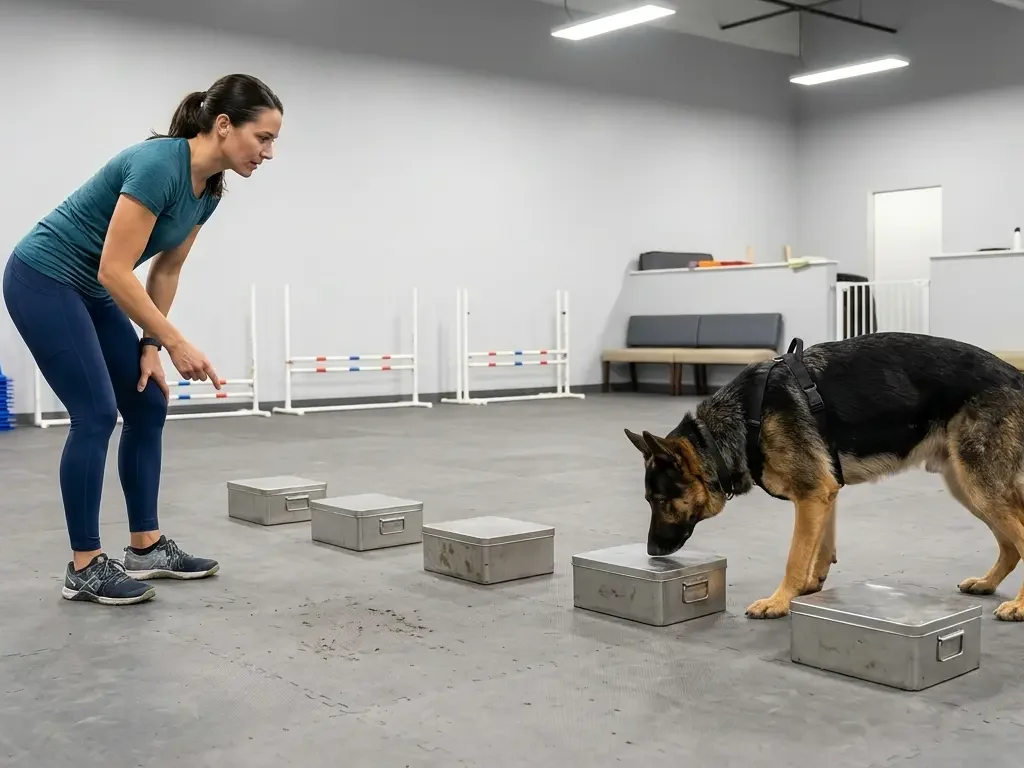
The Off Switch Problem Teaching Your Malinois to Settle
The Malinois’ default mode when in an exciting environment is high excitement. This is their basic state. What doesn’t come naturally is going from high excitement to calm on a cue.
Teaching the “off switch” means teaching your dog to sit on a mat, high spot, or specific spot
How to do it: Start with a mat. Reward your dog every time he puts all four paws on the mat. Increase the duration. Add mild distractions. Reward calmness, not excitement. The standard is for the dog to lie down with a relaxed body, not sit rigidly and wait for the next command.
This skill is what makes the Malinois house-trained. Without it, any downtime is either spent in confinement, or the dog will choose activities that you don’t like.For many owners, that shows up as excessive barking at home.
Watching a well trained Malinois sit calmly on a mat in a busy room while everything else is going on around him is truly impressive.
Why Harsh Methods Backfire Specifically with This Breed
This applies to all dogs, but with Malinois the results are more immediate and severe.
When you use punishment based methods on a high drive dog corrections, confrontations, a punishment based approach you increase his arousal, not decrease it. Now your dog is excited and conflicted at the same time, and the combination creates behavior that looks like aggression, but is actually a stress response.
Studies in canine behavior consistently show that punishment-based training methods increase stress, anxiety, and defensive aggression especially in high drive working breeds. When arousal increases under pressure, behavior often escalates rather than improves. This doesn’t mean that every Malinois has this gene, but it does mean that the breed has a documented sensitivity to stress-inducing training methods.
You can’t physically subdue a Malinois. You can’t scare a dog that has been bred to not back down under pressure. Only one thing works in the long run: making it rewarding for him to choose the behavior you want.
Combining positive reinforcement with clear structure is not a gentle option. For this breed in particular, it is an effective option.
What to Do When Training Isn’t Working
Before concluding that your Malinois is untrainable, run through this checklist:
Check your reward value. Most Malinois are more motivated by toys and movement than food. If you’re using kibble as your primary reward and wondering why your dog isn’t engaged, this could be the answer. A tug of war, a thrown ball, access to something he wants to go to these often work far better than treats.
Check your household consistency. One person reinforces the rule and another allows the same behavior and the behavior will persist. Your Malinois learns what goes where. Every adult in the household should be on the same page.
Check your timing. Delaying the reward by even a few seconds will fail to connect him to the behavior. If you reward your dog three seconds after he sits, you’re reinforcing what he was doing in those three seconds and that’s usually something else.
Check your arousal management. A dog that’s above his threshold can’t learn. Training is often ineffective when your dog is already excited. First, bring the arousal down a quiet walk, a sniffing session, some time in the crate then ask for a focused task.
Check the length of your sessions. Longer is not better. If you’re doing 30 minute sessions and the results are dropping after 10 minutes, you’re practicing failure. End first. End on success.
If you’ve really addressed all of this and the behavior is still escalating, this is when a professional trainer specializing in working breeds becomes a must not an option.
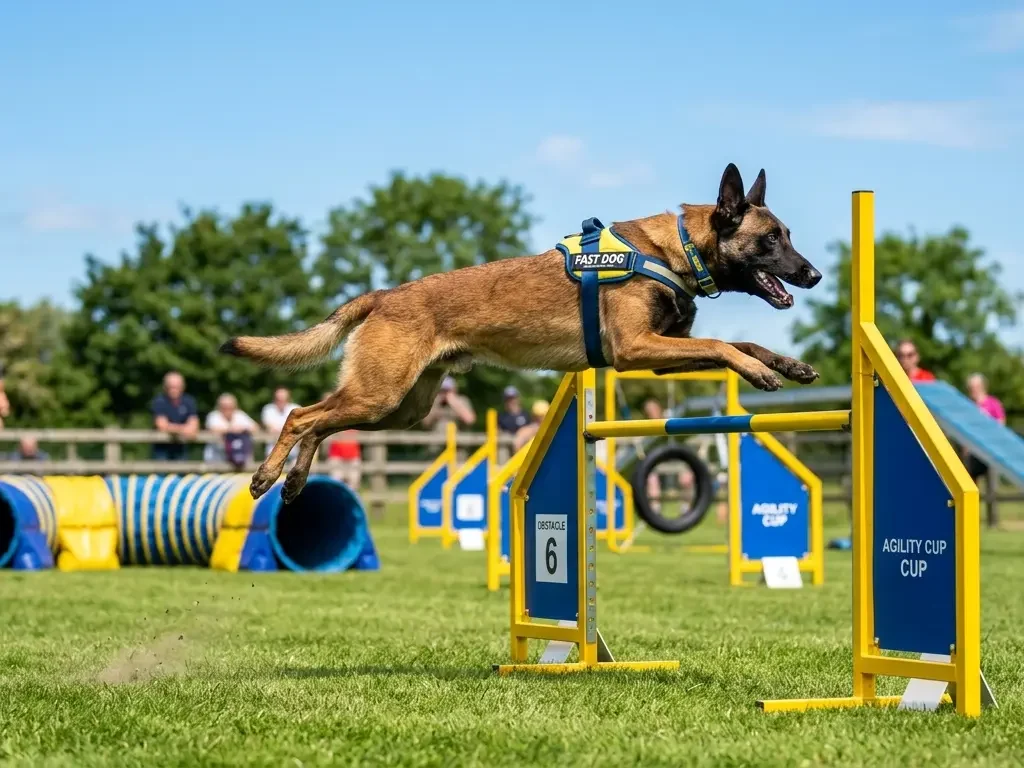
Conclusion
Training a Belgian Malinois is a commitment with no end date. Structure, daily sessions, and appropriate outlets all of these continue throughout the dog’s life. This is not a breed you can train as a puppy and then sit back and relax. The work goes on.
But owners who understand this from the start, who have created routines that truly meet this dog’s needs, describe a partnership unlike any other in their experience. The attention this breed gives you when it trusts you. The intensity of their engagement. The way a well-trained Malinois watches you waiting to understand what you need next.
Frequently Asked Questions (FAQ)
Is the Belgian Malinois easy to train?
They are highly trainable, but not easy. This difference is important. A Malinois learns faster than almost any other breed commands sit quickly, chains of behavior are well formed, complex tasks are possible. But it takes daily consistency, timing, and skill in rewarding,
What is the 3-3-3 rule for dog training?
The 3-3-3 rule describes the adjustment period for a newly adopted dog: the first 3 days of being overwhelmed, the first 3 weeks of testing boundaries and showing true personality, and 3 months of truly settling in. For the Malinois, this period is crucial whatever patterns are established in those 90 days become your foundation.
How to discipline a Belgian Malinois?
Through structure and redirection, not punishment or confrontation. When your Malinois does something you don’t want, the most effective response is
What are common training mistakes with Malinois?
Relying solely on exercise without mental work. Using a correction that increases excitement. Being inconsistent between different family members. Skipping impulse control and moving to higher commands. Exercising the dog before the training session rather than after. Socialization that forces interactions rather than building neutral trust. Expecting that training has failed by the adolescent decline stage (6 to 18 months) and underestimating how long crate training should last.
