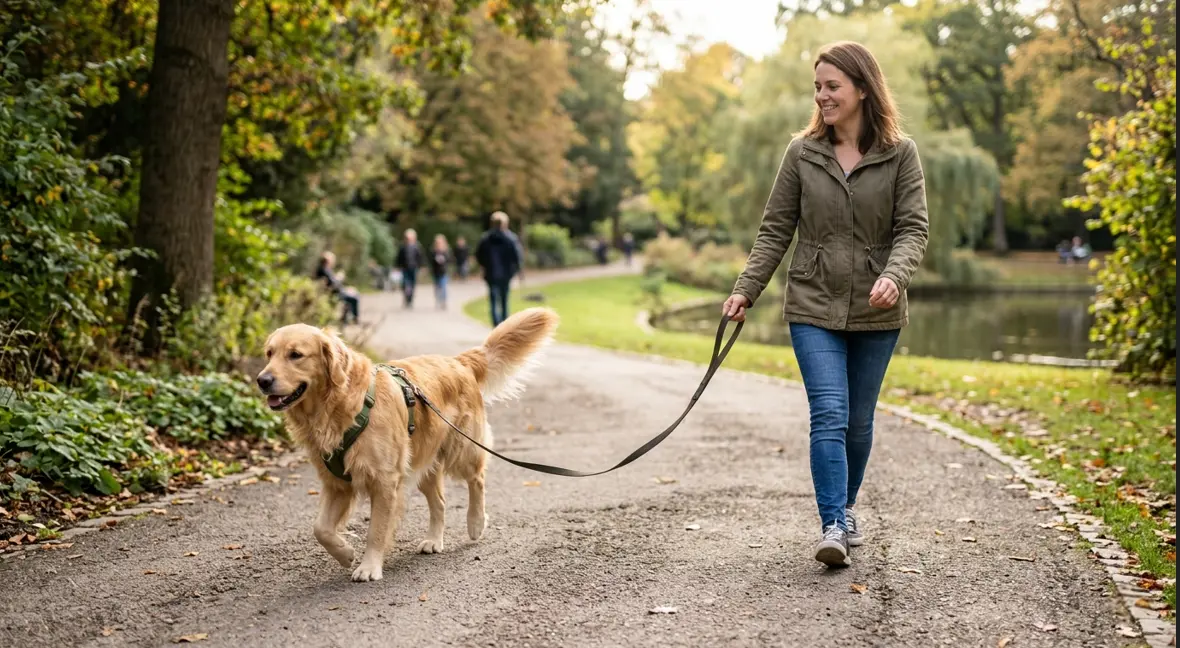
Teaching a dog to walk on a leash is one of the first things every owner should learn and, to be honest, it’s also one of the most overlooked skills. I learned this lesson the hard way with my first dog.
What do people do? Put on the leash, go outside, and pray that everything is okay. Then they spend the next six months dragging their dog down the street the dog was technically on a leash, but not trained at all. I was that person myself, for a long time.
But the good thing is that when you have the right equipment and a solid routine, it’s one of the easiest skills to master. In my own experience, most dogs start to show a noticeable difference within 2 to 3 weeks.
Why dog training leash work matters
A dog that pulls on a leash isn’t just uncomfortable to walk on it can also be physically harmful. Research has found that suddenly pulling on a collar puts a lot of stress on a dog’s neck. One study also noted that this stress can temporarily increase intraocular pressure and that’s especially concerning for breeds that have eye problems.
What’s more, a dog you can’t control on a leash can’t go anywhere safely. Leash training is the foundation of everything parks, trails, stores, trips to the vet, and every outdoor adventure you’ll ever share with your dog.
The right equipment get this right first
Teaching your dog to walk properly starts with choosing the right gear gear that helps with training, not works against it. I myself have wasted weeks before realizing that my gear was working against me.
The leash
A simple 4- to 6-foot nylon or leather leash this is the right tool. If you’re unsure which material or style suits your dog best, choosing the right training leash can make the process much easier .Retractable leashes should never be used during training they work under constant pressure, which actually teaches your dog to pull against resistance every time. They also tangle easily, and can cause real injury by wrapping around the legs with a sudden jerk.
If you want to give your dog more freedom in safe, open spaces, a 15- to 30-foot long line is great.
Harness vs collar
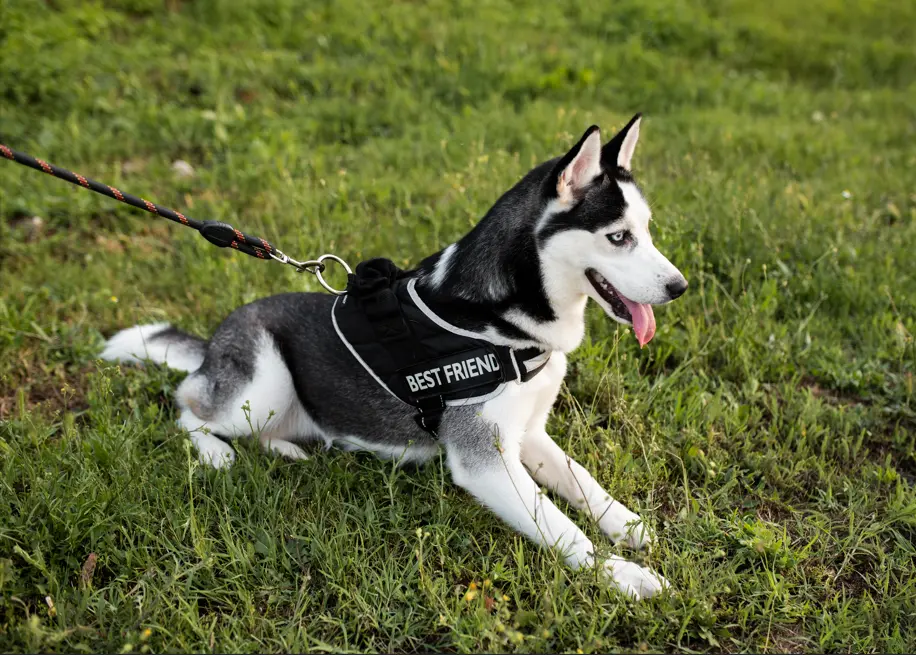
For most dogs, a harness is the better choice. A collar puts pressure on the neck, while a well-fitting harness spreads that pressure across the chest and shoulders. It’s much more comfortable, especially during the learning phase.
The best option is a front clip harness when your dog pulls forward, the front clip gently turns him back toward you. This way, the laws of physics work in your favor rather than against you.
The two finger rule: You should be able to comfortably fit two fingers anywhere under the harness. Anything less means the harness is too tight; anything more means the harness is too loose.
Treats
High value treats are essential. Small, soft, and really interesting small pieces of chicken, cheese, or commercial training treats. Dry kibble won’t work when you’re competing for the attention of squirrels and other dogs. I made this mistake in the beginning and then I couldn’t figure out why my dog was ignoring me.
Keep treats in a pouch on your waist so you can reward your dog within half a second of the right behavior. Timing is everything.
Puppy vs adult dog the approach is different
Most leash training guides think all dogs are the same, but in reality they are not.
Puppies under six months old have very short attention spans and haven’t yet developed any bad habits. Keep sessions to 5 to 10 minutes, 2 to 3 times a day. Your only goal at this stage is to build a positive association with the leash and harness not perfect the heel position. Puppies are learning everything at once and can only absorb so much.
Adult dogs who have never been leash trained they start out behaviorally fresh, but they have a long attention span, so sessions can last up to 15 minutes. The challenge is that they have been accidentally rewarding pulling for months or years every time they pull to an interesting place, the habit has become strong. It takes more repetition, not different techniques, to break it.
Rescue dogs are different on another level. They may have had negative experiences with the leash — being tied up, punished, or worse. Walk them even more slowly.
How to leash train a dog step by step
Step 1: Introduce the Equipment Indoors
Before you go outside, get your dog comfortable with the harness and leash in the house. If he’s uncomfortable with them, he won’t learn anything outside.
Put the harness on at positive times during mealtimes, during play, or during quiet cuddles. Let him wear it for 10-15 minutes, then take it off. Repeat until your dog accepts the harness with ease rather than resistance. Do the same with the leash: clip it on, let him move around freely, and reward calm behavior.
Step 2: Establish a position indoors
The goal is a loose leash a comfortable “J” shape between you and your dog, where the dog is walking alongside you, not in front or behind.
Pick a side (the left side is traditional, but it doesn’t matter) and decide that that’s where you’re going to walk. Hold a treat at waist height on that side, take a step, and stop when the dog is in the correct position. Give him a treat near your waist so that spot becomes associated with good things. Build up slowly one step, then two, then three. If he moves forward and pulls the leash, stop.
Step Three: The Stop Response
This is the heart of loose leash training. As soon as the leash is tight, stop completely. Don’t jerk, correct, or scold just stand still.
Your dog wants to move forward, but pulling won’t get him there anymore. Eventually he’ll look at you or take a step back, and as soon as the leash is loose, you move forward and give him a treat. Repeat this hundreds of times. It sounds tiring, but it really works believe me, it will come much sooner than you think.
Step Four: Add a Change of Direction
Once he understands stopping and walking, add directional changes. When he starts moving forward, instead of just stopping, turn around and start walking in the opposite direction, happily calling him to you, and reward him when he arrives.
This keeps his attention on you instead of ahead, and the unpredictability actually makes the walk more interesting for him.
Step Five: Gradually Move Training Outdoors
This is where most people rush and lose all their progress. Your first outdoor sessions should be in a place with the fewest distractions your backyard or a quiet street outside of busy times, never a dog park or busy trail.
Expect some retreating when the environment changes because more distractions mean more pulling. Temporarily increase your reward rate a treat every 2-3 steps instead of every 10-15 steps in a busy place. Then gradually reduce the reward as the dog calms down. Gradually increase the difficulty over several weeks: quiet streets, then neighborhood walks, then parks, then anywhere.
How to stop your dog pulling on the leash specifically
Every time your dog pulls to reach something interesting, his brain takes note: pulling moving forward. That’s a powerful reinforcement history that you need to work against.
The “stop-and-go” method above is the most consistently effective method, but the key is consistency. It should work every time, with every person who walks the dog. If even one person in the household lets him pull, the effort can be wasted . I had to explain this to my own family.
For dogs who pull hard or constantly, a front-clip harness significantly changes the mechanics and speeds up the process.
What doesn’t work: Jerking the leash, verbal scolding, or punishment based corrections. These create a negative association with the walk and with you.
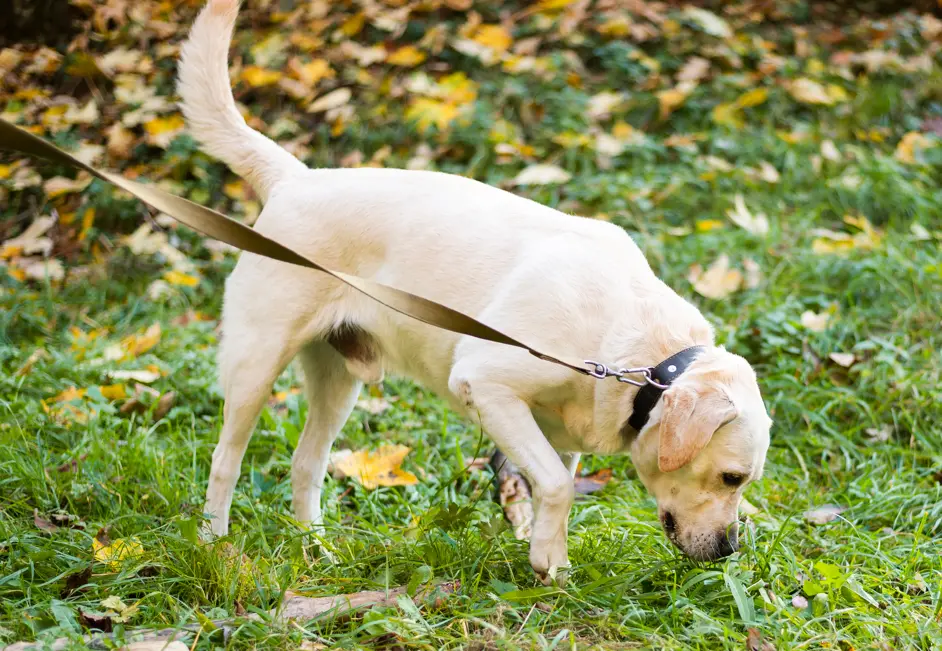
What about Smelling?
Research on canine cognition consistently shows that 10 to 15 minutes of free sniffing expends as much mental energy as an hour of physical exercise. A dog that is allowed to sniff is calmer and more content.
So incorporate intentional sniffing into your walks. When your dog is walking well on a loose leash, give a clear release cue like “go smell” or “free time” and let him explore within the confines of the leash.
This method makes walks truly rewarding for him, and reduces the restless, pulling everywhere behavior that develops in dogs who never get a chance to explore.
Common dog training leash challenges and what actually works
Leash biting
especially puppies, grab or pull on the leash while walking. This is usually a sign of play, frustration, or an invitation to start a conversation.
Don’t jerk the leash or it will become a game. Nor do you scold, as any reaction can reinforce it. Instead, stop walking and stand still. If your breed can hold it in their mouth, offer a toy that they can hold. Resume walking when they let go of the leash.
Reactive behavior toward other dogs or people
A reactive dog one that barks excessively on leash, snaps, or pulls needs distance management .
Find a distance where your dog can see the trigger but still be in control meaning they can hear you and take the treat. Work from there, reward calm behavior, and gradually reduce the distance over several sessions. Leash corrections almost always make the reaction worse, because the dog is already stressed and corrections only add fuel to the fire.
If the reaction is severe, contact a certified professional rather than repeating a method that isn’t working.
Fear of the leash
is common in rescue dogs. Rushing will only make it worse.
Place the leash on the floor near the food area, let him see and smell it on his own, and reward any interaction. Then only put it on and take it off for 30 seconds while giving a treat. Gradually increase this period over days or weeks depending on how deep the fear is.
How long does leash training take?
Realistic expectations depend heavily on your situation:
| Dog Type | Typical Timeline |
|---|---|
| Puppy, no bad habits | 3–4 weeks (low-distraction); several more weeks for busy areas |
| Adult dog, light puller | 4–6 weeks |
| Adult dog, years of pulling | 2–4 months |
| Rescue with leash trauma | Weeks to months at the dog’s pace |
The biggest factor is consistency .The same principle applies when working on issues like crate training or separation anxiety. Daily training with everyone using the same method produces far faster results than occasional sessions with inconsistent rules.
When to get professional help
If your dog shows aggression growling, snapping, trying to bite, or biting stop immediately and contact a certified professional before proceeding. This is not just a matter of training, it’s a matter of safety.
Similarly, if you’ve practiced the correct techniques for 6 to 8 weeks and haven’t seen any improvement, a professional evaluation may be in order.
When choosing a trainer, look for certification from the CCPDT (Certification Council of Professional Dog Trainers) or membership in the APDT (Association of Professional Dog Trainers). Dog training is an unregulated industry, so credentials really matter.
Conclusion
Walking calmly on a leash doesn’t come naturally to dogs they want to run, explore, and sniff everything. Teaching them to walk calmly with you is a real skill that requires real training.
Dogs who finally enjoy being walked the ones you wait to take out got there through consistent training that respected both the learning process and the dog’s nature. There are no shortcuts, but there are no secrets either.
Start with the right equipment, be consistent, stop when the leash is tight, reward the position you want, and give your dog time to sniff. Do this, and the rest will come naturally.
Frequently asked questions (FAQ)
What is the 3-3-3 rule in dog training?
It’s a guideline for newly adopted dogs: the first 3 days are for them to feel comfortable and secure, the next 3 weeks are for them to learn your routine, and 3 months are for them to truly feel at home. This isn’t a leash rule specifically, but it does affect timing — a dog that hasn’t come out of the shock of a big change isn’t ready to learn. Trying to leash train them during those first stressful days is frustrating for everyone.
What is the 7-7-7 rule for dogs?
The puppy socialization rule: Introduce them to 7 people, 7 surfaces, and 7 environments in the first 7 weeks. This isn’t strictly about leash training, but early socialization profoundly influences how a dog reacts to new environments later on. A well-socialized puppy is a much easier student to leash train.
How to walk a dog on a leash correctly?
Start indoors with a front clip harness and high value treats. Establish a position near your hip, and stop whenever the leash is tight never move forward with tension. Incorporate changes of direction to keep your dog’s attention, then slowly move outside, starting in the least distracting area. Apply the same principle with each person on each walk, rewarding the loose leash position heavily at first, and reducing the reward as the behavior becomes reliable.
What are the 7 basic dog training commands?
Most trainers recommend these: sit, stay, come, down, heel (walk on a loose leash), leave it, and go to your place. Loose leash walking is often considered the most important, as it directly impacts the safety and enjoyment of each walk for you and your dog.
Send feedback
